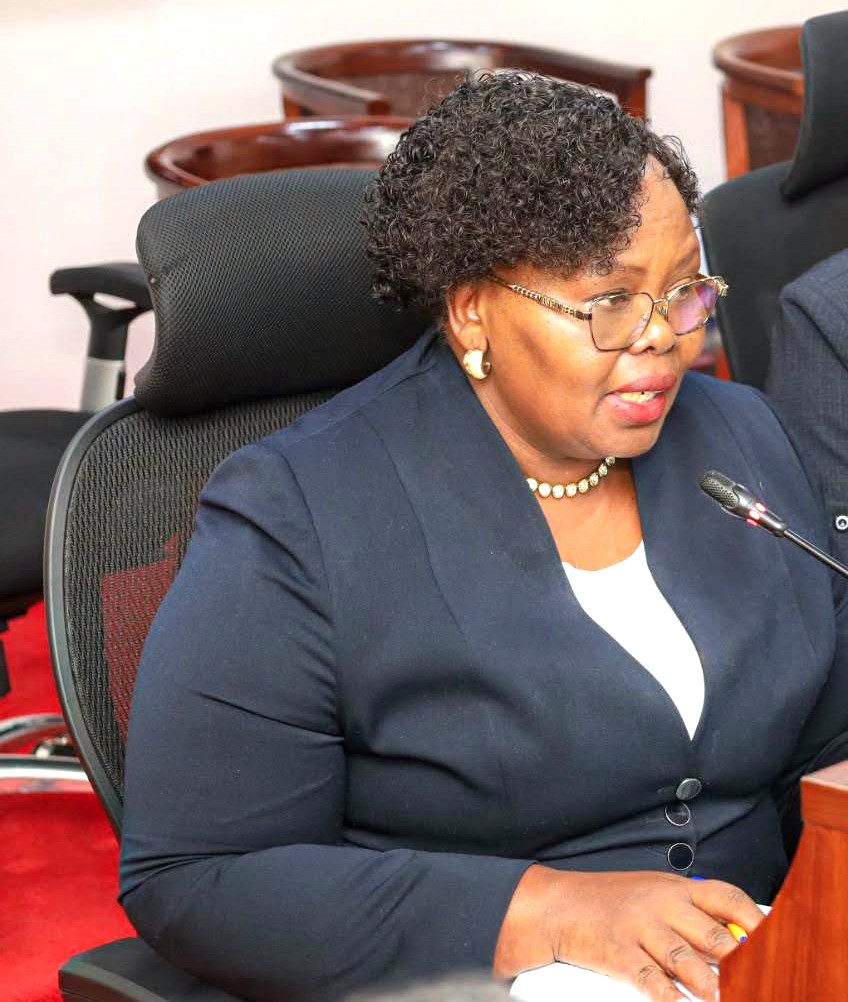
- Limuru Girls faces questions over a Sh785,946 capitation discrepancy linked to conflicting learner enrolment figures.
- MPs questioned differences between NEMIS data and the school’s physical records used to determine funding.
- The inquiry has renewed scrutiny of the accuracy of learner data underpinning public school capitation.
Limuru Girls High School has been put on the spot over a Sh785,946 capitation discrepancy after Members of Parliament discovered that learner numbers used to calculate Government funding did not match the institution’s physical enrolment records.
The revelation has triggered wider parliamentary scrutiny of the accuracy of NEMIS/KEMIS data, the systems relied upon to determine how billions of shillings in public education funding are distributed to schools.
The matter came before the Public Investments Committee on Governance and Education (PIC-G&E) at Bunge Tower in Nairobi on Wednesday, September 16, 2026, as MPs scrutinised Auditor-General reports covering Limuru Girls and other national schools.
According to the audit finding presented to the committee, NEMIS recorded 2,099 learners in September 2023, 2,300 in January 2024 and 2,354 in May 2024.
However, the school’s physical records showed 2,062 learners in September 2023 and 2,253 learners in both January and May 2024.
The differences resulted in the school receiving Sh785,946 more in capitation than the figures supported by its physical records, according to the audit finding.
The discrepancy raised questions among MPs about the reliability of learner enrolment data used in determining capitation allocations.
Limuru Girls Chief Principal Susan Kariuki acknowledged that there were discrepancies but said they arose from differences between the school’s physical records and information captured in NEMIS.
She maintained that the school had not deliberately inflated its enrolment figures.
Committee chair and Luanda MP Dick Maungu questioned what happened to funding allocated for learners who were not reflected in the school’s physical records. Parliament lists Maungu as chair of the committee responsible for examining Auditor-General reports and accounts of public investments.
The principal raised another challenge facing schools, citing the Government’s prescribed capitation of Sh22,244 per learner against actual receipts of approximately Sh15,000 per learner.
MPs, however, maintained that the funding shortfall was a separate issue from the accuracy of enrolment figures used to determine disbursements.
Kilome MP Thaddeus Nzambia urged the committee to distinguish between inadequate capitation and discrepancies in learner numbers.
Central Imenti MP Moses Kirima questioned why the school did not formally disclose unmatched learner records instead of allowing the discrepancy to persist.
Narok Woman Representative Rebecca Tonkei also questioned how funding could be generated for learners whose details did not correspond with the school’s physical records, particularly when other schools have complained of underfunding linked to incomplete learner data.
Igembe Central MP Daniel Karitho sought an explanation on how the additional funds were accounted for if the enrolment figures did not tally.
Kariuki told the committee that the school had acknowledged receipt of the funds to the relevant State Department as required.
Spotlight on funding data
The proceedings have placed renewed attention on the integrity of Kenya’s school-funding data.
Where physical learner numbers differ from those recorded in the national database used to calculate capitation, questions arise over whether public resources are being allocated according to verified enrolment.
Maungu questioned the dependability of the system, arguing that a public funding mechanism should be predictable, consistent and reliable.
The committee’s concerns therefore extend beyond Limuru Girls to the wider process through which schools, education officials and Government agencies reconcile admission registers, class records and NEMIS/KEMIS data before public funds are disbursed.
Sh9 million investment scrutinised
The committee also examined a separate audit concern involving a Sh9 million fixed-deposit investment made by Limuru Girls during the financial year ended June 2025.
Although the investment generated about Sh116,000 in interest over three months, the investment and interest were not properly reflected in the school’s financial statements, according to the audit issue presented to MPs.
The Auditor-General consequently raised concerns over the accuracy and completeness of cash and cash equivalents amounting to Sh43.56 million.
Kariuki described the failure to account for the interest as an oversight, while the school bursar linked the omission partly to the institution’s transition from cash-basis accounting to accrual accounting under International Public Sector Accounting Standards (IPSAS).
MPs nevertheless stressed that investment of public funds carries an obligation to account for every return generated.
The proceedings consequently raised two key accountability questions: whether schools are receiving capitation based on verified learner numbers and whether institutions are properly accounting for funds placed under their control.
With schools continuing to report pressure from funding shortfalls, unexplained differences in enrolment figures could affect confidence in how scarce education resources are distributed.
The parliamentary scrutiny therefore places renewed pressure on education authorities to strengthen reconciliation between school records and the national learner database and ensure capitation is based on verified enrolment.
READ ALSO: Joy as President Ruto honours pledges made to Thika High, key projects underway
The committee also examined Auditor-General reports relating to Loreto High School Limuru, Alliance High School, Alliance Girls’ High School, Mang’u High School and Kiambu High School, covering financial years between 2020/2021 and 2024/2025.
By Hillary Muhalya
Get more stories from our website: Education News
To write to us or offer feedback, you can reach us at: editor@educationnews.co.ke
You can also follow our social media pages on Twitter: Education News KE and Facebook: Education News Newspaper for timely updates.
>> Click here to stay up-to-date with trending regional stories