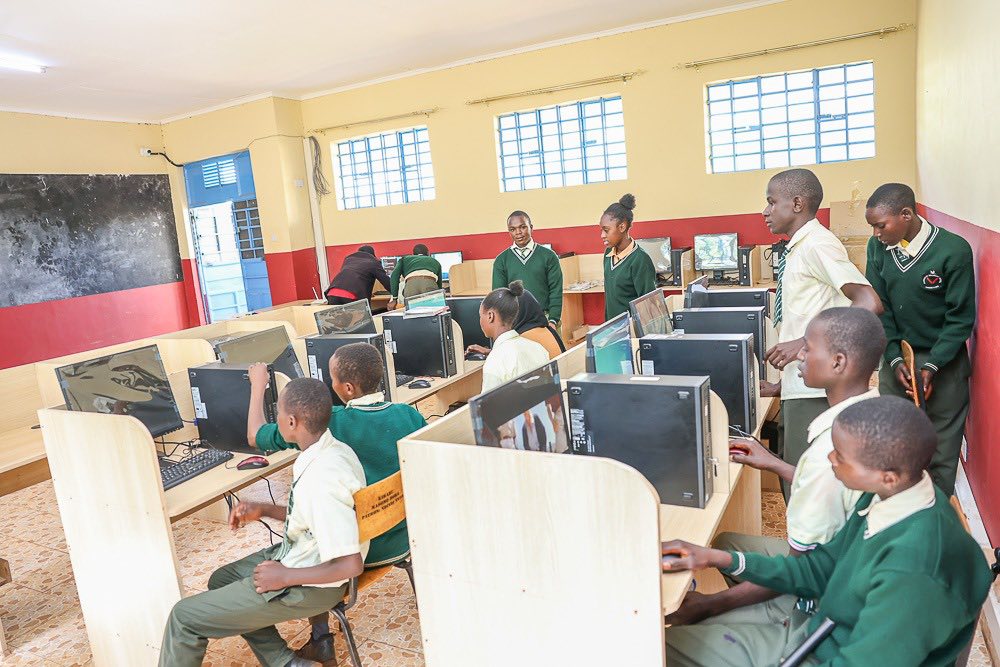
The modern classroom sits at a crossroads. On one side is an ever-expanding universe of digital tools promising efficiency, engagement, and global connectivity.
On the other is a growing unease among teachers, parents, and education thinkers who are beginning to question whether the very tools meant to enhance learning may, in fact, be undermining it. The debate is no longer about whether technology belongs in schools. It is about how much, how often, and for what purpose.
There is no denying that technology has become deeply embedded in the architecture of contemporary education. From learning management systems and digital assessments to virtual classrooms and online research platforms, schools today rely on technology not just as a supplement, but as infrastructure.
Remove it abruptly, and the system would struggle to function. Curriculum delivery would slow, administrative processes would become cumbersome, and access to updated information would shrink significantly.
Technology also offers undeniable pedagogical advantages. It allows teachers to track student performance in real time, identify learning gaps instantly, and tailor instruction with precision. A teacher can know, within minutes, which concepts a majority of learners have failed to grasp and adjust accordingly. For students with special needs, digital tools can be transformative, offering accessibility features that traditional methods simply cannot match. In this sense, technology levels the playing field and expands the boundaries of who can learn and how.
Yet, this is only one side of the story.
A growing body of classroom experience suggests that the overuse—or misuse—of technology is quietly eroding some of the most fundamental elements of learning. Attention spans are shrinking. The presence of a device, even when intended for academic use, often introduces a parallel world of distraction. A student toggles between a lesson and entertainment, between concentration and fragmentation. The result is not deep learning, but surface engagement.
ALSO READ:
Bitok: Gov’t to cut number of teacher trainees by half this year
Teachers are increasingly reporting that students struggle to sustain focus during lessons that require extended reading, writing, or discussion. The cognitive stamina that traditional learning demanded is being replaced by a preference for quick answers and instant feedback. In such an environment, patience—a critical ingredient in mastering complex ideas—becomes a casualty.
There is also the question of authenticity in student work. With the rise of artificial intelligence tools, the line between a student’s own thinking and externally generated content is becoming blurred. Assignments that once measured understanding are now vulnerable to automation. When a machine can produce a polished essay in seconds, the risk is not just academic dishonesty—it is the erosion of the thinking process itself. Students may submit work, but they are not necessarily learning.
Beyond academics, the social and emotional implications are equally concerning. Excessive screen time has been linked, in many educational discussions, to reduced interpersonal interaction, diminished empathy, and increased anxiety. Classrooms, once vibrant spaces of dialogue and human connection, risk becoming quiet zones of individual screen engagement. The subtle but powerful art of conversation—listening, responding, negotiating meaning—is weakened.
It is therefore not surprising that a backlash is emerging. Parents are questioning the extent of screen exposure. Teachers are re-evaluating their instructional strategies. Some schools are experimenting with tech-free days or limiting device usage to specific periods. This is not a rejection of technology, but a recalibration—a recognition that more is not always better.
The real issue, then, is not technology itself, but imbalance. For years, there has been an implicit assumption that increasing the presence of technology would automatically lead to better learning outcomes. This assumption is now being challenged. Technology does not create good teaching; it amplifies it.
ALSO READ:
In the hands of a skilled teacher with clear objectives, it can enhance learning. In the absence of strong pedagogy, it can just as easily magnify confusion and distraction.
Effective schools are beginning to shift their approach. Instead of asking, “What technology should we adopt?” they are asking, “What learning problem are we trying to solve?” This shift in questioning is critical. It places pedagogy at the center and technology as a supporting tool, not the driver.
In practical terms, this means using technology selectively. Digital tools are most powerful when they do what traditional methods cannot—such as simulating complex processes, connecting learners to global resources, or providing immediate feedback. However, for tasks that require deep thinking—reading a challenging text, constructing an argument, engaging in meaningful discussion—technology often adds little value and may even detract from the experience.
For educators in contexts such as Kenya, where the Competency-Based Curriculum (CBC) emphasizes skills like critical thinking, communication, and collaboration, this balance becomes even more crucial. These competencies are inherently human. They are developed through interaction, reflection, and sustained effort—not through passive screen engagement. Technology can support these processes, but it cannot replace them.
The path forward is therefore not to abandon technology, nor to embrace it uncritically, but to use it with intention. Schools must develop clear guidelines on when and how devices are used. Teachers must be trained not just in operating digital tools, but in integrating them meaningfully into their pedagogy. Students must also be guided to use technology responsibly, understanding that it is a tool for learning, not an escape from it.
Ultimately, the goal of education remains unchanged: to develop thoughtful, capable, and well-rounded individuals. Technology, when aligned with this goal, is an asset. When it distracts from it, it becomes a liability.
The challenge for today’s educators is not to choose between technology and tradition, but to orchestrate a thoughtful integration of both. In that balance lies the future of effective teaching and meaningful learning.
By Ashford Kimani
Ashford teaches English and Literature in Gatundu North Sub-county and serves as Dean of Studies.
You can also follow our social media pages on Twitter: Education News KE and Facebook: Education News Newspaper for timely updates.
>>> Click here to stay up-to-date with trending regional stories
>>> Click here to read more informed opinions on the country’s education landscape