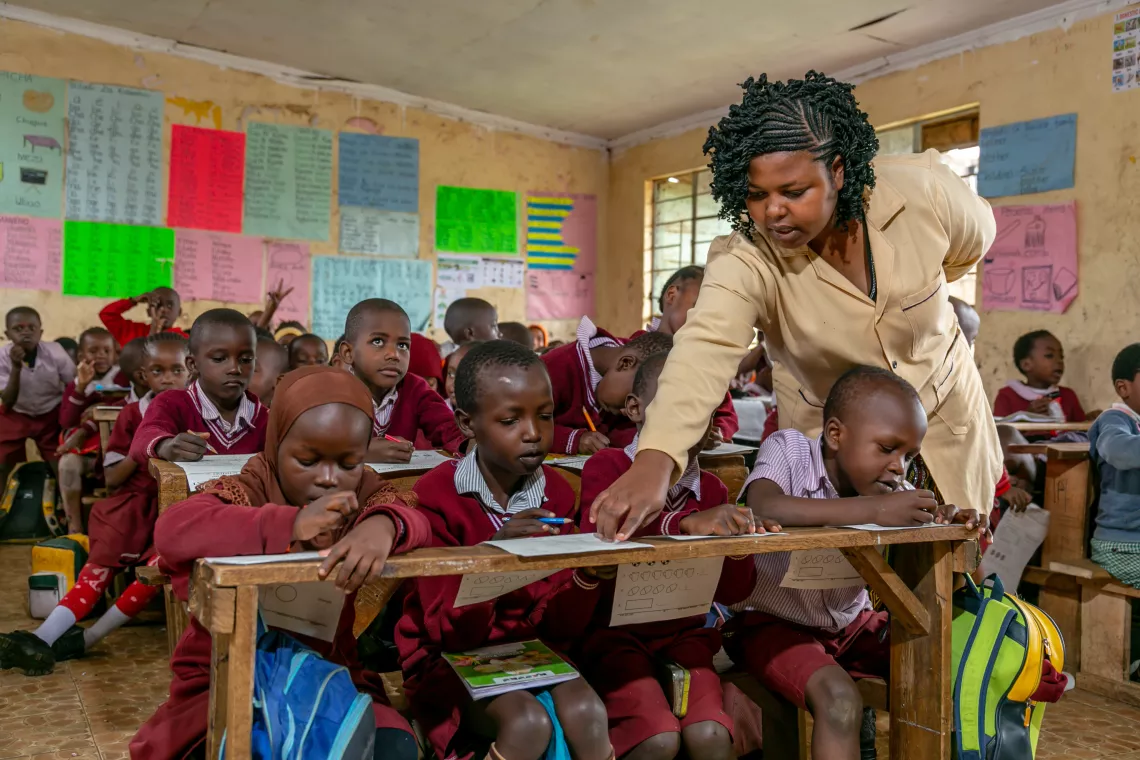
- TSC’s breastfeeding provision gives lactating teachers up to two hours daily to breastfeed or express milk.
- The arrangement highlights how maternal support and proper nutrition contribute to children’s early development.
- As World Breastfeeding Week ends, Hillary Muhalya argues that nutrition and quality education must work together.
As World Breastfeeding Week comes to a close on August 7, Kenya is being reminded of a fundamental truth about childhood development: a child’s brain needs both nourishment and stimulation to reach its full potential.
Good nutrition provides the biological foundation upon which the developing brain grows, while quality teaching, play, interaction and learning experiences help build and strengthen the child’s cognitive abilities.
This makes breastfeeding and education two sides of the same child-development equation.
The issue has gained renewed attention following the provision allowing lactating teachers to take up to two hours each working day for breastfeeding. Under the leadership of Teachers Service Commission Secretary and Acting Chief Executive Officer Evaleen Mitei, the arrangement provides teacher-mothers with time to breastfeed or express breast milk while continuing to meet their professional responsibilities.
The significance of the provision goes beyond employee welfare.
It touches directly on the wellbeing of children and the conditions required for healthy development.
During the earliest stages of life, the brain undergoes rapid growth. Adequate nutrition supplies the energy and nutrients required for this process. Breast milk provides important nutrients and bioactive components, while breastfeeding also supports the infant’s immune system and helps protect against infections that can interfere with healthy growth.
This is why feeding a child is not simply about satisfying hunger.
Feeding is part of building the foundation for brain development.
A child who receives adequate nutrition has a stronger foundation upon which later learning and development can take place. As children grow, that nutritional foundation must be complemented by responsive caregiving, stimulation, play and quality education.
Where nutrition meets education
This is where teachers enter the equation.
A well-nourished child needs a stimulating learning environment. Teachers help children develop language, reasoning, memory, problem-solving abilities, creativity and social skills.
In simple terms, nutrition helps prepare the brain for development, while education helps put that developing brain to work.
The two therefore cannot be separated.
This also explains why supporting breastfeeding mothers is important within the education sector.
A teacher-mother is responsible for developing the minds of other people’s children while also nurturing the physical and cognitive development of her own child.
Without reasonable workplace support, returning to school can make continued breastfeeding difficult.
Teachers may spend long hours away from home, while some schools are located considerable distances from where they live. Without an opportunity to breastfeed or express milk, a mother may face unnecessary pressure at a time when her infant still requires breast milk.
The two-hour provision offers a practical response.
It allows teacher-mothers to attend to their infants while maintaining their professional role in the classroom.
The policy therefore demonstrates an important principle: supporting a teacher as a mother does not take away from education—it strengthens the human being delivering that education.
Malnutrition and child development
The connection between nutrition and learning becomes even more important when considering the consequences of malnutrition.
Children who experience severe nutritional deficiencies may face difficulties with healthy growth and development. Poor nutrition can affect a child’s energy, attention and ability to participate fully in learning.
That is why the appeal by Médecins Sans Frontières (MSF), also known as Doctors Without Borders, remains significant even as World Breastfeeding Week ends.
MSF has urged the public to continue supporting programmes for children affected by malnutrition, including therapeutic feeding and emergency medical care.
Through its Eastern Africa operations, the organisation has encouraged Kenyans to donate unused Safaricom Bonga Points towards child nutrition interventions under its #FeedAChildNow campaign.
MSF has reported supporting more than 615,000 malnourished children through outpatient feeding programmes last year, although its appeal did not provide a country-by-country breakdown.
Its outpatient therapeutic feeding programmes provide specialised ready-to-use therapeutic foods and medical follow-up for children suffering from acute malnutrition.
Such interventions can be life-saving.
But the larger lesson is that child nutrition should be viewed as an investment in human development.
A child’s journey towards academic success begins long before the child enters a classroom.
It begins during pregnancy, continues through infancy and early childhood, and is shaped by nutrition, healthcare, responsive caregiving and stimulating environments.
The first years of life are particularly important because the brain is developing rapidly and establishing neural connections that support later learning, behaviour and development.
Breastfeeding forms part of this early foundation.
As children grow, complementary foods become increasingly important, providing nutrients needed for continued growth and development. Eventually, the child enters structured learning, where teachers become central to developing knowledge and skills.
The journey can therefore be viewed as a continuum.
Feed the child. Protect the child. Stimulate the child. Teach the child.
Each stage supports the next.
Supporting mothers, children and teachers
This is why the debate surrounding teacher breastfeeding breaks should not be reduced to whether teachers are being given time away from classrooms.
The bigger question is whether society is creating conditions that allow mothers to care for infants while continuing to contribute professionally.
For teachers, the answer matters enormously because they are responsible for educating the next generation.
A teacher who is supported during motherhood is better placed to remain engaged in her profession. At the same time, her infant receives an opportunity to continue benefiting from breastfeeding.
That is a double investment.
One supports the child at home.
The other supports children in school.
The relationship between nutrition and education also highlights why Kenya’s fight against malnutrition should involve more than emergency feeding.
Long-term child development requires food security, maternal health, breastfeeding support, appropriate complementary feeding, healthcare, early childhood development and quality education.
No single intervention can accomplish all of this.
The brain cannot develop optimally on education alone if a child’s basic nutritional needs are neglected.
Likewise, nutrition alone cannot unlock a child’s full potential without opportunities for learning, interaction and education.
That is why teaching is as important as feeding when it comes to building the next generation.
Food supplies the developing body and brain with essential building blocks.
Teachers, parents and caregivers provide the experiences through which children learn to think, communicate, solve problems and interact with the world.
The TSC’s two-hour breastfeeding provision consequently fits into a much larger national conversation about human capital.
It recognises that mothers need supportive workplaces, children need adequate nutrition and schools need committed teachers.
These priorities should not compete.
They should reinforce one another.
As World Breastfeeding Week concludes, Kenya therefore has an opportunity to move beyond awareness campaigns and embrace a year-round approach to child development.
That means protecting breastfeeding mothers, supporting maternal nutrition, ensuring vulnerable children receive therapeutic care, strengthening early childhood development and investing in teachers.
For every child, the journey begins with a healthy foundation.
A nourished brain is better positioned to grow.
A stimulated brain is better positioned to learn.
And a well-educated child is better positioned to contribute to society.
The lesson is simple but powerful: what a child is fed and what a child is taught are both investments in the same future.
By supporting mothers such as teacher-mothers, Kenya is not merely protecting breastfeeding.
It is helping protect the earliest foundation of brain development while ensuring that the educators responsible for shaping young minds can continue performing their vital role.
World Breastfeeding Week may end on August 7, but the responsibility to nourish, protect, stimulate and educate children continues every day.
READ ALSO: St. Joseph’s Girls Kitale dominates nationals, sends record 8 teams to 2026 FEASSSA Games
Feed the brain. Develop the mind. Educate the child. Build the future.
By Hillary Muhalya
You can also follow our social media pages on Twitter: Education News KE and Facebook: Education News Newspaper for timely updates.
>>> Click here to stay up-to-date with trending regional stories
>>> Click here to read more informed opinions on the country’s education landscape
>>> Click here to stay ahead with the latest national news.