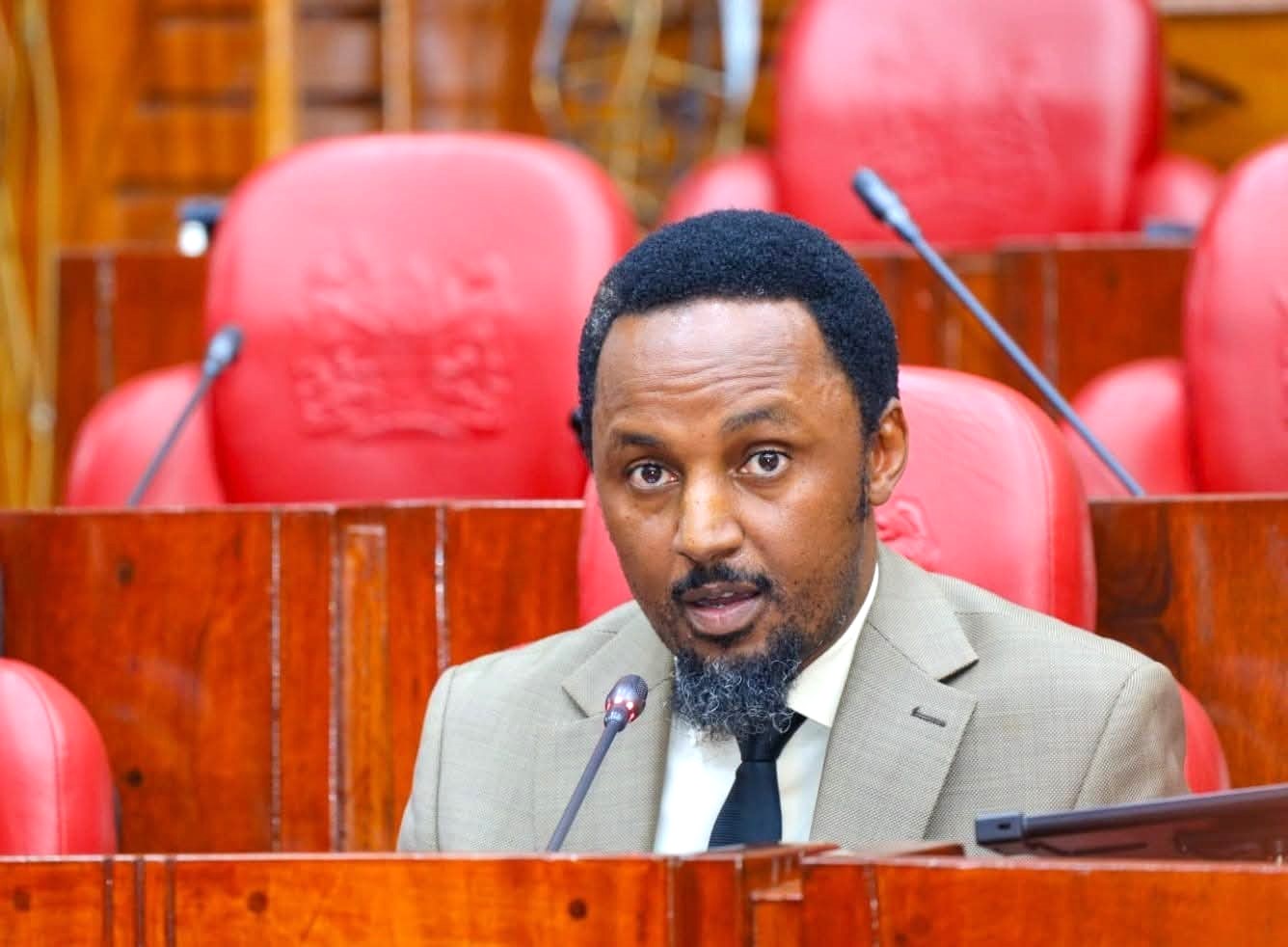
- Kiambu Senator Karungo wa Thang’wa has questioned whether proposed tertiary financing reforms adequately protect needy students.
- He wants Parliament to guarantee scholarships, clarify loan repayment terms and cap interest charged on student loans.
- The debate comes as lawmakers collect public views on the Tertiary Education, Placement and Funding Bill, 2026.
A new battle is brewing over how Kenya will pay for university and technical education, with concerns emerging that a proposed financing law could leave students from poor households shouldering the biggest debts.
The Tertiary Education, Placement and Funding Bill, 2026, is designed to overhaul the way students are placed and financed in universities and other tertiary institutions. The Bill proposes a new framework for financing students and trainees and would create a Tertiary Education Funding Authority to consolidate functions currently handled by bodies including HELB and the Universities Fund.
But Kiambu Senator Karungo wa Thang’wa has challenged Parliament to reconsider the proposed model, arguing that it risks replacing targeted scholarship support with a system dominated by repayable loans.
At the centre of the controversy is a deceptively simple question: when a poor student enters university, how much of the cost should become a debt?
Mr Thang’wa says the answer contained in the proposed law could fundamentally change the economics of higher education for an entire generation.
His intervention comes as Parliament conducts public hearings on the Bill, with students, parents and other stakeholders being invited to submit their views. The National Assembly Departmental Committee on Education began nationwide public participation on six education reform Bills on September 14.
The senator’s criticism is not directed at the proposed consolidation of higher education financing agencies itself. Rather, he is questioning the structure of the proposed funding, the protection offered to vulnerable students, repayment conditions and the possibility of financing the system through capital markets.
‘The poorer the child, the smaller the debt’
Mr Thang’wa has pointed to recommendations of the Presidential Working Party on Education Reform, chaired by Prof Raphael Munavu, which proposed a variable scholarship and loan model.
The Working Party recommended a sustainable university financing model combining grants or scholarships, loans and household contributions for students classified as vulnerable, extremely needy, needy and less needy.
Under the model cited by the senator, vulnerable students would receive the bulk of their funding through scholarships, with a smaller loan component. Extremely needy and needy students would similarly receive different combinations of scholarships, loans and family contributions.
The underlying principle was that students’ financial circumstances should determine how much debt they incur.
Mr Thang’wa argues that the proposed Bill does not provide the same level of statutory protection.
He says the word “scholarship” appears in the legislation, but that the Bill does not establish a dedicated scholarship fund, prescribe guaranteed scholarship proportions for different categories of students or provide a clearly defined source of money for such scholarships.
The distinction could be significant for families that have little capacity to contribute to university fees.
A wealthy household can finance a child’s education without borrowing. A poor household may have no comparable option.
Under a loan-heavy system, the senator argues, the student with the least financial support could ultimately leave university with the largest debt.
Questions over repayment and interest
Another flashpoint is loan repayment.
Mr Thang’wa has drawn attention to a provision allowing deductions of up to 25 per cent of a borrower’s salary.
The Bill provides that loan repayment deductions should not exceed 25 per cent of a loanee’s emoluments.
He emphasised that 25 per cent is a ceiling and not an automatic deduction for every graduate.
But he argues that even the possibility of such deductions raises questions about how much disposable income young graduates would retain after statutory deductions and ordinary living costs.
For a graduate earning Sh100,000 a month, the maximum deduction would amount to Sh25,000.
That would come on top of other statutory deductions and household expenses.
The senator also wants Parliament to set a clear legal ceiling on interest charged on student loans.
He argues that leaving the rate to be determined through subsequent administrative arrangements could expose borrowers to uncertainty over the final cost of their education.
During the ongoing public participation, stakeholders have also raised concerns about interest rates, with Education Committee Chair Julius Melly saying some participants have proposed removing interest altogether. He said the Bill currently provides for a four per cent interest rate.
The issue becomes more consequential where a student spends several years in an expensive professional programme.
Medicine offers perhaps the starkest illustration of the debate.
Mr Thang’wa used cost estimates attributed to the education reform working party to illustrate what a loan-only system could mean for a medical student.
He cited annual costs of approximately Sh360,000 for pre-clinical training and Sh720,000 for clinical training.
Using a hypothetical six-year programme, he estimated the total at about Sh3.2 million.
If the entire amount were borrowed, a repayment of Sh25,000 a month would take more than 10 years to clear the principal alone, before interest.
The senator stressed that the calculation is an illustration rather than a forecast of what every medical graduate would owe.
His wider argument is that expensive courses could produce significantly larger debts, potentially affecting course choices among students from low-income households.
That concern is particularly relevant to disciplines such as medicine, engineering and health sciences, which have been identified in education reform discussions as areas of national priority.
“The more expensive the dream, the bigger the debt.”
What happens to unemployed graduates?
The debate does not end at the university gate.
Mr Thang’wa is also questioning when repayment should begin for graduates who complete their studies but cannot immediately find employment.
He argues that the proposed framework needs to make clear whether repayment obligations are linked to completion of studies or to the borrower’s ability to earn an income.
Published explanations of the Bill indicate repayment would begin within a year after completion of studies, while employers would make deductions from borrowers in employment.
For a graduate without a job, the distinction could determine whether an education loan becomes a manageable obligation or an accumulating liability.
The senator wants Parliament to spell out protections for unemployed graduates and establish how deductions below the maximum 25 per cent would be calculated.
There is a second, broader financial question: how will the new system raise enough money to keep funding students?
The proposed framework provides for funds to come from sources including loan repayments and interest, while allowing the financing authority to borrow and mobilise capital.
Mr Thang’wa has drawn attention to statements by Government officials about capital market financing and securitisation.
He is careful to distinguish these statements from the actual wording of the Bill, noting that the legislation does not expressly state that student loan repayments will be securitised.
His concern is about what could happen if future repayments were used to raise financing.
He wants any such transactions subjected to greater transparency, including disclosure of financial models, feasibility studies, legal opinions and the identities of advisers, intermediaries and investors.
The issue goes beyond accounting.
If future student repayments are used to support borrowing, a key question becomes who carries the risk when graduates cannot repay.
Would it be investors, taxpayers or the students themselves?
That question is yet to become a central feature of public debate over the Bill.
Transition to new system raises concerns
The proposed transition from the current financing system to the new framework is another area of concern.
Mr Thang’wa says students entering university under the existing needs-based funding model need clear guarantees about what happens to their scholarships and loans once the new legislation takes effect.
The Ministry of Education has said first-time funding applications are currently being processed under the Student-Centred Funding Model, with transition to the proposed Universal Access and Funding Framework expected only after Parliament passes the Tertiary Education, Placement and Funding Bill, 2026.
The Bill contains provisions dealing with the transfer of assets, staff and liabilities from existing institutions, but the senator argues that students need equally explicit protection.
For first-year students already making decisions about university, the issue is immediate rather than theoretical.
They need to know whether the financial support offered when they entered higher education will remain available under the new regime.
The argument over the Bill is ultimately a debate about who should carry the cost of higher education.
Kenya has traditionally viewed university education as a pathway out of poverty, with graduates often becoming the economic support system for entire families.
But rising university costs, institutional financial pressures and limited public resources have intensified the search for a sustainable financing model.
The Government’s proposed framework seeks to address that challenge through a new structure for tertiary education placement and funding.
Critics such as Mr Thang’wa are asking whether sustainability can be achieved without shifting too much of the burden onto students.
The senator has called for the Bill to be withdrawn or substantially amended before passage.
He wants Parliament to resolve five issues: the guaranteed scholarship component for vulnerable students, the interest rate and its legal ceiling, the point at which repayment begins, how deductions are determined below the 25 per cent maximum, and whether student-loan repayments can be pledged or securitised.
READ ALSO: Residents of Kisii, Kericho demand clarity on JSS, comprehensive school model
For the millions of Kenyan families looking towards university as a route to social and economic mobility, the answers could determine not only how students enter higher education, but what they carry with them when they leave.
By Felix Wanderi
Get more stories from our website: Education News
To write to us or offer feedback, you can reach us at: editor@educationnews.co.ke
You can also follow our social media pages on Twitter: Education News KE and Facebook: Education News Newspaper for timely updates.
>> Click here to stay up-to-date with trending regional stories