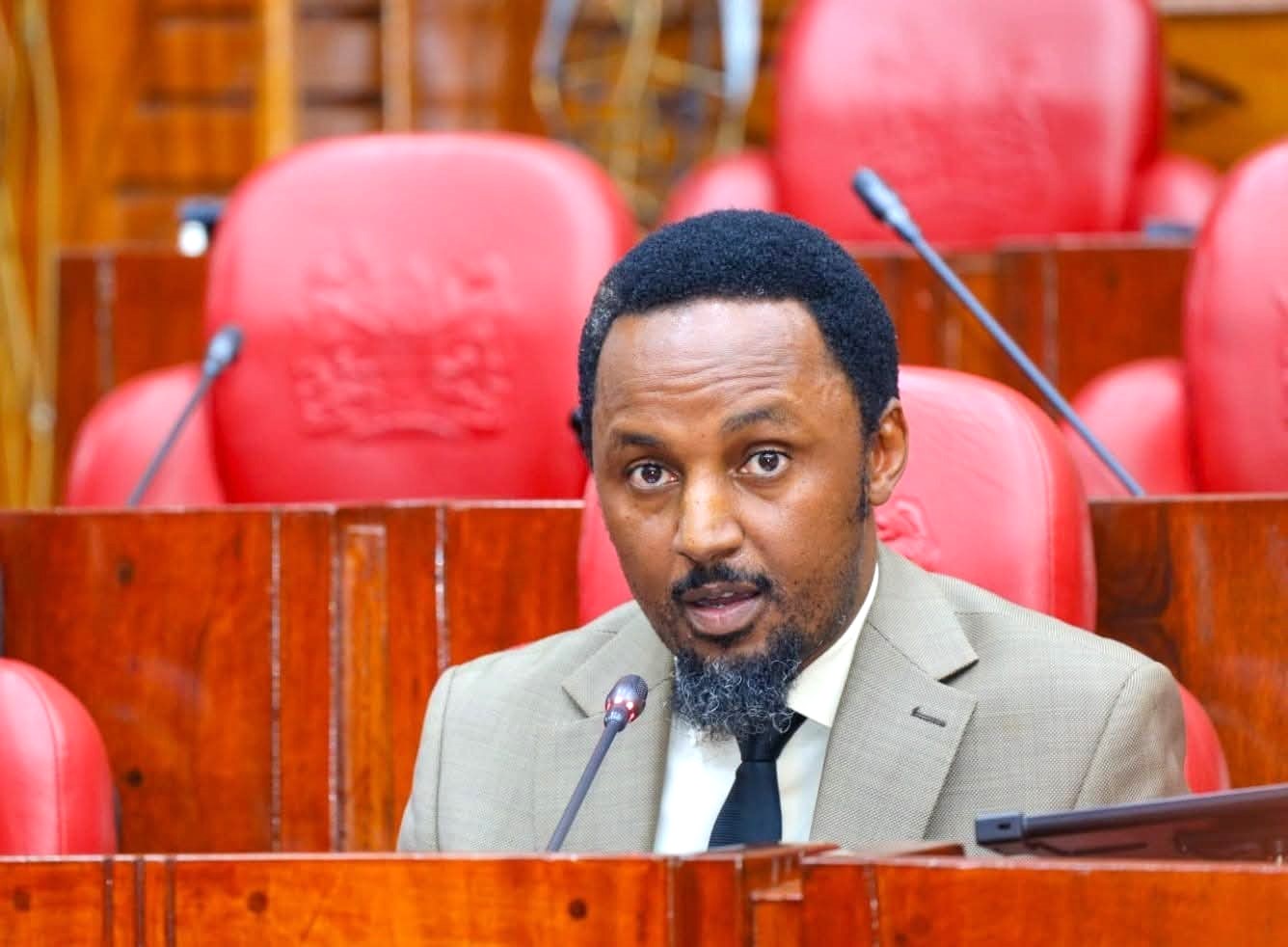
- Kennedy Buhere questions whether Kenya is using the term “comprehensive school” in its proper educational sense.
- He says the phrase traditionally refers to secondary schooling combining academic, general and vocational programmes.
- Buhere warns that terminology can shape future policy choices and limit flexibility in education planning.
As the National Assembly Departmental Committee on Education subjects the Basic Education Bill, 2026, to public participation across the country, the proposed law has given recognition to the comprehensive school system as part of Kenya’s basic education structure.
“There shall be a Board of Management appointed by the County Education Board for public comprehensive schools; public primary schools; public senior schools; public special schools; public adult and continuing education centres; and public multipurpose development training institute,” Section 38 of the Bill reads.
The preliminary part of the Basic Education Bill, 2026, defines a “comprehensive school” as an institution registered under the Act offering basic education where primary and junior schools are housed within a unified compound.
The legal recognition of the concept follows a recommendation by the Presidential Working Party on Education Reform (PWPER), which was appointed in 2022 to review Competency-Based Curriculum implementation and recommend wider education reforms.
The Working Party recommended that the Ministry of Education adopt a Comprehensive School system covering Pre-Primary to Grade 9, comprising Pre-Primary, Primary and Junior School managed as one institution.
The recommendation emerged amid concerns over the transition of Grade 6 learners to Grade 7 and the capacity of existing secondary schools to accommodate the new cohort alongside learners progressing under the 8-4-4 system.
“It appears more efficient to retain Grade 7 and Grade 8 in Primary Schools, where there is already some infrastructure for Standard 7 and 8, which can be improved to meet CBC standards, than going to construct new classes in selected Secondary School,” the PWPER report reads in part.
The concerns prompted stakeholders to recommend hosting Junior School in existing primary schools, a position the Working Party adopted.
The members of PWPER subsequently proposed that the integrated levels of primary and Junior School be referred to as comprehensive schools. Yours truly was present during this session.
Hence the recommendation that the Ministry of Education establish a comprehensive school system where all levels of learning from Pre-Primary to Grade 9 are managed as one institution headed by the Head of Institution.
The phrase “comprehensive school” is therefore relatively new terminology within Kenya’s current education structure.
In the Kenyan policy context, a comprehensive school is essentially an institution bringing together different levels of basic education, particularly primary and Junior School, under a common institutional framework. The Basic Education Bill, 2026, seeks to formalise that arrangement in law.
While a new institutional framework was necessary, I believe the designation “comprehensive school” for the consolidation of primary school and part of secondary education requires reconsideration.
This is why.
What does ‘comprehensive school’ traditionally mean?
In education policy, a comprehensive school acknowledges certain realities about learners and the curriculum that the system must address.
The first is that students differ considerably in ability and that the school system, particularly at the level after primary or elementary education, must find ways of responding to those differences.
The second is that post-primary school experience must address the learning needs of academically talented learners, who are proportionally fewer.
The third is that post-primary education must also provide programmes for learners who intend to enter work immediately after completing school.
The fourth, and by no means the least important, is that post-primary education must provide a general education for all.
Here, “all” means both learners oriented towards academics and preparation for college, and those likely to terminate formal schooling at high school and proceed into employment.
The term “comprehensive” therefore envisions a balanced curriculum at high-school level after primary or elementary education.
It combines academic and vocational education.
Semantically, therefore, comprehensive education brings together different strands of learning rather than referring merely to different school levels sharing an institution.
It is the opposite of highly specialised education that is purely academic on one hand or purely vocational on the other.
The concept became prominent in the United Kingdom and the United States during the 20th century.
One of the best-known American advocates of the comprehensive high school was former Harvard University President James Bryant Conant.
In The American High School Today, Conant identified three broad purposes of the comprehensive high school: general education for all future citizens, elective programmes for those entering employment after graduation and programmes preparing learners for subsequent college or university education.
Accordingly, Conant recommended that high schools—the equivalent of our secondary schools—offer strong mathematics, science and foreign-language programmes for academically oriented learners preparing for higher education.
He also urged schools to provide adequate specialised vocational programmes for learners planning to enter the workforce upon graduation.
His study followed work commissioned by the Carnegie Corporation of New York on American secondary education in the late 1950s.
Why terminology matters
Words are not idle objects. They assume a life of their own, shaping the way we see and reflect on things.
The words we use provide a window into what is in our minds and also influence how we understand what lies outside us.
They have the power to expand or limit our mental horizons.
An expanded horizon creates flexibility, creativity and imagination when confronting policy issues, problems and challenges. A limited horizon can produce rigidity in thinking.
Without doubt, the current working definition of the phrase “comprehensive school” departs from its older educational usage and might, in the long run, influence future policy choices.
If I may dare the devil, lawmakers might in their wisdom ask whether it is prudent to hold 16-year-olds within a basic curriculum system that remains largely academic in orientation, particularly learners who, for practical reasons, may not proceed beyond Junior School.
This raises a wider question about whether the education system should provide stronger recognised pathways into vocational training and employment for learners whose circumstances or interests take them in that direction.
Lessons from earlier education structures
The former 7-4-2-3 system—the system under which I received my education—provided two safety valves for students.
One was vocational centres, formerly village polytechnics. The training centres absorbed students who had completed Class Seven with the Certificate of Primary Education and those who joined Form One but later left school.
The second was the Kenya Junior Secondary Examination at Form Two.
Students who left at that stage could proceed into areas such as security services, teacher training, youth polytechnics or other forms of training and employment.
They left before reaching Form Four, having enhanced their cognitive skills while also gaining non-cognitive skills during their secondary education.
Dropping out of school before attaining age 18 for whatever reason is regrettable.
But leaving formal schooling before age 18 after rigorous general and vocational education, accompanied by meaningful certification at Grade 9 or 10, could provide a stronger foundation for employment, vocational training and life.
Staying in school longer can enhance critical thinking and problem-solving skills.
It can also strengthen non-cognitive and behavioural skills such as self-discipline, resilience, empathy, teamwork, communication and leadership.
The names we give policy actions are as important as the substance of the policies.
READ ALSO: Residents of Kisii, Kericho demand clarity on JSS, comprehensive school model
They can either expand or limit the flexibility we need to address present, emerging and future education challenges.
By Kennedy Buhere
Get more stories from our website: Education News
To write to us or offer feedback, you can reach us at: editor@educationnews.co.ke
You can also follow our social media pages on Twitter: Education News KE and Facebook: Education News Newspaper for timely updates.
>> Click here to stay up-to-date with trending regional stories