President William Ruto has directed the Ministry of Education to begin consultations aimed at formally integrating Duksi, Madrassa and the Programme for Pastoral Instruction into Kenya’s education system.
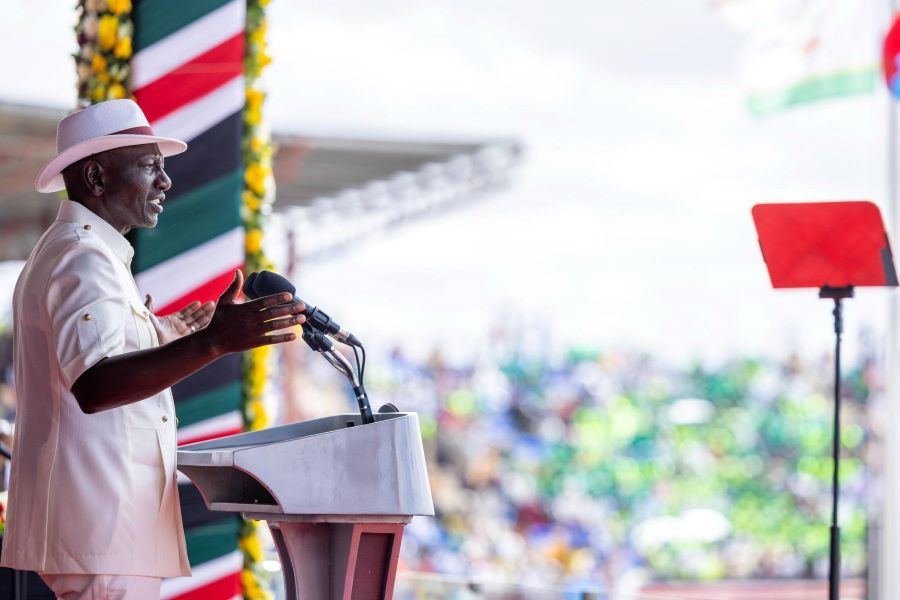
Speaking during the 63rd Madaraka Day celebrations held at Wajir Stadium on Monday, June 1, 2026, the President said the move is intended to ensure that children in Northern Kenya and other marginalized regions are not excluded from education opportunities because of the nature of their learning pathways.
The Head of State noted that despite significant investments in education, some children remain outside the formal education system because alternative forms of learning have not been adequately recognized within the country’s education framework.
“This challenge is particularly evident in the absence of a clear framework to recognise and integrate Duksi, Madrassa, and the Programme for Pastoral Instruction into the national education system,” President Ruto said.
He subsequently directed Education Cabinet Secretary Julius Ogamba to spearhead consultations with stakeholders and recommend appropriate reforms.
“I direct the Cabinet Secretary for Education to engage all relevant stakeholders and take the necessary measures under the Basic Education Act, to consult widely and recommend appropriate measures for the formal integration of the same,” the President stated.
According to the President, the reforms will create pathways that allow all children, regardless of background, to access learning opportunities and skills development.
“This will ensure that every child, regardless of background or circumstance, has a recognised pathway into learning, skills, and opportunity. Every child deserves a door into learning. It is our duty to open every door,” he said.
The directive is expected to spark national debate on how religious and community-based education systems can be harmonized with formal schooling without undermining their cultural and religious foundations.
Education stakeholders have for years argued that many learners in pastoral and marginalized communities acquire valuable knowledge and skills through alternative learning systems that are often excluded from mainstream education planning.
The proposal also aligns with growing efforts to improve educational inclusion in Arid and Semi-Arid Lands (ASALs), where school attendance and retention remain persistent challenges.
READ ALSO: How would teachers want their students to remember them?
The issue of integrating Madrassa and Duksi learning has featured prominently in education policy discussions over the years, particularly in Northern Kenya and coastal regions. Advocates have argued that recognition of such learning pathways could help bridge gaps in access and improve transition rates into formal education.
The announcement comes at a time when the government is implementing Competency-Based Education and Training (CBET), which emphasizes flexibility, inclusion, learner diversity and recognition of different talents and learning experiences.
By Joseph Mambili