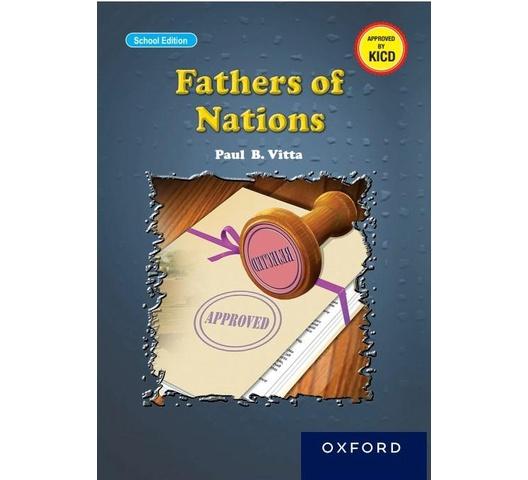
Fathers of Nations by Paul B. Vitta uses the character of Professor Kimani to examine the role and failures of Kenya’s educated elite in the years following independence. Kimani is introduced as a university lecturer and former classmate of Newborn and Lawino, whose reunion forms the backbone of the novel. He is articulate, well-read, and deeply knowledgeable about Kenya’s political history.
Through his explanations and reflections, the reader gains a clear understanding of how corruption, tribalism, and poor leadership took root and persisted. In this way, Kimani functions as the voice of reason and history in the story, providing context to the chaos that surrounds the characters.
Kimani’s character is marked by both promise and contradiction. He represents the ideal of the post-independence Kenyan intellectual: someone trained to think critically, understand the nation’s problems, and guide it forward. Yet Vitta does not allow him to remain a flawless figure. Although Kimani can diagnose Kenya’s ailments with remarkable precision, he remains largely passive.
His intellectualism often slides into detachment, as he limits himself to analysis and lamentation rather than action. This makes him a tragic figure. He possesses the tools to help build the nation but chooses the safety of commentary over the risk of involvement. In doing so, he embodies the dilemma faced by many educated Kenyans who understand what is wrong but feel either powerless or too comfortable to challenge it.
Within the novel, Kimani serves as more than just a participant in the plot. He acts as the conscience of the educated class and as a satirical mirror held up to Kenyan society. His debates with Newborn and Lawino force readers to confront the question of responsibility: if those who are informed and educated refuse to act, who will?
Through his passivity, Vitta exposes how easily knowledge can become ineffective when it is not matched with courage and action. Kimani’s presence in the story is intended to provoke discomfort, especially among readers who see themselves reflected in his position of privilege and understanding without a corresponding commitment to change.

The major lesson for Kenyans in Kimani’s character is that education and knowledge carry responsibility. Kenya does not suffer from a lack of educated people. Rather, it suffers from a shortage of educated citizens willing to translate their understanding into meaningful public action.
Kimani’s failure serves as a warning against intellectual complacency. It is easy to retreat into private life, criticise politics from a distance, and leave the country to be managed by those who are corrupt or incompetent. Yet nations are not built by those who merely understand their problems best. They are built by those who act on that understanding, even when doing so is inconvenient or risky.
For Kenya today, the lesson is direct. Teachers, lecturers, professionals, and graduates must view themselves as nation-builders rather than merely employees. Courage matters as much as credentials. Speaking out against injustice, voting with conscience, mentoring the younger generation, and holding leaders accountable are actions that shape the direction of the country. Discussing problems is necessary, but without action, such discussions become empty.
READ ALSO: Parallels between the Africa Forward Summit and heads of state summit in Fathers of Nations set book
Professor Kimani therefore teaches that the greatest tragedy is not ignorance, but informed inaction. The future of Kenya depends on what those who know choose to do with what they know. If the educated step out of their lecture halls and into the public square, the nation has a chance. If they remain silent, they become part of the decay they claim to understand so well.
By Enock Okong’o
You can also follow our social media pages on Twitter: Education News KE and Facebook: Education News Newspaper for timely updates.
>>> Click here to stay up-to-date with trending regional stories
>>> Click here to read more informed opinions on the country’s education landscape