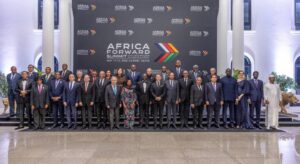
The ongoing summit has once again placed Africa at the centre of global political and economic conversations. Presidents, diplomats, investors, scholars, and development partners have converged in Nairobi to discuss Africa’s future under themes such as economic transformation, technology, green energy, artificial intelligence, trade, and governance.
To many observers, this summit symbolises hope, cooperation, and renewed partnerships between Africa and the rest of the world. However, to students and teachers of Literature, the summit strongly mirrors themes explored in Fathers of Nations by Paul B. Vitta.
The set book presents African leadership through satire, exposing hypocrisy, dictatorship, corruption, foreign influence, and the widening gap between leaders and ordinary citizens. Although the novel was written decades ago, its themes remain surprisingly relevant today. The Africa Forward Summit reflects many of the same realities that Vitta dramatizes in his novel.
One major parallel lies in the nature of leadership gatherings. In Fathers of Nations, African heads of state and political elites gather in Banjul, Gambia, in luxurious diplomatic engagements where they speak grandly about development and national progress. The leaders use polished language and sophisticated rhetoric to portray themselves as visionaries committed to improving their countries. Similarly, the Africa Forward Summit is filled with speeches about transforming Africa into a global economic powerhouse. Leaders speak passionately about youth empowerment, digital innovation, climate resilience, and industrialisation. Cameras flash, delegates applaud, and declarations are made with confidence and optimism.

Yet in both cases, one fundamental question emerges: how much of what is promised actually reaches the ordinary citizen? In Fathers of Nations, despite the endless meetings and declarations, common people continue suffering from poverty, poor governance, unemployment, and oppression. The political elite appear disconnected from the realities on the ground. This same criticism is often directed at modern international summits. While billions of dollars in investments may be announced, many Africans still struggle with high living costs, weak healthcare systems, unemployment, corruption, and poor infrastructure. The contrast between elite diplomacy and grassroots suffering remains painfully visible.
Another striking parallel concerns foreign influence in African affairs. In Vitta’s novel, African governments are heavily influenced by external powers and international interests. Leaders seek validation, aid, and support from foreign nations, often compromising the independence of their countries. This creates a subtle form of dependency that weakens genuine sovereignty. The Africa Forward Summit similarly revolves around partnerships between African countries and global powers such as France and the European Union. While such partnerships can bring investment and development opportunities, they also raise concerns about whether Africa is negotiating from a position of strength or dependency.
This mirrors the neo-colonial concerns raised in Fathers of Nations. The novel questions whether African nations are truly independent if their economies, policies, and development agendas are shaped externally. Today, many African citizens ask similar questions whenever foreign governments announce major infrastructure deals, loans, or strategic investments. Who benefits most from these agreements? Are African resources being protected? Is the continent developing sustainably or becoming economically dependent again under a different form of control? These concerns show how literature continues to reflect real political dynamics.
The summit also parallels the novel through the theme of political performance. In Fathers of Nations, leaders are skilled performers. They carefully manage their public image through speeches, ceremonies, media appearances, and diplomatic events. Behind the scenes, however, many are corrupt, authoritarian, and self-serving. They preach democracy while suppressing dissent. They speak about unity while practising tribalism and exclusion.
Modern summits sometimes attract similar criticism. Political leaders often use international conferences to boost their image both locally and globally. High-profile events become opportunities for public relations and political branding. Leaders appear statesmanlike before cameras, sign agreements, and make ambitious promises. Yet citizens frequently judge them not by speeches but by service delivery, accountability, and transparency back home. The spectacle of diplomacy may therefore conceal unresolved domestic problems, much like in Vitta’s novel.
Additionally, Fathers of Nations explores the obsession with power and status among African leaders. Political office becomes associated with prestige, authority, and personal glorification. Leaders compete for influence and control, often placing personal interests above national priorities. This power dynamic is also visible in continental and global summits where nations seek regional dominance, diplomatic influence, and strategic partnerships. International forums are not merely platforms for cooperation; they are also arenas for geopolitical competition and image projection.

Another important parallel is the tension between hope and hypocrisy. Both the novel and the summit embody a contradiction. On one hand, there is genuine hope for African progress. Discussions about technology, trade, education, climate action, and innovation are necessary and important. Africa indeed requires continental cooperation and global partnerships to accelerate development. On the other hand, there is widespread scepticism because previous promises have often failed to produce meaningful change for ordinary citizens.
This tension is exactly what Fathers of Nations dramatises. The leaders talk endlessly about patriotism and development while engaging in corruption and abuse of power. The novel therefore, forces readers to question whether African leadership genuinely serves the people or merely sustains political elites.
The Africa Forward Summit also demonstrates how relevant literature remains in understanding society. Set books are not merely academic exercises for examinations. They are mirrors of political, social, and economic realities. Through satire and characterisation, Paul B. Vitta exposes patterns that continue to shape modern Africa decades later. Students studying Fathers of Nations can therefore easily connect its themes to current affairs such as the Africa Forward Summit.
READ ALSO: Africa Universities Summit 2026 ends with push for skills, innovation
Ultimately, the summit represents both promise and caution. It offers opportunities for investment, diplomacy, and continental dialogue. However, it also revives long-standing questions about leadership, accountability, dependency, and the true beneficiaries of development. These are precisely the questions raised in Fathers of Nations. The similarities between fiction and reality remind us that Africa’s greatest challenge is not the absence of conferences or declarations, but the need for sincere, accountable, and people-centred leadership capable of translating promises into meaningful transformation for ordinary citizens.
By Ashford Kimani
Ashford teaches English and Literature in Gatundu North Sub-county and serves as Dean of Studies.
You can also follow our social media pages on Twitter: Education News KE and Facebook: Education News Newspaper for timely updates.
>>> Click here to stay up-to-date with trending regional stories
>>> Click here to read more informed opinions on the country’s education landscape
>>> Click here to stay ahead with the latest national news.