-
The write contends that Kiswahili language is not merely a cultural marker, but a geopolitical and economic instrument capable of advancing peace, deepening regional integration, and expanding Africa’s global bargaining power.
-
He analyses how the former Mozambique President Joaquim Chissano approached Kiswahili as a functional bridge across political and geographic divides.
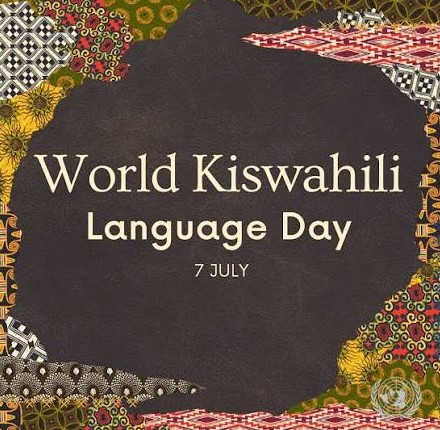
As the world marks World Kiswahili Day on July 7, 2026 under the theme, “Kiswahili for Peace, Solidarity and Global Economic Diplomacy,” the occasion extends well beyond ceremonial celebration of one of Africa’s most widely spoken languages.
It underscores a more strategic reality: language is not merely a cultural marker, but a geopolitical and economic instrument capable of advancing peace, deepening regional integration, and expanding Africa’s global bargaining power.
Yet beneath the official commemorations, speeches, and cultural showcases lies a more uncomfortable question: are African governments doing enough to convert Kiswahili from a symbol of unity into a fully operational tool of diplomacy, trade, education, and continental development?
If there is a statesman whose legacy offers a compelling answer, it is former Mozambican President Joaquim Chissano.
Unlike many of his contemporaries who treated language policy as a peripheral cultural concern, Chissano approached Kiswahili as a functional bridge across political and geographic divides.
While Portuguese remained Mozambique’s official language, he consistently elevated Kiswahili as a practical medium for strengthening regional cooperation in Eastern and Southern Africa.
ALSO READ:
Why Kenya must stop cutting trees to fight climate change and food insecurity
His approach reflected a distinctly Pan-African conviction: that integration is not achieved solely through infrastructure corridors and trade protocols, but also through a shared linguistic infrastructure that enables Africans to negotiate, collaborate, and imagine collectively.
This year’s theme is therefore not merely symbolic—it is strategically urgent. Peace is fragile where communication is fractured. Solidarity remains rhetorical where mutual comprehension is limited. And economic diplomacy is constrained when traders, policymakers, and investors operate within linguistic silos.
Kiswahili today stands as one of the continent’s most remarkable linguistic success stories. It is an official working language of the African Union and is increasingly embedded in academic institutions across Africa and beyond.
In 2025, UNESCO elevated Kiswahili to the status of the seventh official language of its General Conference—the first African-origin language to attain such recognition, marking a milestone in global linguistic diplomacy.
Yet despite these gains, Africa’s policy commitment has often lagged behind its rhetorical enthusiasm.
Many governments continue to mark World Kiswahili Day with visible celebration, while underinvesting in the structural foundations required for its expansion-teacher training, curriculum reform, translation capacity, linguistic research, and digital infrastructure.
In numerous public institutions, colonial languages remain the default medium of administration, even in contexts where Kiswahili would ensure broader citizen participation and comprehension.
ALSO READ:
This disconnect carries real developmental costs. It weakens the very integration agenda African leaders publicly endorse.
As the African Continental Free Trade Area gathers momentum, language will increasingly determine the efficiency of cross-border commerce, the inclusivity of markets, and the speed of innovation diffusion.
Kiswahili already functions as a living language of trade across vast parts of East, Central, and Southern Africa. With sustained and deliberate investment, it could evolve into the linguistic architecture of Africa’s single market.
Chissano understood this trajectory long before it entered mainstream policy discourse. His advocacy for Kiswahili was not an exercise in cultural preservation, but a calculated investment in regional cohesion and economic competitiveness.
ALSO READ:
Bomet nursing student appeals for help to sit final qualifying exam
The digital era has only intensified the stakes. Artificial intelligence, e-commerce, digital education, and content economies are increasingly shaped by language data and local-language ecosystems.
Nations that invest in Kiswahili today are not only preserving cultural heritage—they are positioning themselves within the emerging knowledge economy, while ensuring that linguistic exclusion does not become a new form of inequality.
As Africa observes World Kiswahili Day, the moment calls for more than ceremonial affirmation. It demands policy coherence: expanded Kiswahili education systems, strengthened language research institutions, robust translation services within regional bodies, support for African-language publishing, and targeted investment in Kiswahili-based digital innovation.
The 2026 theme—”Kiswahili for Peace, Solidarity and Global Economic Diplomacy”—therefore reads less as a slogan and more as a policy directive. Joaquim Chissano’s legacy offers a grounded blueprint for translating that directive into institutional reality.
Africa has already identified its common linguistic thread. The unresolved question is whether its leadership is prepared to weave that thread into the fabric of its political, economic, and digital future.
By Yabesh Onwonga
Language and History Analyst
You can also follow our social media pages on Twitter: Education News KE and Facebook: Education News Newspaper for timely updates.
>>> Click here to stay up-to-date with trending regional stories
>>> Click here to read more informed opinions on the country’s education landscape