- The Teachers Service Commission has confirmed that teachers serving in its 44 gazetted hardship areas will continue receiving hardship allowances.
- The clarification follows concerns over a possible review of hardship area classifications across the public service.
- Education stakeholders say the decision provides stability as the Government considers a harmonised national framework.
Thousands of teachers serving in some of Kenya’s most remote and underserved regions have received reassurance after the Teachers Service Commission (TSC) confirmed that it will continue using its existing list of 44 gazetted hardship areas for the payment of hardship allowances.
The clarification follows weeks of uncertainty after reports emerged that the Government was reviewing hardship area classifications across the public service.
Many teachers had feared that the review could lead to some regions losing their hardship status, and with it, a critical allowance that compensates educators working in difficult conditions.
No changes to current policy
Although discussions on harmonising hardship classifications across government institutions are ongoing, TSC has confirmed that no changes have been made to its current policy.
Teachers serving in the commission’s 44 gazetted hardship areas will therefore continue receiving hardship allowances until any future policy changes are officially approved and communicated.
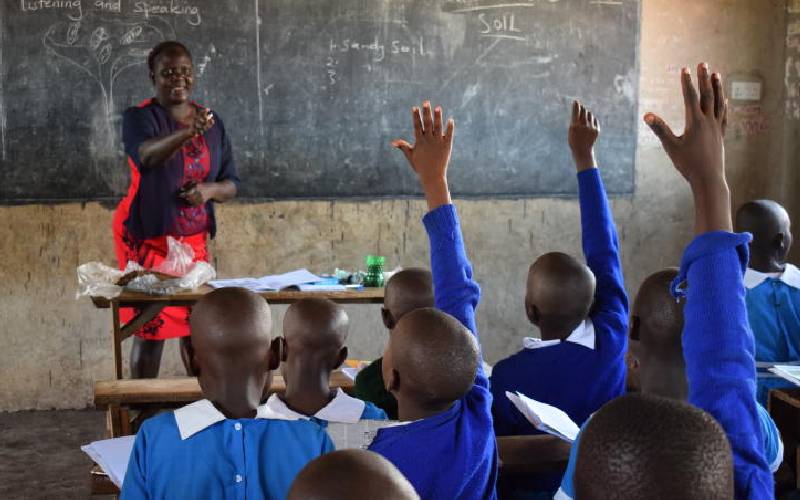
The clarification provides certainty to thousands of teachers whose livelihoods depend partly on the allowance while serving in remote, insecure and poorly serviced areas.
For many years, hardship allowances have served as one of the Government’s key incentives for attracting and retaining teachers in areas characterised by insecurity, harsh climatic conditions, poor road networks, inadequate housing, unreliable electricity, water shortages and limited access to healthcare.
Education experts say the allowance remains essential in supporting teachers working under challenging circumstances.
Calls for a harmonised framework
The ongoing debate has also highlighted inconsistencies in hardship classifications across public institutions.
While TSC currently recognises 44 hardship areas, the Judicial Service Commission (JSC) and the Public Service Commission (PSC) apply different classifications under their respective mandates.
The differing criteria have resulted in public servants working in the same geographical areas receiving different hardship benefits depending on their employer.
Labour experts and education stakeholders have called for a transparent, evidence-based national framework that considers factors such as security, accessibility, infrastructure, healthcare, communication networks, climate and the cost of living.
Teacher unions have consistently maintained that any review should involve broad stakeholder consultation and should not remove hardship status from deserving areas before underlying challenges are addressed.
Protecting educational access
Education specialists warn that reducing hardship incentives prematurely could worsen teacher shortages in arid, semi-arid and geographically isolated regions.
They argue that hardship allowances remain one of the few incentives encouraging teachers to accept and remain in difficult postings.
Stakeholders further caution that any reduction in incentives could increase transfer requests, deepen staffing shortages and ultimately affect learners in already disadvantaged communities.
For now, TSC’s clarification has provided much-needed stability, allowing teachers serving in the commission’s 44 gazetted hardship areas to continue receiving their hardship allowances while broader policy discussions continue.
READ ALSO: MoE directs all public schools to submit electrification status
Education experts say the ultimate challenge will be developing a fair, transparent and nationally consistent hardship classification framework that balances fiscal sustainability with equitable support for public servants working in Kenya’s most challenging environments.
By Hillry Muhalya
You can also follow our social media pages on Twitter: Education News KE and Facebook: Education News Newspaper for timely updates.
>>> Click here to stay up-to-date with trending regional stories
>>> Click here to read more informed opinions on the country’s education landscape