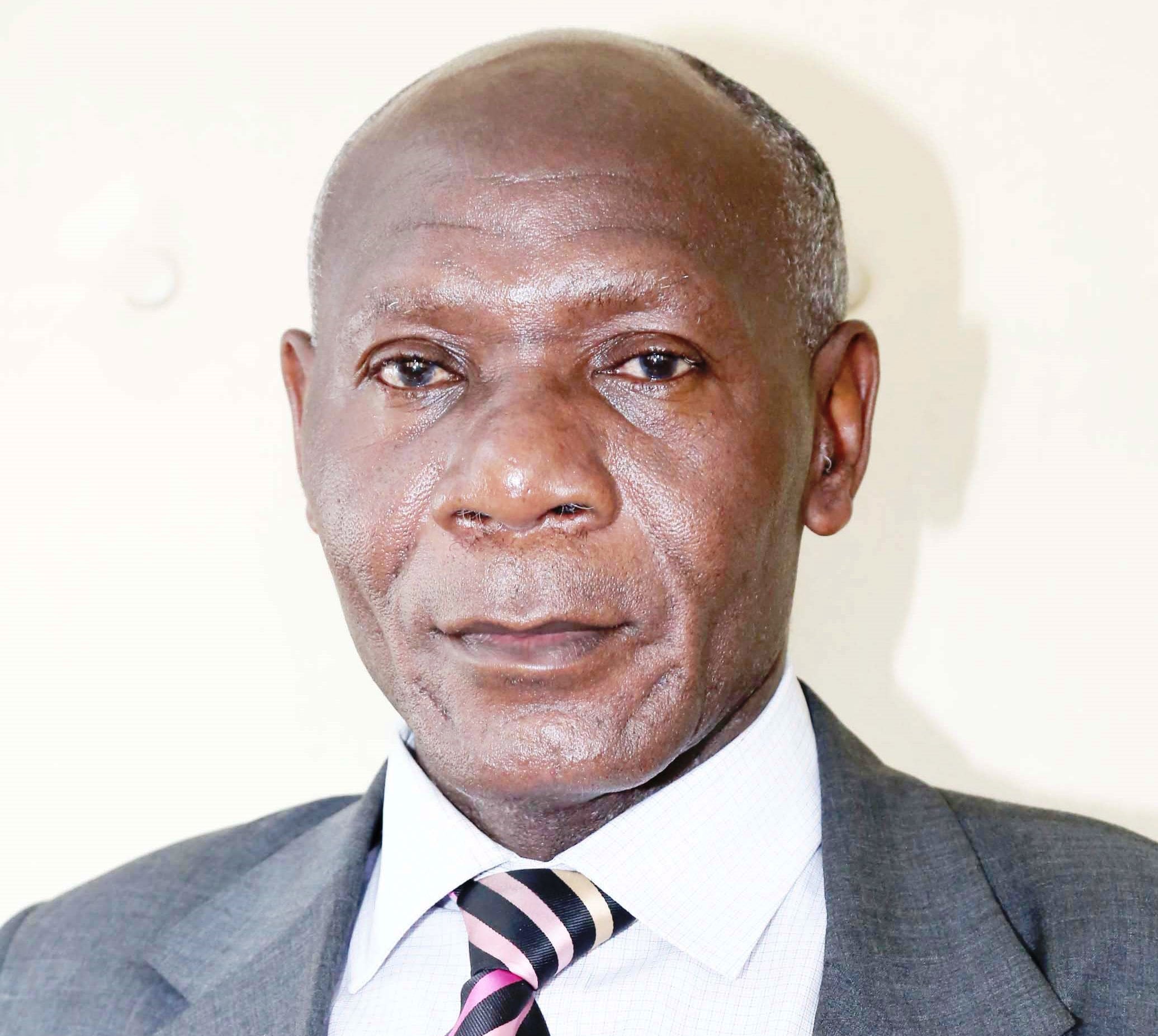
- Kennedy Buhere argues that restoring County Commissioners to chair County Education Boards strengthens coordination.
- He says the boards require adequate staffing, financing and institutional support to discharge their mandates.
- Buhere proposes an independent national entity to coordinate reports from all 47 County Education Boards.
The Basic Education Bill, 2026 has restored the County Commissioner, formerly District Commissioner, to the position of Chairperson of the County Education Board (CEB)—the successor to the District Education Board (DEB) under the defunct Education Act, Cap 211.
This is welcome. The Basic Education Act, 2013, which is set to be repealed, had virtually excluded National Government Administrative Officers (NGAO) from the management of affairs concerning education in the counties.
This was odd. The functions the law had vested in the County Education Boards required the coordination of the County Commissioner to realise them. The County Education Board required working with other departments of government to implement the policies, regulations and rules governing basic education. The County Commissioner is the focal point of the National Government in the field. His exclusion from the CEB was regrettable.
County Directors of Education and their officers at the sub-county levels regularly consult County Commissioners on matters touching on the safety and health of learners.
The reinstatement of the County Commissioner at the centre of County Education Boards will help address some of the persistent problems that have plagued children’s access to equitable quality education across the country.
Section 30(2) of the Basic Education Bill says that the County Education Board shall be an agent of the National Government. From one perspective, the County Education Board is the mind, eyes, ears and hands of the National Government. It is only natural that the County Commissioner, the coordinator of National Government operations in the county, steers it.
Under the proposed law, as with the Basic Education Act, 2013, County Education Boards have heavy responsibilities.
Every County Education Board will be expected to submit annual reports to the Cabinet Secretary. The reports will ideally address the state of education in each county. The reports might address such things as the excellence of education in the respective counties, factors that either facilitated or impeded the realisation of not just its excellence, but also access in terms of gender and other variables.
The reports will be a minefield of information and insights that have the potential to guide the Cabinet Secretary in decision-making. Barring reports on emergencies, the annual reports will be bulky. They will predictably address two facets of education reform: structural and curriculum aspects of education reform.
The structural aspects might address things like school finances from the National Treasury and from households and for what purposes. Other structural aspects of education to be addressed will be the adequacy or otherwise of necessary infrastructure for schooling: classrooms, desks, ablution blocks, laboratories, libraries and office space for teachers.
The reports won’t be complete without information about the shortage or availability of teachers and their motivation, management structures responsible for County Education Officials to administer education, and the adequacy or otherwise of inspection and supervision of schools in the context of access, equity and inclusivity.
The Boards will also, unavoidably, address curriculum aspects of the management of education. Arising from the functions the law has given them, the Boards must report on the state of beginning reading instruction at the lowest levels of primary education.
The reports must state whether learners are attaining the optimal reading proficiency levels required at every grade. The reports are likely to address how well numeracy skills are being imparted or developed in learners at the earliest levels of learning.
Above all, the reports will also address the acquisition by learners of the basic knowledge the curriculum has prescribed for them to know—as the building block for the skills, attitudes, values and reasoning that define an education.
Suffice it to say that the functions and responsibilities that the Basic Education Bill envisions for County Education Boards are extraordinary. They strike at the heart of not just education excellence, but education excellence for all children regardless of whether they are in public or private schools, rural or urban schools, or from low- or high-potential areas in this country.
There are two implications from this deduction.
Boards require adequate resources and personnel
The first is that the National Government must empower the County Education Boards with money and personnel at the secretariat level to enable the Boards to meet their mandates.
County Education Offices and their sub-county counterparts suffer from enormous staff shortages. District Education Offices in the early 1990s were sufficiently staffed. Not so today—thanks to the freeze in new recruitment of staff by the Public Service Commission.
The Bill, as with the Basic Education Act, 2013 slated to be repealed, designates the County Director of Education as the Secretary to the County Education Board. The work the basic education law has carved out for the Board is onerous.
The County Director of Education (CDE) needs additional staff. They work with skeleton staff. This has hampered delivery of education services to schools and the public.
The specialised committees the Bill envisages on planning, finance, audit and human resources, registration and management, curriculum, quality assurance and assessment, and discipline and dispute resolution will require knowledge, tact, thinking and writing.
The committees and the Board will look at the mandate in a flexible and not restricted manner. The law allows the Board to secure experts to help it study the contours of the policy and operational issues before it.
Implied in the mandate is the power to raise questions regarding the structural and curricular aspects of education—with a view to addressing, as best they can, the legitimate expectations of learners, parents, guardians, educators and policymakers.
Therefore, the 47 County Boards of Education will not submit briefs to the Cabinet Secretary.
The spirit of the basic education law, regulations and international conventions on education and the child will constrain the Boards to be impartial brokers for education decision-making.
The Boards will, perforce, look at the ultimate essence of basic education in the context of the constraints they identified and, accordingly, make policy proposals for consideration by the Cabinet Secretary to address identified barriers to children’s access to inclusive quality education across the county.
Conversely, the Boards may make appropriate policy proposals to take advantage of the available opportunities to nurture the potential of all school-going children to the best possible extent.
Case for an independent national coordinating entity
The second implication of the onerous functions of County Education Boards is that the 47 Boards require an independent entity at the national level with which they can deal.
The independent entity will work as a liaison office coordinating the activities of the Boards and, crucially, receive the reports the Boards prepare for ultimate consumption by the Cabinet Secretary.
The independent entity will receive and consolidate the reports for submission to the Cabinet Secretary.
The suitability of such an office is based on two education laws that have shaped Kenya’s education system.
The Basic Education Act, 2013, set to be repealed, provides for the National Education Board. Section 5(2) designates the functions of the National Education Board as “to advise the Cabinet Secretary, the department of education and related departments on policy matters in respect to various aspects of education.”
Former Cabinet Secretary for Education Prof Jacob Kaimenyi appointed members of the Board, but a new Board wasn’t appointed when the tenure of the first Board lapsed. The government shouldn’t have killed the Board.
As long as it retains the County Education Boards with their current functions, it necessarily must retain the National Education Board or an entity outside the management structures of its line Ministry, dedicated to the operations of County Education Boards.
The defunct Education Act, Cap 211—the law that shaped the education of this country from 1968 to its repeal in 2013—provided for an independent entity.
Section 4(1) of the Education Act, Cap 211 read: “The Minister may, by order, establish an advisory council to advise him on any matter concerning education in Kenya or in some part of Kenya and may establish different councils for different areas for different aspects of education.”
Former Quality Assurance and Standards Officer, now retired, Mr Majani Baridi, told me that past Ministers of Education never established the office. It means successive Ministers of Education solely relied on Permanent Secretaries and technocrats in managing education.
I think they managed because the environment for delivering education was fairly simple. Basic education institutions, the population of learners and the dynamism were not as complex as they are today.
The educational landscape is complex. Management structures we have today have enough on their plates to handle. They may not give their best time, thought and wisdom to consolidate reports from the 47 County Education Boards.
An independent office with sufficient leisure—without the distractions from day-to-day operations and problems—will give quality briefs to the Cabinet Secretary for action.
READ ALSO: Laikipia University retools lecturers ahead of 2029 CBE transition
What the Cabinet Secretary for Education needs to receive is not just a report, but a report with pieces of advice for deliberation by his Principal Secretary and technocrats under him—for possible preparation of a Cabinet Memo for consideration by the Cabinet.
By Kennedy Buhere
Communication Specialist
Email: buhere2003@gmail.com
Get more stories from our website: Education News
To write to us or offer feedback, you can reach us at: editor@educationnews.co.ke
You can also follow our social media pages on Twitter: Education News KE and Facebook: Education News Newspaper for timely updates.
>> Click here to stay up-to-date with trending regional stories