- Hillary Muhalya argues that rural teachers are central to closing Africa’s education inequality gap.
- He maintains that recognition through initiatives such as the Rural Teacher Awards should be matched with better housing, resources, professional development and career incentives.
- Hillary says the continent’s education reforms will ultimately be judged by whether quality teaching reaches learners in the most remote and underserved communities.
They teach where roads disappear, resources run out and connectivity is a luxury. Now, an African Union initiative is forcing attention onto the educators carrying the continent’s most difficult classrooms.
Africa has celebrated presidents, entrepreneurs, scientists, athletes and technology innovators.
But some of the continent’s most consequential change-makers remain largely invisible.
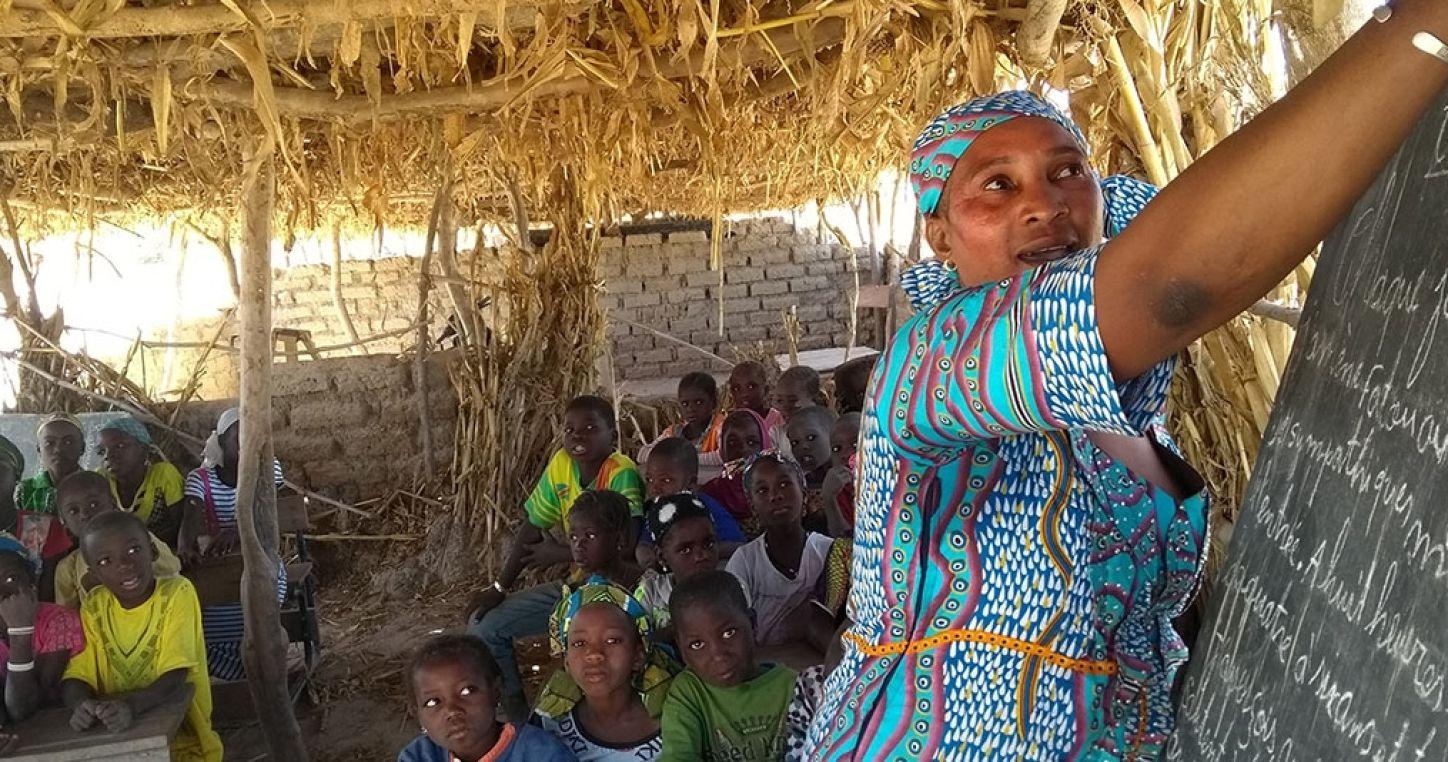
They are the teachers reporting to schools far from capital cities and major towns.
They work in remote villages, isolated settlements, pastoralist communities and underserved neighbourhoods where the distance between a school and the nearest essential service can be measured in kilometres.
Their classrooms may lack adequate learning materials.
Their schools may struggle with infrastructure.
Internet connectivity may be unreliable.
Housing may be difficult to secure.
Transport can be a daily challenge.
And vacancies can remain unfilled because qualified teachers are understandably reluctant to accept postings where basic services are limited.
Yet the bell rings.
The learners arrive.
And the teacher stands before them.
That quiet act of showing up is at the heart of a growing conversation about educational inequality across Africa.
The continent’s education inequality has an address
Africa’s education challenge is often discussed in terms of funding, infrastructure, enrolment and examination results.
But there is another factor that receives considerably less attention:
geography.
Where a child is born can influence the quality of education available to them.
Urban schools tend to benefit from better infrastructure, easier access to professional services, technology and larger pools of qualified teachers.
Remote schools face a very different reality.
A school may have classrooms but lack enough teachers.
It may have teachers but inadequate learning materials.
It may have both but struggle with connectivity and infrastructure.
The result is an education divide that can deepen existing social and economic inequalities.
The children who most need strong educational support can end up attending schools where teachers are being asked to accomplish the most with the least.
When the teacher becomes more than a teacher
This is where rural educators become extraordinary.
In remote communities, teachers often occupy a unique position of trust.
They know the learners.
They interact with parents.
They understand community challenges.
And they frequently become the first line of intervention when a child begins missing school or facing difficulties at home.
The teacher can become a mentor.
A counsellor.
A community mobiliser.
A child-welfare advocate.
Sometimes, simply a trusted adult who tells a young person that their circumstances do not have to determine their future.
For a learner growing up in a disadvantaged community, that message can be transformative.
The African Union, working with Humana People to People, has sought to elevate this often-overlooked contribution through the Rural Teacher Awards.
The initiative was introduced during the Pan-African Conference on Teacher Education and Development and is intended to recognise educators serving in rural and hard-to-reach areas.
Its significance goes beyond honouring individual educators.
It recognises that teachers serving in difficult communities are operating on the front lines of Africa’s battle for educational equity.
The awards celebrate commitment, innovation and resilience among educators who continue to serve learners despite difficult working conditions.
That recognition matters.
But it also raises a bigger question.
Will Africa simply celebrate rural teachers — or finally invest in the conditions that make their work possible?
Applause cannot replace policy
An award can recognise a teacher.
It cannot build a classroom.
It cannot provide a house.
It cannot guarantee internet connectivity.
It cannot solve insecurity.
And it cannot permanently fill a teacher shortage.
Those responsibilities belong to governments and education authorities.
If African countries are serious about closing the education gap between urban and rural communities, teacher policy must become a central part of the solution.
Rural educators need decent working environments.
They need access to continuous professional development.
They need appropriate housing and security.
They need technology and learning resources.
And where conditions are particularly difficult, governments should consider meaningful incentives for teachers willing to serve there.
The objective should not merely be to send teachers to remote areas.
It should be to retain good teachers there.
One of the most important changes Africa can make is cultural.
Teaching in a remote community should not be viewed simply as a hardship posting or a temporary stop before an educator moves to a better-served school.
It should be recognised as valuable professional experience.
Rural teachers develop skills that cannot easily be acquired in textbooks.
They learn to innovate when resources are limited.
They adapt lessons to different circumstances.
They build relationships with communities.
They manage challenges that would overwhelm less experienced educators.
Their work should therefore count in professional development and career progression.
The teacher who succeeds in the hardest environment should not be forgotten when opportunities for recognition and advancement arise.
Africa is rightly investing in digital learning, artificial intelligence and education technology.
But there is a danger in assuming that technology alone can close the education gap.
A smart device cannot substitute for a committed teacher.
A digital platform cannot persuade a struggling parent to keep a child in school.
Artificial intelligence cannot replace the human encouragement given by an educator who knows a learner’s circumstances.
Technology can strengthen education.
But the teacher remains the human engine of the system.
That is particularly true in communities where social and economic challenges are inseparable from learning outcomes.
The real test of educational equity
The ultimate measure of Africa’s education reforms will not be how impressive schools look in major cities.
It will be what happens in the places that receive the least attention.
Can a child in a remote village access a qualified teacher?
Can that teacher remain in the community long enough to build meaningful relationships with learners?
Does the school have the resources needed for effective teaching?
Can teachers access professional development?
Do they have safe and decent living conditions?
And can a learner’s geographical location cease to determine the quality of education they receive?
Those are the questions that must sit at the centre of the continent’s education debate.
The Rural Teacher Awards offer Africa an opportunity to begin a different conversation.
Instead of asking only which teachers deserve awards, policymakers should ask what their stories reveal about the education system.
If a teacher has achieved remarkable results despite inadequate resources, what could that educator accomplish with proper support?
If a rural school is succeeding despite severe disadvantages, what lessons can be transferred elsewhere?
If teachers are willing to serve difficult communities, what policies can encourage thousands more to do the same?
Recognition should become the beginning of action.
There are teachers across the continent whose names will never appear in national headlines.
They will not necessarily receive public recognition.
Their schools may never become showcases for education reform.
Yet they continue to shape lives.
Every learner who remains in school because a teacher refused to give up is a victory.
Every child who discovers their potential because an educator believed in them is a victory.
Every family persuaded to prioritise education is a victory.
And every rural classroom where learning continues despite overwhelming challenges represents another investment in Africa’s future.
The African Union’s recognition sends an important message.
The teacher at the end of the road matters.
The teacher in the remote village matters.
The teacher working with limited resources matters.
And the child sitting in that classroom matters just as much as the child in Africa’s most privileged school.
Africa cannot achieve genuine educational equality by concentrating investment where services are already strongest.
The real test will be whether the continent can take quality education to the hardest places — and ensure that the teachers carrying that mission are not forgotten.
READ ALSO: Busia County trains VTC managers, instructors to boost youth skills development
The educators furthest from the spotlight may be the ones standing closest to Africa’s future.
By Hillary Muhalya
Get more stories from our website: Education News
To write to us or offer feedback, you can reach us at: editor@educationnews.co.ke
You can also follow our social media pages on Twitter: Education News KE and Facebook: Education News Newspaper for timely updates.
>> Click here to stay up-to-date with trending regional stories