- Hillary Muhalya examines Prof Wilkister Moturi’s appointment as Director of Linkages and Collaborations at Egerton University.
- He argues that her three-year tenure could strengthen international partnerships, research collaboration, student mobility and resource mobilisation.
- Hillary maintains that the real test will be whether institutional agreements translate into tangible opportunities for students, staff and researchers.
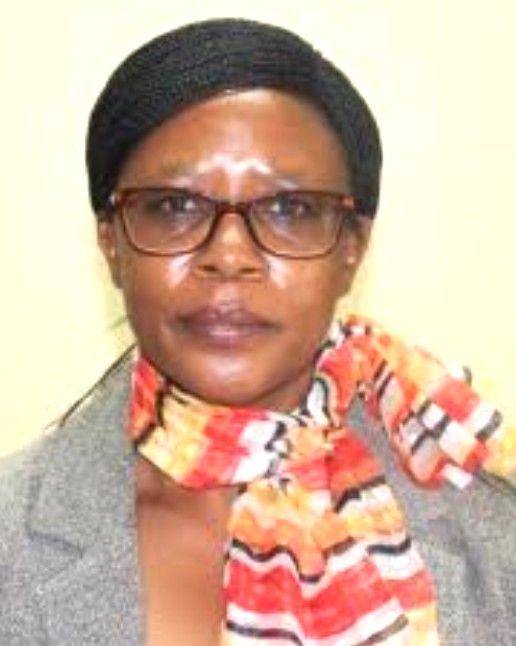
Egerton University has placed a seasoned academic and administrator at the centre of its global engagement agenda with the appointment of Prof Wilkister Moturi as the new Director of the Directorate of Linkages and Collaborations.
Prof Moturi takes up the three-year appointment at a critical moment for higher education, when universities are increasingly being judged not only by the number of students they enrol or programmes they offer, but also by the strength of their research networks, international partnerships, innovation ecosystems and ability to mobilise resources.
She succeeds Prof Daniel O. Auka, who is currently away on leave. Egerton University confirmed the appointment on September 3, describing it as a transition in its strategic partnership and international engagement agenda.
Her appointment gives Egerton an opportunity to strengthen an area that has become increasingly important to the competitiveness and sustainability of universities: turning institutional relationships into practical opportunities for students, academic staff and researchers.
The Directorate at the heart of Egerton’s global ambitions
The Directorate of Linkages and Collaborations is one of the university’s important gateways to the outside world.
Its mandate includes developing and maintaining strategic partnerships and Memoranda of Understanding with reputable universities, research institutions, organisations and other partners.
Through these relationships, the Directorate facilitates staff and student exchange programmes, academic mobility, collaborative research and resource mobilisation.
It also coordinates services for international students and scholars, helping create an environment in which Egerton can attract and retain international academic partnerships. These functions are confirmed by the university’s official announcement of Prof Moturi’s appointment.
Increasingly, however, the role of such directorates extends beyond conventional university-to-university relationships.
Egerton is also seeking stronger engagement with industry and the private sector to support innovation, research commercialisation and sustainable funding opportunities.
This makes the Directorate a potentially powerful engine for institutional transformation.
A successful partnership is no longer simply about signing an agreement or hosting a delegation. Its value increasingly lies in what happens after the signatures: joint research, student exchanges, new technologies, funding opportunities, publications, innovation and knowledge transfer.
That is where Prof Moturi’s experience could become particularly significant.
Experience meets opportunity
Prof Moturi brings to the position experience in institutional planning, partnerships and international engagement.
She is a Professor in Egerton University’s Department of Environmental Science, specialising in environmental health, with qualifications from Egerton University and Moi University.
Her international engagement record also includes participation in academic mobility and research collaborations. Egerton records, for instance, show her involvement in an Erasmus+ mobility project involving Sorbonne University in France.
Such exposure provides an important foundation for a directorate whose success depends heavily on building trust, maintaining institutional relationships and identifying areas where different organisations can work together for mutual benefit.
Egerton already has a broad network of partners, including universities, research organisations, government agencies and private-sector institutions from Africa, Europe, Asia and North America.
For Egerton students, the success of the Directorate could have implications far beyond the university campus.
International partnerships can create opportunities for student exchanges, joint academic programmes, research exposure, scholarships, internships and professional networking.
A student who participates in an international mobility programme, for instance, gains exposure to different academic systems, technologies, cultures and approaches to problem-solving.
Research collaborations can similarly provide students and early-career researchers with access to expertise, laboratories, datasets, equipment and international research communities that may otherwise be difficult to access.
The potential benefits for academic staff are equally substantial.
Stronger institutional linkages can support collaborative research, joint publications, conferences, professional development and international academic networks.
For a research-intensive university, these connections can also contribute to greater visibility and stronger research output.
Beyond the memorandum
One of the biggest tests facing university linkages offices is ensuring that partnerships do not remain on paper.
Universities across the world sign numerous Memoranda of Understanding every year. The real measure of success, however, is whether those agreements generate programmes, projects and opportunities.
Prof Moturi’s tenure therefore presents an opportunity to emphasise partnerships with measurable outcomes.
The focus could increasingly shift towards collaborations capable of delivering joint research grants, student and staff mobility, innovation projects, industry partnerships, technology transfer and other tangible benefits.
Such an approach would also strengthen the university’s ability to demonstrate the value of its international engagement.
For Egerton, partnerships can potentially become an important source of research funding and institutional support at a time when universities are under growing pressure to diversify their revenue sources.
The appointment also comes against a broader transformation in higher education.
Universities are becoming increasingly interconnected, with research challenges such as climate change, food security, public health, environmental sustainability and technological disruption requiring collaboration across national boundaries.
Egerton’s strengths in agriculture, environmental studies, science, education and other fields provide opportunities for the university to position itself within these global conversations.
Strategic partnerships can help connect local knowledge and research expertise to international networks while allowing Kenyan scholars and students to contribute to global solutions.
For Prof Moturi, this creates both an opportunity and a demanding responsibility.
She will be expected to build on existing relationships, identify new partners and help ensure that collaboration produces visible benefits for the university.
The university fraternity has congratulated Prof Moturi on her appointment and wished her success during her three-year tenure.
Her arrival at the Directorate represents more than a change of leadership. It is an opportunity to recalibrate Egerton University’s partnership agenda around collaborations that generate academic, research, financial and institutional value.
The coming years will reveal how effectively existing relationships can be deepened and how many new opportunities can be created.
But with her experience in academia, institutional engagement and international collaboration, Prof Moturi begins her tenure with a strong foundation.
For Egerton University, the ambition is clear: build partnerships that do more than connect institutions.
Build partnerships that connect people, ideas, research, resources and opportunities — and ultimately transform them into lasting benefits for students, staff and society.
READ ALSO: Teachers raise alarm over incomplete TPAD records ahead of TSC promotion interviews
That mission aligns with Egerton University’s wider commitment to strengthening its national and international academic footprint while placing strategic collaboration at the centre of institutional development.
By Hillary Muhalya
Get more stories from our website: Education News
To write to us or offer feedback, you can reach us at: editor@educationnews.co.ke
You can also follow our social media pages on Twitter: Education News KE and Facebook: Education News Newspaper for timely updates.
>> Click here to stay up-to-date with trending regional stories