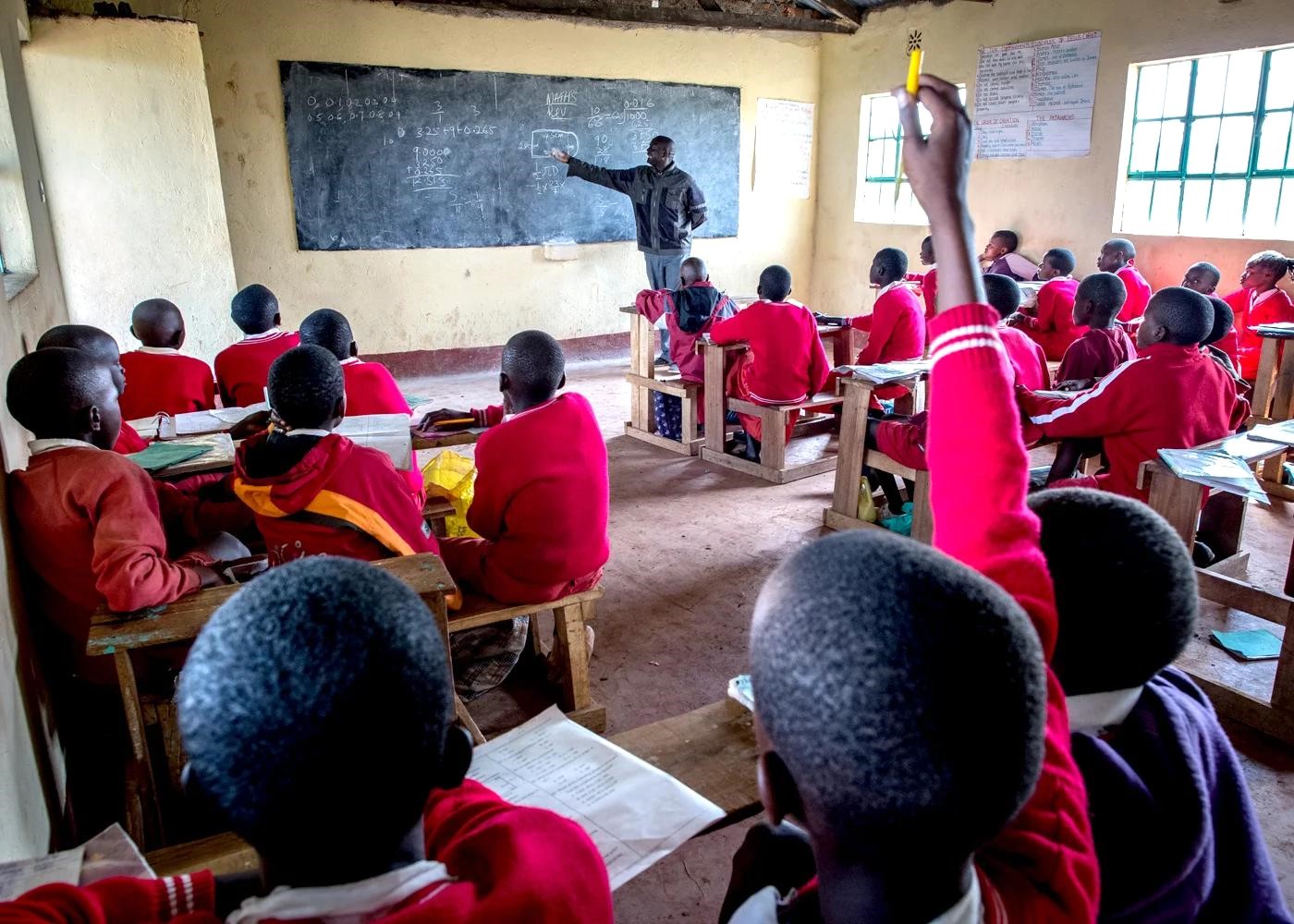
- Children often carry grief, violence, poverty and family conflict into classrooms without teachers knowing what has happened at home.
- Hillary Muhalya argues that schools must recognise warning signs without expecting teachers to become psychologists or family therapists.
- Early support, counselling and social protection can prevent family crises from permanently disrupting a child’s education and future.
A child can walk into a classroom carrying a secret no teacher can see: a dead parent, an abusive home, an empty kitchen, unpaid school fees, a broken relationship between parents or the fear of what will happen when the school bell rings and the child has to go home.
That is the uncomfortable human story behind the suicide figures recorded in Busia—and the family pressures that increasingly threaten the wellbeing of adults and children alike.
Between January and August 2023, Busia County Referral Hospital recorded 80 suicide cases, nine of which resulted in deaths at the facility. The previous year, the hospital had handled 54 cases and recorded seven deaths. The figures are historical, not current 2026 statistics, but they remain a stark reminder of how deeply emotional and family crises can penetrate communities. Pasted markdown
Behind every statistic is more than one victim.
There are spouses left asking questions.
There are parents wondering how to explain death to children.
There are brothers and sisters forced to grow up faster.
And there are school-going children who return to class carrying grief that cannot be measured in examination marks.
When a parent dies, the funeral may last days.
The consequences can last years.
For a child, the death of a parent can mean losing a provider, protector, counsellor or source of school fees. It can mean moving to another home, changing schools, taking responsibility for younger siblings or watching the family’s standard of living collapse.
The child may still wear a school uniform.
The child may still sit for examinations.
The child may still laugh with classmates.
But something fundamental may have changed.
Looking beyond a learner’s behaviour
This is where the education story begins.
A teacher stands before a classroom every morning, but does not necessarily know what happened in the homes behind those children’s faces the previous night.
One learner may have witnessed violence.
Another may be grieving.
Another may have gone to bed hungry.
Another may have been awake because parents were fighting.
Another may be worrying about whether there will be money for fees.
Another may be quietly carrying the responsibilities of an adult.
The teacher sees a pupil.
The pupil carries a story.
And sometimes the difference between the two is the difference between punishment and understanding.
A learner who suddenly becomes withdrawn may not be rude.
A child whose performance collapses may not have become lazy.
A pupil who begins fighting may not simply be indisciplined.
A learner who repeatedly misses school may not have lost interest in education.
There may be a troubled home behind the behaviour.
That is why the question facing teachers should sometimes change from “What is wrong with this child?” to “What has happened to this child?”
Family pressure rarely has a single cause.
It can emerge from unemployment, financial hardship, relationship breakdown, bereavement, alcohol and substance abuse, expectations around providing for a family, separation, unresolved conflict and violence.
Pastor Salina Jelimo Wekesa has recently been drawing public attention to the complicated realities behind relationships, including the difference between the image couples present publicly and what may happen behind closed doors. Her remarks have resonated because many families live with pressures that are invisible to outsiders.
The danger is that when those pressures become destructive, children are rarely spectators.
They become casualties.
Gender-based violence, for instance, is not only a question of physical injury. It can disrupt livelihoods, force families to relocate, consume household income through medical and legal expenses, separate children from parents and create an atmosphere of fear in which learning becomes secondary.
Church leaders have continued to call for dialogue, counselling and non-violent ways of resolving family disputes amid concern over gender-based violence.
But even when adults are locked in conflict, the child still has to wake up the following morning.
The child still has to attend school.
The child still has to complete homework.
The child is still expected to sit quietly when the teacher enters.
This is an extraordinary demand to place on a young mind.
Schools as a bridge to support
It is also why schools must stop looking at education purely through the lens of curriculum coverage and examination performance.
A school is often the one institution that remains predictable when everything else in a child’s life becomes uncertain.
The timetable remains.
The teacher arrives.
The bell rings.
The classroom opens.
There is routine.
There are friends.
There are adults outside the family who may notice that something has changed.
That stability can matter enormously.
Teachers, however, should not be turned into psychologists, social workers, police officers or family therapists. Their responsibility is not to solve every domestic crisis.
Their responsibility is to notice, listen, protect dignity and connect vulnerable children to appropriate support.
A trained teacher can recognise warning signs.
A school counsellor can provide a safe space.
A headteacher or principal can coordinate support.
A child-protection mechanism can respond where abuse is suspected.
A bursary can keep a child in school when bereavement destroys a family’s finances.
A feeding programme can help a hungry learner remain attentive.
Academic recovery can prevent a grieving child from falling permanently behind.
A trusted mentor can remind a frightened child that the future has not disappeared.
These interventions may look small beside the size of a family crisis.
But for a child, they can be enormous.
The most dangerous mistake is to assume that returning to school means returning to normal.
A child can attend school every day and still be struggling.
A learner can smile and still be grieving.
A teenager can pass examinations and still be carrying trauma.
A child can sit in the front row and be emotionally somewhere else entirely.
That is why follow-up matters.
The crisis may become visible immediately after a parent’s death, but the educational consequences may emerge months later.
The child who was strong during the funeral may collapse later.
The child who appeared to accept the death may begin withdrawing.
The child who initially performed well may eventually lose concentration.
And by then, adults may have stopped asking questions.
The same is true of children exposed to prolonged family conflict.
They may learn to hide what is happening.
They may become experts at pretending everything is fine.
That makes the teacher’s role even more delicate.
Sometimes the most important intervention begins with a simple conversation.
“How are you?”
Not as a routine greeting.
As a genuine question.
And sometimes the question needs to go further:
“Is everything okay at home?”
“Is there something making it difficult for you to concentrate?”
“Do you need someone to talk to?”
A child does not always need an immediate solution.
Sometimes the first lifeline is knowing that an adult has noticed.
Family wellbeing is an education issue
This is where Kenya’s conversation about mental health, family wellbeing and education must converge.
The suicide figures from Busia should not be reduced to shocking numbers.
They should force a deeper question: What happens to the families left behind?
And, more importantly, what happens to their children?
If the father dies, who pays the fees?
If the mother dies, who looks after the younger children?
If domestic violence drives a family apart, where does the child live?
If household income disappears, does the child remain in school?
If grief destroys concentration, who notices?
If a child begins withdrawing, who asks why?
And when a teacher discovers the answer, what support is available?
These are education questions.
They are also questions of social protection, health, family welfare and national responsibility.
Because the consequences of family distress do not stop at the front door.
They walk into classrooms.
They sit beside other children.
They appear in attendance registers.
They surface in examination results.
They sometimes emerge as indiscipline.
And occasionally, they disappear altogether when a child drops out.
The tragedy is that society can easily punish the visible symptom while ignoring the invisible wound.
We punish the child for failing to submit homework without asking whether there was electricity, food, peace or even a parent at home.
We punish the child for sleeping in class without asking whether the child slept at all.
We punish the child for fighting without asking what violence the child has witnessed.
We punish absenteeism without asking what responsibilities the child is carrying outside school.
Education must be firm.
But firmness without understanding can become another burden for a child already struggling to survive.
This does not mean excusing destructive behaviour.
It means understanding its context before deciding how to respond.
The teacher cannot rescue every child.
But the teacher can become the person who notices the child before the child disappears beneath the crisis.
And the school can become the bridge between the troubled home and the help that family needs.
That is the opportunity Kenya cannot afford to lose.
Because children do not choose bereavement.
They do not choose poverty.
They do not choose domestic violence.
They do not choose whether their parents remain together.
They do not choose the emotional burdens carried by adults.
But society can choose whether those circumstances determine the rest of their lives.
A parent’s death should not become a child’s educational death sentence.
A troubled marriage should not become a child’s lost future.
Poverty should not automatically become school dropout.
Domestic violence should not become a permanent classroom wound.
And family crisis should not be allowed to silently reproduce itself from one generation to the next.
The teacher standing before that child may never know the whole story.
But the teacher can notice the change.
The teacher can ask the question.
The school can open the door to help.
And sometimes, that is where the story begins to change.
READ ALSO: Indigenous knowledge should complement modern education, Gusii stakeholders say
Because when a child’s home falls apart, school should be the place that helps hold the child together—not another place where the child falls through the cracks. Pasted markdown
By Hillary Muhalya
Get more stories from our website: Education News
To write to us or offer feedback, you can reach us at: editor@educationnews.co.ke
You can also follow our social media pages on Twitter: Education News KE and Facebook: Education News Newspaper for timely updates.
>> Click here to stay up-to-date with trending regional stories