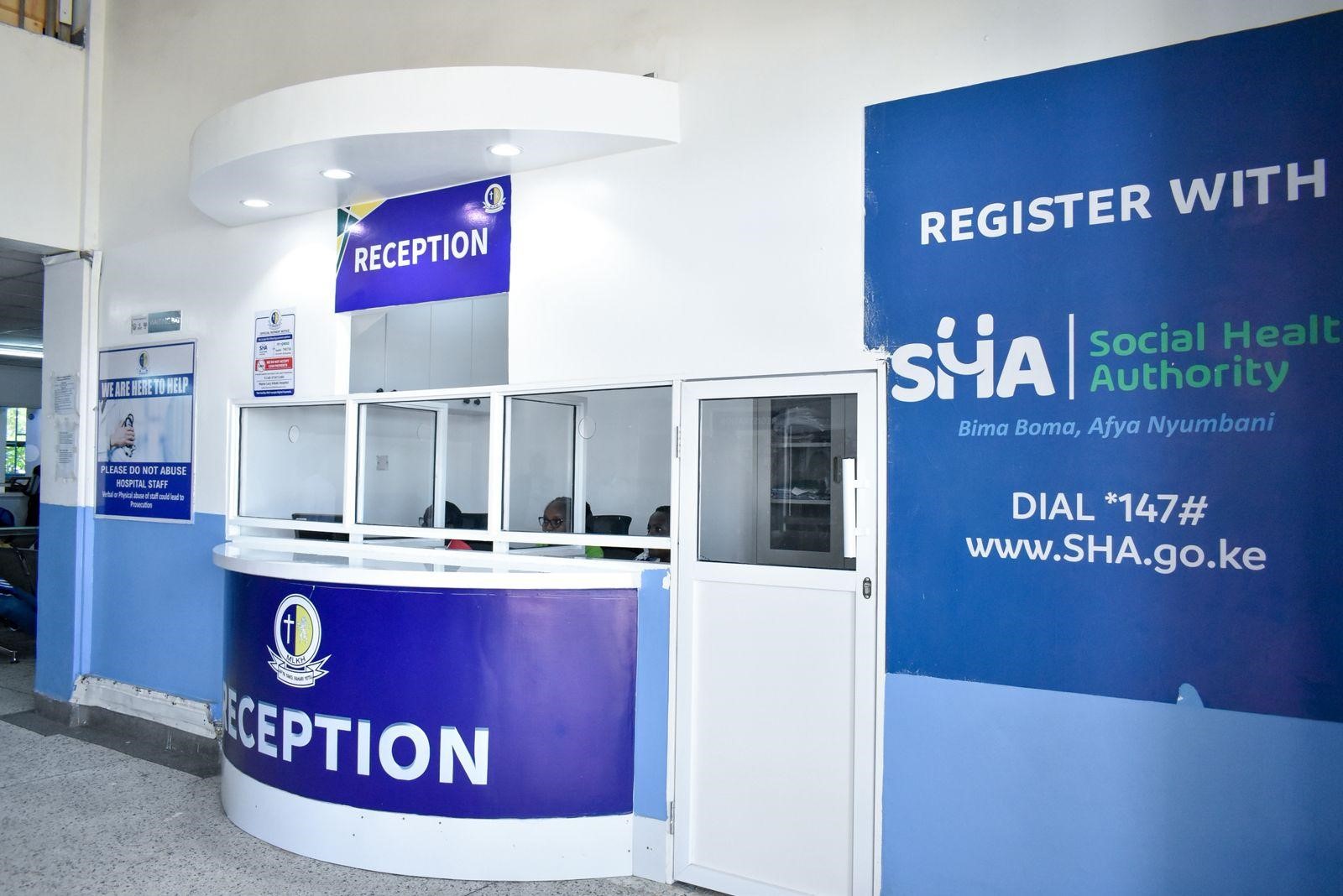
- Hillary Muhalya examines how SHA’s new three-year contracting cycle could affect healthcare access nationwide.
- He says tighter compliance and digital requirements may improve accountability but could challenge smaller facilities.
- Muhlaya argues that the reforms should ultimately be judged by patients’ ability to access timely treatment.
The proposed contracts will run until June 30, 2029, meaning the requirements imposed on healthcare providers will have consequences not only for hospitals but also for patients who depend on SHA to finance treatment.
For the ordinary Kenyan, the central question is simple: Will these reforms make it easier to receive treatment, or will additional compliance requirements create new barriers between patients and healthcare providers?
SHA says healthcare providers seeking contracts will undergo a formal onboarding process through a centralised digital platform.
The process involves regulatory validation, know-your-customer verification, technical assessment and financial due diligence.
The requirements can be understood under seven main areas.
First, a healthcare facility must have a valid licence demonstrating that it is legally authorised to operate.
Healthcare professionals working within the facility must also have valid registrations with the relevant regulatory bodies.
Facilities must declare their beneficial ownership to establish who ultimately owns or controls the institution.
Providers are also required to have valid tax compliance certificates.
They must operate institutional bank accounts registered in the official name of the healthcare facility or institution and provide bank confirmation.
Facilities must also give undertakings addressing anti-fraud, anti-bribery and conflicts of interest.
Finally, providers must demonstrate digital readiness. This includes having a functional electronic medical record or approved claims system, the capacity to submit claims electronically, internet-accessible devices at points of care and a designated administrator responsible for digital platform activities.
These requirements should therefore not be confused with seven separate pieces of paperwork. Some are documents, while others are operational and technological conditions that a facility must satisfy.
What this means for patients
The most important impact of the new contracting cycle will ultimately be felt at the point where a patient walks into a hospital, health centre, clinic or other contracted facility.
A patient should not have to understand SHA’s contracting architecture to receive healthcare.
What matters is whether the facility is contracted, whether the patient’s SHA cover is recognised, whether treatment can be authorised efficiently and whether the patient is protected from unnecessary delays or unexplained charges.
The digital requirements could potentially make some of these processes easier.
If facilities have functioning electronic medical records and electronic claims systems, patient information and claims can be processed more systematically. SHA’s existing digital infrastructure already supports electronic contracting and claims-related processes.
Better digital records can also make it easier to trace services provided, verify claims and identify irregularities.
But the same transition raises a practical question for Kenya’s rural and smaller healthcare facilities: What happens to patients who depend on facilities that struggle to meet the technological requirements?
A small health centre in a remote county may not have the same financial and technical capacity as a large private hospital in Nairobi.
If a facility fails to secure or maintain a SHA contract, patients who previously relied on it may have to seek services elsewhere.
That is where an administrative reform becomes a patient-access issue.
Emergency care must put patients first
There is another particularly important protection for patients.
Government policy has repeatedly emphasised that contracted facilities should not deny treatment merely because of system or payment-related difficulties. Health Cabinet Secretary Aden Duale has warned facilities against turning away SHA patients because of system downtime.
Emergency care under SHA is financed through the Emergency, Chronic and Critical Illness Fund, which covers eligible emergency and critical services.
This principle is particularly important because emergencies do not wait for paperwork.
A road-crash victim, a mother experiencing a life-threatening complication, a child in severe distress or a patient arriving with a serious injury may not have the ability to produce documents, raise money or negotiate payment before treatment begins.
The first obligation in such circumstances must be to stabilise and treat the patient according to applicable emergency-care protocols.
The contracting framework is designed to give SHA tighter oversight over facilities participating in the public health insurance system.
The authority is seeking to verify providers’ regulatory status, ownership, financial information, technical capacity and digital readiness before entering into contracts.
The new cycle covers four funds: the Primary Health Care Fund, Social Health Insurance Fund, Emergency, Chronic and Critical Illness Fund and Public Officers Medical Scheme Fund.
SHA has also placed increasing emphasis on digital systems as part of provider contracting and claims management.
The logic behind stronger verification is understandable.
Kenya cannot afford a public health insurance system in which public funds are lost through fictitious claims, inflated bills, unqualified providers or weak verification systems.
But compliance should never become an end in itself.
The success of SHA’s new contracting system should ultimately be judged from the patient’s perspective.
A technically efficient digital system that leaves patients travelling long distances to find a contracted facility would not represent meaningful progress.
Likewise, a facility may have every certificate required by SHA, but if patients continue experiencing unexplained delays, rejected claims, unauthorised payments or poor-quality treatment, the administrative reform will have achieved only part of its purpose.
The government should therefore ensure that digitalisation does not widen the gap between urban and rural healthcare.
Smaller facilities may require reasonable technical support, training and transition assistance so that compliance does not unintentionally reduce healthcare access in underserved communities.
Patients should also be clearly informed about which facilities are contracted, what services are covered, when pre-authorisation is required and what to do when treatment is denied.
Most importantly, emergency care must remain genuinely patient-centred.
The question Kenya should be asking
The October contracting cycle is therefore more than a new checklist for hospitals.
It is a test of whether Kenya can build a public health insurance system that is simultaneously accountable to taxpayers, fair to healthcare providers and responsive to patients.
SHA has the responsibility to protect public funds.
Healthcare providers have the responsibility to comply with the rules and deliver quality services.
But the ultimate reason for having the system is the Kenyan patient.
READ ALSO: PSC announces 1,000 Digital Literacy Programme internships
The measure of success should therefore be simple: when a Kenyan falls sick, can they get the right treatment, at the right facility, at the right time, without being trapped in bureaucracy?
That is the standard against which the new SHA contracting regime should eventually be judged.
By Hillary Muhalya
Get more stories from our website: Education News
To write to us or offer feedback, you can reach us at: editor@educationnews.co.ke
You can also follow our social media pages on Twitter: Education News KE and Facebook: Education News Newspaper for timely updates.
>> Click here to stay up-to-date with trending regional stories