- A Ugandan parliamentary delegation has travelled to Nairobi to benchmark Kenya’s education reforms.
- Kenyan lawmakers have outlined how teacher salaries, performance and accountability are managed under the Teachers Service Commission.
- The delegations have discussed Competency-Based Education, digital learning, inclusive education and constituency development funding.
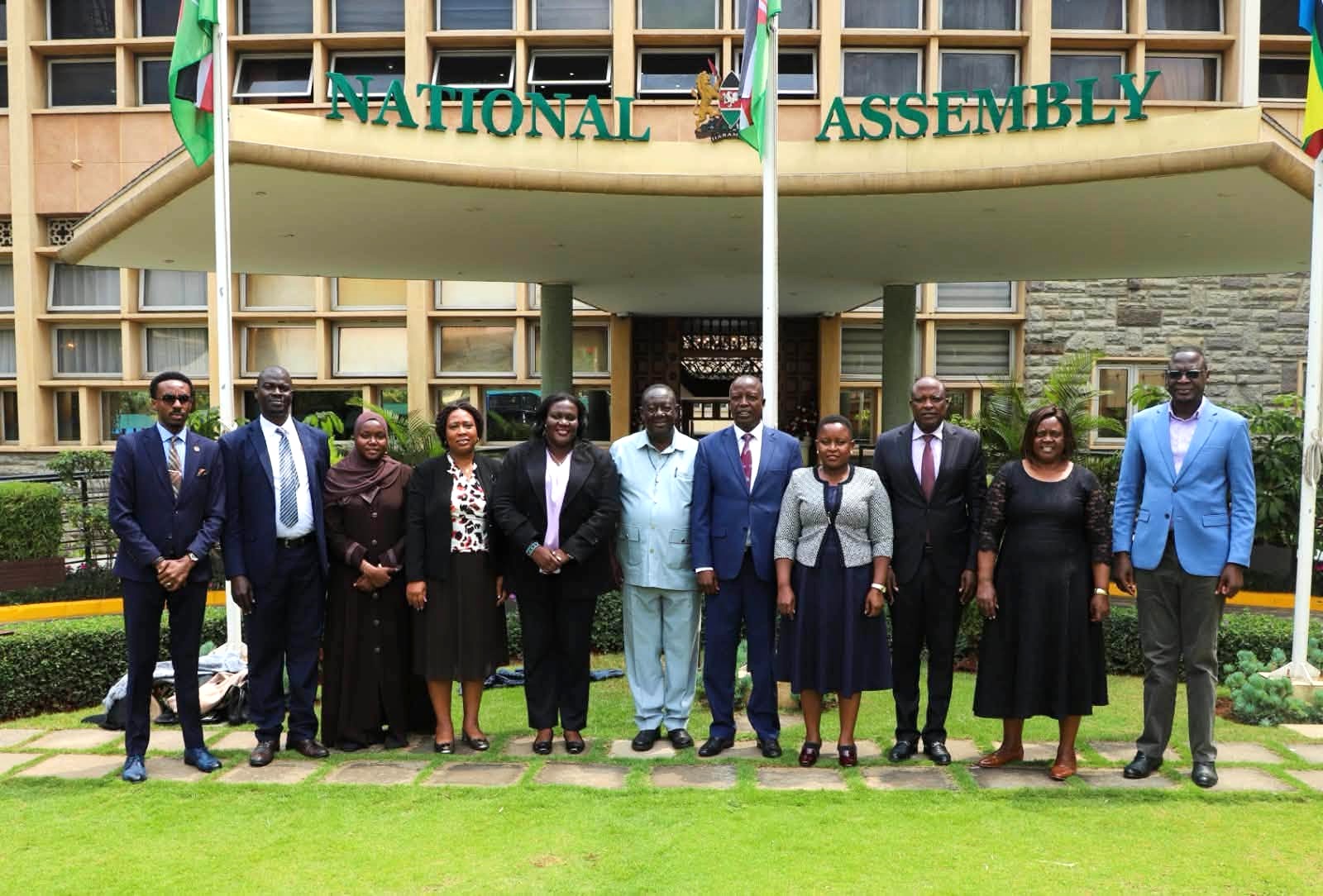
A Ugandan parliamentary delegation from the Committee on Education and Sports travelled to Nairobi on Wednesday, August 19, 2026, for a benchmarking engagement with Kenya’s Parliamentary Committee on Education, seeking lessons on teacher remuneration, curriculum reform, accountability, inclusive education, digital learning and the management of public education funds.
Led by Deputy Committee Chairperson Emmanuel Ongiertho, MP for Nebbi Municipality, the delegation met its Kenyan counterparts at Parliament Buildings in Nairobi. Discussions covered teacher salaries and performance management as well as the implementation of Kenya’s Competency-Based Education reforms.
Teacher pay and accountability
The Ugandan legislators questioned Kenya’s experience with salary differentiation between teachers of science and humanities subjects, an issue that has generated debate in Uganda, which has previously operated different salary scales for secondary school teachers depending on subject area. Kenyan lawmakers explained that teachers employed by the Teachers Service Commission are generally placed within established salary structures rather than receiving different basic salaries based on subject taught, though earnings can differ due to allowances tied to specific responsibilities or working environments. Special-needs teachers may receive additional allowances, teachers in designated hardship areas qualify for hardship allowances, and teachers with disabilities may benefit from tax exemptions under Kenyan law.
MPs flag financial and procurement lapses at TVET institutions
On accountability, Jerusha Momanyi, MP for Nyamira, said teacher attendance and performance are monitored through school-level supervision and technological systems. Teachers are required to record attendance, while the Teacher Performance Appraisal and Development system allows performance information to be submitted electronically and assessed by school heads and principals. Unauthorised absenteeism can trigger disciplinary action.
Kenyan lawmakers acknowledged that the country continues to require more teachers despite substantial recruitment in recent years, including the use of teacher interns, with some schools relying on additional teachers hired by parents to bridge staffing gaps.
On curriculum reform, the Ugandan delegation asked about Kenya’s experience with Competency-Based Education, particularly the principle of progression and whether learners can repeat classes. Kenyan lawmakers said repetition is generally discouraged under government policy, although individual parents may sometimes seek repetition for their children, particularly for competitive academic pathways. The delegation also reviewed Kenya’s education structure, including early childhood education, primary, junior secondary, senior secondary and university levels.
Technology, private education and public funding
The Ugandan MPs also examined Kenya’s growing use of technology in education. ICT is increasingly being integrated across subjects rather than treated as a stand-alone skill, with digital tools supporting teaching in disciplines including history, geography and religious education, alongside the introduction of interactive digital screens and other infrastructure into schools.
On the relationship between public policy and private education, Kenyan lawmakers explained that government education policies and regulatory requirements extend across the sector, while private institutions remain responsible for their own fees and teacher salaries. International schools may follow different curricula but operate within the applicable regulatory framework. The government pays examination fees for learners in both public and private institutions.
On inclusive education, lawmakers noted gaps in support for learners with severe and multiple disabilities, with some learners requiring intensive assistance from support personnel whose roles have not always been fully integrated into the formal public employment system.
MPs push for mandatory guidance and counselling in schools
On constituency-level development funding, Kenyan lawmakers explained that the Constituency Development Fund framework is governed by legislation and that MPs do not directly control the funds or sign cheques, though they may participate in identifying and discussing constituency priorities. The funds can support certain national-government functions, including construction and development of schools and selected government facilities, while county-government functions such as healthcare, roads, water and early childhood development generally fall outside its ordinary mandate except where the law permits otherwise.
Ongiertho thanked the Kenyan committee for the engagement, saying the information gathered would contribute to the Ugandan committee’s recommendations and its efforts to strengthen the country’s education sector. His delegation acknowledged that Uganda still has considerable ground to cover and called for continued cooperation between the two countries.
By Hillary Muhalya
Get more stories from our website: Education News
To write to us or offer feedback, you can reach us at: editor@educationnews.co.ke
You can also follow our social media pages on Twitter: Education News KE and Facebook: Education News Newspaper for timely updates.
>>> Click here to stay up-to-date with trending regional stories