




- Nelson Mandela’s reflections on family life offer powerful lessons on fatherhood, sacrifice and public service.
- The article explores the often-overlooked personal costs borne by fathers pursuing professional success and societal responsibilities.
- It challenges fathers to balance achievement with presence, relationships and family connection.
Today, the world celebrates Father’s Day. It is a day set aside to honour fathers, husbands, grandfathers, guardians and father figures for the critical roles they play in shaping families and societies.
It is a moment to appreciate the men who provide, protect, guide, mentor and sacrifice so that those under their care may thrive.
The significance of fatherhood is perhaps best captured by Pastor Simon Mbevi of Mavuno Church in his aptly titled book, Dad is Destiny.
The title conveys a profound truth: fathers have an immense influence on the destiny of their children and families.
Their presence, values, decisions and sacrifices often determine the trajectory of future generations.
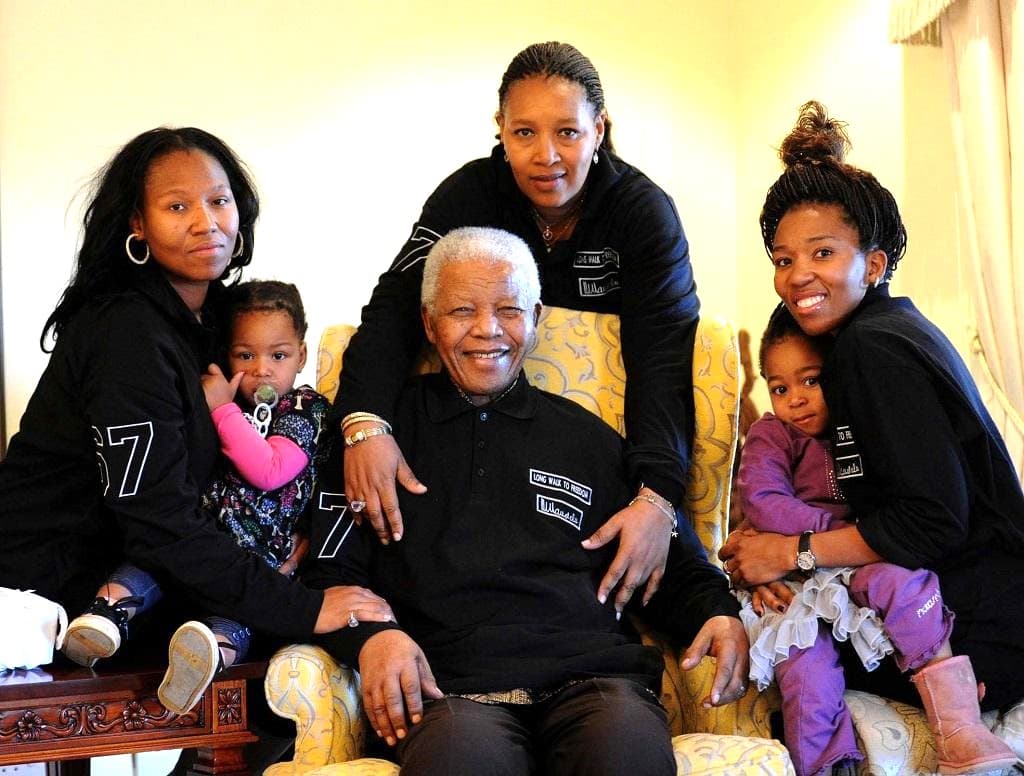
As we mark this Father’s Day, let us immerse ourselves in the life and reflections of one of the world’s most revered statesmen, the late Nelson Mandela.
While Mandela is celebrated globally as a freedom fighter, reconciler and nation-builder, he also left behind a powerful lesson about fatherhood, family and the hidden cost of greatness.
Mandela’s painful reflection
At one point in his life, Mandela openly expressed regret about not having had sufficient time for his family while serving his nation.
It was a rare admission from a man whose name had become synonymous with courage, resilience and sacrifice.
One of the most poignant reflections Mandela shared after his release from prison and during his presidency was the personal cost of public service.
Having spent twenty-seven years imprisoned for his role in fighting apartheid in South Africa, Mandela later acknowledged that his commitment to the struggle for freedom came at a heavy price to his family life.
His marriage suffered, his relationships with loved ones were strained and he missed much of his children’s upbringing.
While history remembers him as a global icon of justice, reconciliation and courage, Mandela himself understood that greatness often comes with sacrifices that are not always visible to the public eye.
Throughout his life, Mandela demonstrated extraordinary dedication to a cause larger than himself.
He was willing to endure imprisonment, isolation and uncertainty in pursuit of a free and democratic South Africa.
His resilience inspired millions around the world and transformed him into one of the most respected leaders of the twentieth century.
Yet despite the admiration he received from nations and world leaders, Mandela remained remarkably honest about the personal regrets that accompanied his achievements.
He once observed that while he was celebrated as a hero by the nation, he had not always been able to be the father and husband his family deserved.
The struggle against apartheid demanded enormous sacrifices.
Years spent behind bars meant missed birthdays, graduations, family gatherings and countless ordinary moments that form the foundation of family relationships.
While Mandela fought for the freedom of millions, his own family endured separation, loneliness and uncertainty.
His reflection offers a profound lesson about the often-overlooked consequences of leadership and service.
Society tends to celebrate public accomplishments while paying little attention to the private sacrifices that make those accomplishments possible.
Leaders, professionals, activists and public servants are often praised for their dedication, yet their families frequently bear the hidden burden of their absence.
The applause belongs to the individual, but the sacrifice is shared by spouses, children, parents and loved ones.
A lesson for modern fathers
This reality is not unique to Mandela.
Across the world, countless fathers dedicate themselves to careers, professions and causes that demand significant portions of their time and energy.
Teachers spend evenings preparing lessons and marking examinations. Doctors work exhausting shifts in hospitals. Security officers are deployed far from their families. Business leaders travel extensively. Clergy dedicate long hours to ministry. Politicians and administrators devote themselves to public responsibilities.
In every profession, there are men whose commitment to service often comes at the expense of family time.
The dilemma is particularly relevant in today’s fast-paced world.
Modern society frequently rewards productivity, ambition and professional achievement.
Success is measured through promotions, titles, awards and public recognition.
Consequently, many fathers find themselves investing more time in their work than in their relationships.
They convince themselves that the sacrifices are temporary and necessary.
They promise that once they secure the next promotion, complete the next project or achieve the next milestone, they will have more time for family.
However, life rarely pauses to accommodate such plans.
Children grow up. Opportunities for connection pass by. Seasons change.
The school play that was missed cannot be replayed. The football match unattended cannot be revisited. Conversations postponed often never happen.
Moments that appear ordinary today become treasured memories tomorrow.
Beyond provision
Mandela’s experience reminds us that family relationships require intentional investment.
Love is not sustained merely through good intentions. It flourishes through presence, attention, sacrifice and shared experiences.
A father may provide financially for his children, but children also need emotional connection.
They need guidance, encouragement, affirmation, correction and the assurance that they matter.
Similarly, marriages thrive not merely through commitment but through companionship, communication and mutual support.
One of the most admirable aspects of Mandela’s reflection is his willingness to acknowledge regret.
By openly speaking about the cost of his absence from family life, he demonstrated remarkable humility and self-awareness.
His honesty makes his lesson even more powerful because it comes from a man who had every reason to focus solely on his extraordinary achievements.
The true measure of success
His words challenge us to rethink our understanding of success.
Is success merely attaining professional excellence and public recognition?
Is it measured by wealth accumulated, titles earned or influence acquired?
Or does true success also include building strong, meaningful relationships with those closest to us?
While careers and achievements are important, they are ultimately temporary.
Positions change. Titles fade. Public recognition diminishes.
Family, however, often remains the most enduring source of support, identity and fulfilment.
Father’s Day is not merely a celebration of provision and responsibility.
It is also a reminder of the importance of presence.
Children rarely remember how much money their parents earned. What they remember are the moments shared together.
These seemingly small moments become the building blocks of character, confidence and lifelong memories.
Mandela’s life demonstrates that a nation may applaud your achievements, but it is family that bears the silent burden of your absence.
As we reflect on Mandela’s legacy this Father’s Day, we should celebrate not only his contributions to humanity but also the wisdom contained in his regrets.
His experience reminds us that life is ultimately about relationships.
Great achievements may change the world, but love, presence and family give those achievements their deepest meaning.
READ ALSO: Should high school principals face term limits like university vice chancellors?
In the end, the most meaningful legacy any father leaves behind is not merely what he accomplished, but the lives he touched, the relationships he nurtured and the love he shared along the journey.
By Ashford Kimani
Ashford Kimani is a teacher of English and Literature who writes on education and social affairs.
You can also follow our social media pages on Twitter: Education News KE and Facebook: Education News Newspaper for timely updates.
>>> Click here to stay up-to-date with trending regional stories
>>> Click here to read more informed opinions on the country’s education landscape




Reader Discussion (0)
Sign in to comment