



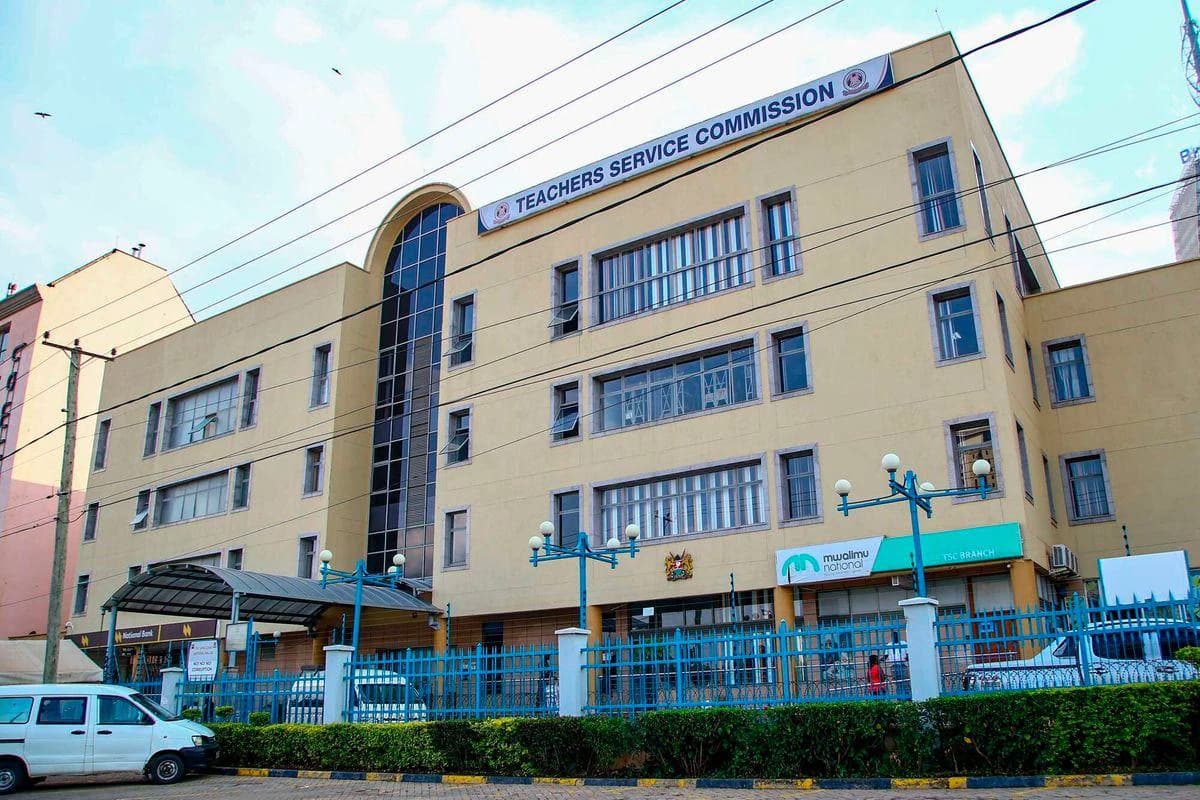





- Educationist Kim Ndiema says proposed teacher grading reforms will only succeed if they translate into meaningful career progression and salary improvements.
- Education stakeholders argue that genuine reform must address promotion stagnation, welfare concerns and healthcare challenges facing teachers.
- The review presents an opportunity to strengthen professional dignity through fair remuneration, transparent progression and improved support systems.
The management of the teaching profession in Kenya has reached a critical policy juncture. As the Teachers Service Commission (TSC), in collaboration with the Salaries and Remuneration Commission (SRC) and the National Treasury, works to finalize a revised grading structure for public school teachers, debate has intensified across the education sector.
The central question is whether the proposed shift from the current alphanumeric grades such as B5, C1 and D1 to a simplified Teacher 9–Teacher 1 framework will provide real benefits or merely change titles without improving teachers’ welfare. According to the Eldoret City Educators Forum (ECEF), changing names without corresponding salary improvements amounts to cosmetic reform. Genuine transformation must strengthen career progression, remuneration and professional dignity.
Historical evolution of teacher grading
Kenya’s teacher management system has evolved significantly since independence. The Teachers Service Commission was established in 1967 to centralize teacher employment and standardize service conditions.
Subsequent education reforms shaped the profession. The Bessay Report of 1972 reviewed teacher training and standards, while the Mackey Report of 1981 introduced the 8-4-4 system and expanded higher education. The Kamunge Commission of 1988 focused on educational financing and quality improvement.
The 2010 Constitution elevated TSC into an independent constitutional commission under Article 237. In 2011, the Teacher Performance Appraisal and Development (TPAD) system was introduced to support performance-based career progression.
A major shift came in 2018 with the introduction of the Career Progression Guidelines (CPG), which replaced previous schemes of service with a unified grading structure ranging from B5 to D5.
Challenges under the 2018 Career Progression Guidelines
Although the 2018 CPG sought to streamline teacher management, it generated widespread criticism.
One major concern involved the conversion of former job groups into the new grading structure. Many deputy principals and senior teachers felt they were disadvantaged when their years of service were not adequately recognized during the transition. As a result, thousands remained stuck in the same grades for long periods despite extensive experience and leadership responsibilities.
Another challenge was the dependence of promotions on administrative vacancies and school categories rather than individual qualifications and performance. Teachers serving in sub-county schools often found it difficult to advance compared to their counterparts in national and extra-county institutions.
The system also reduced the influence of higher academic qualifications in accelerating career growth. Many teachers who upgraded to master’s and doctoral degrees discovered that advancement still depended heavily on competitive interviews and limited vacancies.
Proposed 2026 reforms
To address these concerns, TSC has proposed a major overhaul of the grading framework.
The proposed structure introduces a unified Teacher 9 to Teacher 1 progression model. Teacher 9 would serve as the entry grade for certificate holders, while Teacher 1 would represent the highest professional level.
A significant feature of the reforms is the introduction of dual career pathways. Teachers will be able to progress either as classroom practitioners or as administrators. This approach allows experienced educators to advance professionally without necessarily moving into management positions.
The reforms also seek to reduce the time required for career progression. While advancement under the current framework may take up to 30 years, the proposed system aims to reduce the journey to approximately 18 years.
To address staffing shortages in Junior Secondary Schools, TSC has also proposed more flexible qualification requirements, particularly for teachers who upgraded from P1 certificates to university degrees.
Remuneration remains the real issue
Despite the proposed structural changes, many teachers argue that the real issue is remuneration.
The proposed 2025–2029 Collective Bargaining Agreement includes salary increases ranging from 16 to 32 percent and a 20 percent increase in allowances. It also proposes moving some lower-cadre teachers to higher grades, thereby increasing their earnings.
However, unions have argued that the proposed increases are insufficient given the rising cost of living. KUPPET has pushed for significantly higher adjustments, particularly for lower-paid teachers.
The debate therefore remains clear: changing grade names without meaningful salary improvements will not address teachers’ concerns. Professional dignity must be reflected in actual earnings and living standards.
Welfare and healthcare concerns
Teacher welfare extends beyond salaries.
In December 2025, TSC transitioned teachers and their dependents from the Minet medical scheme to the Social Health Authority (SHA) under the Public Officers Medical Scheme Fund.
The new arrangement expanded benefits, including support for chronic illnesses, specialized treatment and a last-expense benefit. However, implementation challenges emerged due to funding gaps and outstanding debts inherited from the previous scheme.
Teachers also raised concerns about additional deductions and service delivery challenges. Although consultations helped avert industrial action, the episode highlighted the importance of adequately financing teacher welfare programmes.
Mental health has also emerged as a critical issue. Teachers face increasing workplace pressures arising from overcrowded classrooms, family separation due to transfers, disciplinary challenges and career stagnation. The TSC Workplace Counselling Policy seeks to address these concerns through structured psychological support.
The importance of accurate data
The success of any grading reform depends on accurate teacher records.
To improve data integrity, TSC introduced the Biometric Enrollment and Validation of Teachers (BEVOT) programme. The exercise validates teachers’ academic qualifications, professional credentials and biometric information.
A clean database is expected to improve deployment decisions, eliminate grading errors and ensure promotions are based on verified information.
Conclusion
The ongoing review of teacher grading structures presents an opportunity to modernize the profession and improve teacher welfare. However, as education stakeholders continue to argue, genuine reform requires more than changing titles.
A successful system must combine simplified career progression, fair remuneration, strong healthcare support, psychological well-being and transparent promotion processes. By linking grading reforms to tangible benefits, TSC can create a system that promotes professional dignity, motivates teachers and supports long-term educational excellence in Kenya.
By Kim Ndiema
Ndiema is a Seasoned Educationist
Eldoret City Educators Forum (ECEF)
Email: admin.ecef@gmail.com
You can also follow our social media pages on Twitter: Education News KE and Facebook: Education News Newspaper for timely updates.
>>> Click here to stay up-to-date with trending regional stories
>>> Click here to read more informed opinions on the country’s education landscape



Reader Discussion (0)
Sign in to comment