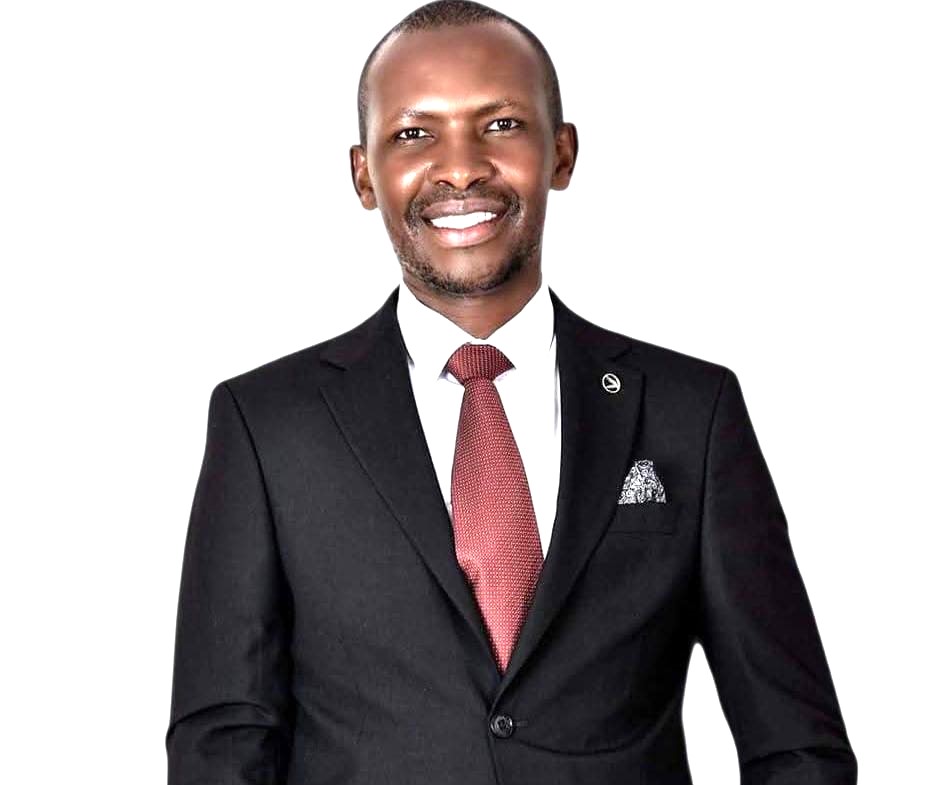
- Maingi M’Thuranira argues that schools often stagnate when their leaders stop learning, innovating and developing others.
- He says effective principals should move beyond administration to empower teachers, build leadership capacity and nurture strong school cultures.
- M’Thuranira maintains that sustainable school excellence depends on leaders who embrace continuous improvement rather than protect past achievements.
“Everything rises and falls on leadership.” This statement has been repeated so often that it risks becoming another leadership cliché. Yet, after working with schools over the years, I have become convinced that it remains one of the most profound truths in education.
The quality of leadership ultimately determines whether a school merely survives, sustains its past achievements or continues to grow. Buildings may attract attention, resources may create opportunities and talented teachers may improve learning outcomes, but lasting institutional growth is almost always a reflection of leadership.
Whenever a school stops making meaningful progress, our first instinct is often to assign blame elsewhere. Some point to teachers, others to parents, learners, government policies, an overloaded curriculum or the difficult economic environment.
While each of these factors undoubtedly influences a school’s performance, they are rarely the principal reason why a once-thriving institution reaches a plateau. More often than not, the greatest limitation to a school’s growth is its leadership.
Schools do not stop growing because they have exhausted their potential; they stop growing because their leadership has reached its ceiling.
Having interacted with many schools, I have observed a fascinating pattern. Some institutions possess magnificent facilities but struggle with uninspired staff. Others boast exceptionally talented teachers but lack collaboration and a shared sense of purpose.
Some enjoy enviable reputations built over decades of excellence, yet today they are simply preserving yesterday’s success instead of creating tomorrow’s. These experiences have reinforced one enduring lesson: every school has untapped potential, but effective leadership is needed to unlock it.
Leadership goes beyond administration
Leadership is far more than occupying the principal’s office or holding the highest title in an institution. It is the ability to create an environment where learners, teachers, parents, support staff and the wider school community are inspired to become better than they were yesterday.
Unfortunately, many school leaders become excellent administrators but ineffective leaders. While administration keeps a school operational, leadership keeps a school moving forward. The distinction is significant.
Administration focuses on timetables, budgets, examinations, reports, inspections, discipline and compliance with policies. These responsibilities are essential because no school can function efficiently without them.
However, administration alone cannot transform an institution.
Leadership goes beyond systems and procedures. It is about vision, people, culture, innovation and influence. It is about inspiring others to pursue excellence even when no one is watching and creating an atmosphere where continuous improvement becomes everyone’s responsibility rather than the leader’s demand.
One of the greatest enemies of school growth is comfort. Success has a subtle way of convincing leaders that nothing more needs to change.
A school records impressive examination results for several years, enrolment steadily increases, parents express satisfaction and gradually innovation begins to disappear. Meetings become predictable, teaching methods remain unchanged and new ideas are quietly resisted because “what we have has always worked.”
The institution slowly shifts from pursuing excellence to protecting its reputation.
The tragedy is that while the school remains good, the world around it continues to evolve. Learners change, parents’ expectations change, technology transforms learning and education itself continues to undergo rapid reform.
The most important question for every school leader, therefore, is not, “Are we doing well?” but rather, “Are we improving?”
Good schools never stop learning because they understand that excellence is a moving target.
Great leaders develop other leaders
Another challenge frequently observed in schools is the tendency to supervise teachers without intentionally developing them. Supervision identifies weaknesses, but leadership develops strengths.
Classroom observations, lesson notes and appraisal reports have their place, yet they do not automatically produce outstanding teachers.
Educators become exceptional when someone deliberately invests in their professional growth, mentors them, challenges them to think differently, encourages them during difficult moments and believes in their potential.
Great schools are built by leaders who develop people, not by leaders who simply control people.
Equally concerning is the leadership model where everything revolves around one individual. Every decision waits for the principal. Every initiative requires approval from a single office. Every solution depends on one person.
Such an environment may appear efficient, but in reality it creates dependency rather than leadership.
The true measure of leadership is not how indispensable the leader becomes but how capable others become because of the leader.
Effective principals deliberately build leadership capacity among deputy principals, heads of departments, teachers and even student leaders. They create systems where responsibility is shared and where the institution continues to thrive even in their absence.
A school that cannot function without its principal has not developed leadership; it has developed dependence.
School culture determines performance
Culture is another dimension that many school leaders underestimate. Every school has a culture, whether intentionally cultivated or accidentally inherited.
That culture influences how teachers relate to one another, how learners behave when no teacher is watching, whether innovation is celebrated or resisted, and whether excellence is expected or merely admired.
School culture cannot be manufactured through buildings, policies, slogans or mission statements displayed on walls. It is shaped daily by what leaders consistently model, reward, tolerate and expect.
Leadership creates culture, and culture ultimately influences performance.
Perhaps the greatest challenge facing school leadership today is that some leaders have stopped learning themselves.
The moment a leader believes they know enough, they begin limiting everyone they lead.
The best principals remain lifelong students. They read widely, attend professional development programmes, seek mentors, visit other schools, listen carefully to different perspectives, reflect on their decisions and remain intellectually curious.
They understand that leadership is not a destination but a continuous journey of growth.
A growing leader is more likely to lead a growing school, while a stagnant leader risks producing a stagnant institution.
Leaders must confront difficult questions
Every school leader should therefore ask difficult but necessary questions.
Am I leading meaningful change or merely managing routines? Who am I intentionally preparing to become the next generation of leaders? If I left this school today, would the vision continue to flourish? Is my institution improving because of my leadership, or merely surviving because of systems established long ago?
These questions may be uncomfortable, but genuine leadership has never been about preserving comfort. It has always been about creating a better future.
The future of education will not belong solely to schools with the largest campuses, the highest fees or the most impressive infrastructure.
It will belong to schools whose leaders continually learn, empower others, nurture healthy cultures, embrace innovation and refuse to settle for yesterday’s success.
Every school possesses hidden potential waiting to be discovered. The responsibility of leadership is to identify that potential, develop it and release it for the benefit of every learner and educator.
In the end, good schools do not stop growing simply because they lack resources. They stop growing when their leaders stop growing.
READ ALSO: CS Ogamba explains Ruto’s new university funding model and how students will benefit
Leadership, therefore, remains one of the greatest investments any school can make in securing its future.
By Maingi M’Thuranira
M’Thuranira is a leadership facilitator, educator and mentor.
You can also follow our social media pages on Twitter: Education News KE and Facebook: Education News Newspaper for timely updates.
>>> Click here to stay up-to-date with trending regional stories
>>> Click here to read more informed opinions on the country’s education landscape