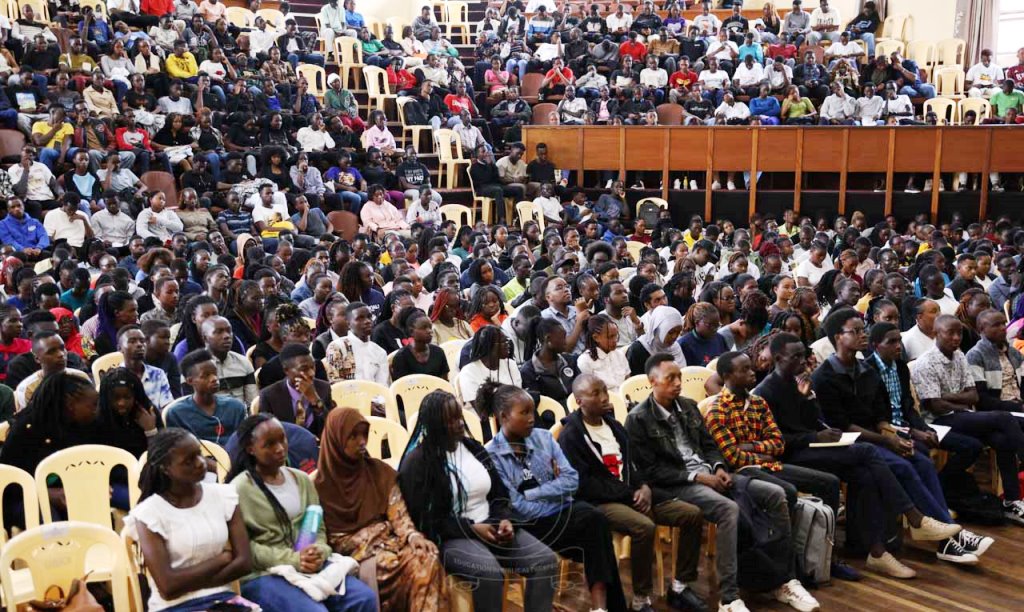
- The proposed Tertiary Education Fund seeks to bring higher education financing under a more unified national framework.
- The reforms seek to expand financial support for students in universities, TVET institutions and other eligible tertiary institutions.
- The proposal would undergo parliamentary consideration and public participation before becoming law.
The Government has proposed the establishment of a Tertiary Education Fund (TEF) in reforms aimed at transforming the financing of higher education and creating a more sustainable system for future generations.
Under the proposal, a new framework would consolidate key functions involved in financing tertiary education, bringing support for students in universities, Technical and Vocational Education and Training (TVET) institutions and other recognised tertiary institutions under a more coordinated system.
The reforms seek to ensure that qualified Kenyans can access financial support to pursue tertiary education regardless of their economic backgrounds.
If approved, the framework would significantly reshape how higher education is financed by moving away from fragmented funding mechanisms towards a more unified system.
A key objective of the proposed framework is to expand access to financial support for eligible students pursuing higher education.
The proposal seeks to ensure that qualified learners are not denied opportunities to pursue tertiary education because of financial hardship.
Financial assistance would cover eligible students pursuing programmes in universities, TVET institutions, colleges and other recognised tertiary institutions in accordance with the requirements established under the framework.
New financing framework
To meet the growing demand for tertiary education, the proposed reforms seek to diversify funding sources beyond annual government allocations.
The framework envisages mobilisation of additional resources to complement government funding while strengthening mechanisms for financing future generations of students.
Loan recovery from beneficiaries who have completed their studies and entered employment would also remain important in sustaining funding for future cohorts.
The reforms are intended to establish a more sustainable financing system capable of responding to the increasing number of learners seeking tertiary education.
The proposed reforms also seek to address challenges faced by students admitted to tertiary institutions before attaining the age of 18.
The framework would provide mechanisms through which eligible learners who have not yet acquired National Identity Cards because they are minors can access financial assistance.
This is intended to prevent qualified students from being excluded from financial support solely because they have not attained the legal age for obtaining national identification documents.
Higher education funding reforms
The proposals come amid continued debate over the sustainability of Kenya’s higher education financing system.
Universities have faced financial constraints while demand for student financing has continued to grow as enrolment in universities and TVET institutions increases.
The Government has also been reviewing the country’s higher education financing arrangements following concerns raised by students, parents and other stakeholders over affordability and accessibility.
The proposed Tertiary Education Fund seeks to address some of these challenges by creating a more coordinated approach to financing tertiary education while expanding access to financial support.
The proposed framework would require the necessary legislative processes before taking effect.
This includes parliamentary consideration and opportunities for public participation, allowing Kenyans and education stakeholders to scrutinise the proposals and submit their views.
Until the necessary legislation is enacted, existing higher education financing arrangements remain applicable.
The broader objective of the reforms is to ensure qualified Kenyans have opportunities to pursue higher education while creating a financing system that is equitable and financially sustainable.
READ ALSO: Schools don’t die from lack of resources but from stagnant leadership
If eventually enacted, the Tertiary Education Fund could represent a major restructuring of Kenya’s higher education financing architecture, including the way student loans, scholarships and institutional funding are administered.
Its ultimate impact, however, will depend on the final legislation approved by Parliament and how the resulting framework is implemented.
By Joseph Mambili
You can also follow our social media pages on Twitter: Education News KE and Facebook: Education News Newspaper for timely updates.
>>> Click here to stay up-to-date with trending regional stories
>>> Click here to read more informed opinions on the country’s education landscape