







A quiet crisis is unfolding in foundational learning across Kenya. Driven by Ministry of Education policies, such as the recent directive merging standalone early childhood and primary diplomas, and by the subsequent recommendations of the Presidential Working Party on Education Reform (PWPER), the country has dismantled the training pathways for Early Childhood Development and Education (ECDE).
While raising the requirement for preschool teachers from a certificate to a diploma sounds progressive on paper, the policy eliminates a critical asset in an early learning classroom: the certificate-trained assistant teacher.
By adopting a diploma-only teacher training model and abolishing the certificate tier, policymakers have overlooked the practical realities of managing a room full of four- and five-year-olds.
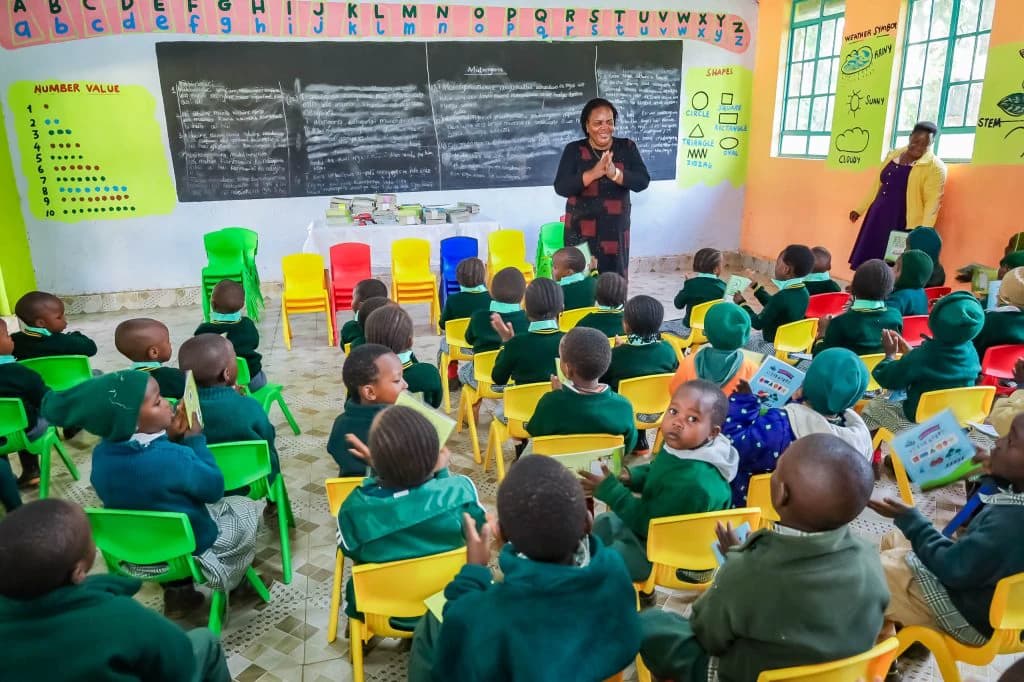
Preschool teaching is as much about physical and emotional caregiving as it is about introducing the alphabet. A child may suddenly need to use the washroom, soil themselves, throw a tantrum or suffer a minor playground injury. When a sole teacher must leave the front of the room to attend to one child, the rest of the class is left unattended. Learning stops, and a safety hazard is created.
Our national framework anticipated this problem. The National Pre-primary Education Policy Guidelines (2018) set the teacher-learner ratio in a regular pre-primary class at 1:25 and require an assistant teacher to be attached to each class. By policy, a standard preschool therefore needs both an ECDE teacher and an assistant teacher. The assistant manages routine physical needs, behavioural disruptions and environmental tasks so that the main teacher can maintain learning without compromising child safety or hygiene.
The Council of Governors (CoG) Scheme of Service for ECDE Teachers has long recognised this division of labour. It details the career progression for both the Assistant ECDE Teacher (certificate holder) and the ECDE Teacher (diploma holder). Abolishing the certificate courses that feed into the assistant position, the writer argues, would make the scheme obsolete and leave county governments facing a future staffing gap.
Looking abroad, he says, high-performing education systems do not rely on a single highly qualified individual to run an early childhood classroom alone. They use layered, team-based approaches that combine different skills, and an assistant with a focused, practical certificate may be better attuned to the physical and emotional pace of young children than an educator trained purely in advanced pedagogy.
The policy also raises socioeconomic and constitutional concerns. The certificate pathway has traditionally allowed people with a D+ or below in KCSE to enter the teaching profession. Many of them, he notes, bring natural empathy, local language skills and a deep understanding of the culture of the children they serve. Requiring a C plain or higher for a merged diploma, he argues, locks thousands of capable rural and disadvantaged young people out of a formal teaching career.
MoE should reverse the abolition of the ECDE certificate course, decouple early childhood education from primary school frameworks, and preserve both an accessible Certificate in Early Childhood Assistant Teaching and a distinct Diploma in Early Childhood Education. Only by keeping a minimum of two educators in every class can the youngest learners receive both focused instruction and the personal care they need to thrive.
The writer is the Director of ECDE in Embu County and the Chairman of the ECDE County Directors Caucus, Kenya.

Reader Discussion (0)
Sign in to comment