







Education reforms face a defining test as evidence points to learners advancing through school without consistently mastering the foundational skills needed for success.
Thousands of Kenyan learners face a critical educational disadvantage: progressing through successive grades while struggling with basic reading, mathematics and other essential competencies. Findings from education assessments and independent studies published in 2026 have exposed weaknesses in foundational learning, digital literacy, school attendance and access to essential teaching resources, raising fresh questions about whether classroom progression is translating into meaningful learning.
The findings place renewed pressure on schools, teachers, parents and the government to close the gap between enrolment, grade progression and actual achievement as Competency-Based Education (CBE) continues to take shape.
The challenge is not simply to teach the prescribed curriculum but to establish whether learners understand what they are taught and can apply that knowledge independently. Without timely intervention, weaknesses in foundational skills can follow children from primary school into junior school, senior school and eventually technical training or employment.
The immediate priority must be to identify learning gaps early, address their underlying causes and measure whether every learner is making progress.
Literacy and numeracy remain the foundation
Findings from Usawa Agenda's Foundational Literacy and Numeracy Assessment (FLANA) 2025, published in 2026, highlighted significant weaknesses in foundational learning.
The assessment examined 49,835 children aged 10–15 across all 47 counties, including children both in and out of school.
According to findings reported by the Open University of Kenya, 51.3 per cent of Grade 6 learners in public primary schools could not comprehend a Grade 3-level English passage, compared with 42.3 per cent in private schools. The assessment also found that 43 per cent of Grade 6 learners could not solve a Grade 3-level numeracy problem.
The findings suggest that some learners reach upper primary without mastering skills essential for understanding instructions, interpreting questions, reading independently and solving mathematical problems.
Schools should conduct regular reading and numeracy checks, group learners according to their specific needs and provide targeted practice. Teachers should give struggling learners additional guided reading, comprehension exercises, basic arithmetic practice and individual feedback instead of assuming that covering a topic guarantees mastery.
Mathematics requires targeted intervention
Mathematics remains a particular concern because learners need more than memorised formulas to solve unfamiliar problems and apply concepts in everyday situations.
Reporting on the 2025 Kenya Junior School Education Assessment, The Star noted that only 32.44 per cent of the 1,130,459 learners assessed met or exceeded expectations in mathematics.
Teachers should identify the precise concepts learners find difficult, whether basic operations, fractions, measurement, mathematical language or problem-solving. Practical demonstrations, locally available teaching materials, peer learning and progressively challenging exercises can help learners develop confidence and understanding.
Mathematics remediation should begin as soon as difficulties emerge rather than waiting until learners encounter more demanding content in higher grades.
Progression must reflect actual learning
The 2026 Status of Junior School Education Report by Usawa Agenda identified persistent foundational learning gaps among learners progressing towards senior school.
According to reporting by Nation, 41 per cent of Grade 7 learners lacked both foundational literacy and numeracy competencies. Nearly three in 10 Grade 9 learners still lacked the combined competencies assessed. The report also found that only 27.5 per cent of junior schools had functional science laboratories, while 27 per cent had libraries.
These findings highlight the need to connect assessment with intervention. Schools should not rely exclusively on end-of-term examinations to identify learning difficulties. Short, regular assessments can reveal misunderstandings early enough for teachers to adjust their methods and provide additional support.
Progression decisions should follow applicable education policy, but moving learners forward must not mean abandoning those who have yet to master essential skills.
Digital literacy and practical learning
A Chalan Foundation baseline study published by The Standard in March 2026 surveyed 612 learners and 209 parents or guardians across 51 schools in 10 counties, including West Pokot.
The study found that 33 per cent of learners could not type, 37 per cent could not use email and 52 per cent had never participated in science, technology, engineering, arts and mathematics (STEAM) activities. Although 93 per cent expressed interest in improving their digital skills, many lacked access to functional computer laboratories and structured training.
The findings point to unequal opportunities to develop digital and practical competencies. Schools should prioritise functional computer laboratories, shared-device programmes, teacher training and structured digital-learning activities. Where internet access is unreliable, offline digital resources and practical classroom demonstrations can provide alternatives.
Science and STEAM learning should also involve experiments, projects, design challenges and problem-solving activities. Learners need opportunities to demonstrate what they can do, not simply describe concepts they have memorised.
Absenteeism, poverty and learner retention
Frequent absence interrupts learning and can widen existing gaps. The Chalan Foundation study reported that nearly half of surveyed learners could not attend full school weeks. Among the reported reasons for absence, 58 per cent cited lack of school fees, 51 per cent cited illness and 43 per cent had missed one to two weeks during the previous term. These figures relate to the study's respondents and should not be interpreted as national prevalence rates.
Separately, KNEC data reported in May 2026 showed that 151,691 learners from the pioneer CBE cohort had left the education system before reaching Grade 10, based on recorded progression from Grade 3 to Grade 9. The figures raise concerns about retention, although recorded differences do not establish that every learner had voluntarily dropped out.
Schools should maintain reliable attendance records, follow up promptly when learners are repeatedly absent and work with parents, local administrators and social-support agencies to address barriers. Learners facing financial hardship, illness, disability or other vulnerabilities may need targeted assistance to remain in school.
Keeping learners in class is only the first step; they must also receive support to recover missed learning.
Teacher shortages and inadequate resources
The OECD's PISA 2025 Kenya country note, published in September 2026, reported that 53 per cent of students attended schools where principals said teacher shortages hindered instruction to some extent. A further 54 per cent attended schools where shortages of educational materials constrained teaching, while another 54 per cent were in schools where physical infrastructure shortages presented challenges.
These findings underline the importance of adequate staffing, suitable classrooms, textbooks, libraries, laboratories and other instructional materials.
Teachers also require professional development in diagnosing learning difficulties, differentiating instruction and using assessment results to plan lessons. School leaders should create opportunities for teachers to share effective practices, review learner progress and coordinate remedial support.
The government must align resource allocation and teacher deployment with actual school needs, particularly in underserved communities.
Geographical inequalities and inclusive education
Learning opportunities vary according to location, household circumstances, disability and access to school resources.
Usawa Agenda's findings showed differences in foundational literacy and numeracy outcomes between girls and boys in several primary-school comparisons, while rural learners generally faced greater disadvantages in combined foundational learning.
Schools should use reliable assessment data to identify which groups are being left behind and why. Learners with disabilities may require accessible learning materials, assistive technology, differentiated instruction and appropriate accommodations. Children facing language barriers may benefit from structured language support and explicit teaching of subject-specific vocabulary.
Interventions should respond to each learner's demonstrated needs rather than rely on general assumptions about performance.
Learner wellbeing is part of academic success
The OECD's PISA 2025 Kenya country note reported that 55 per cent of students surveyed experienced at least one form of bullying a few times per month or more. Approximately 35 per cent had skipped at least one school day during the two weeks preceding the assessment.
These findings reinforce the need for safe and supportive learning environments. Bullying, exclusion and emotional distress can undermine concentration, confidence and participation.
Schools should enforce clear anti-bullying procedures, strengthen guidance and counselling, encourage learners to report concerns and involve parents where appropriate. Positive discipline and respectful teacher-learner relationships can help learners feel secure enough to participate and seek assistance when they struggle.
How Kenya can close the learning gaps
Addressing the gaps requires a coordinated response built around practical measures.
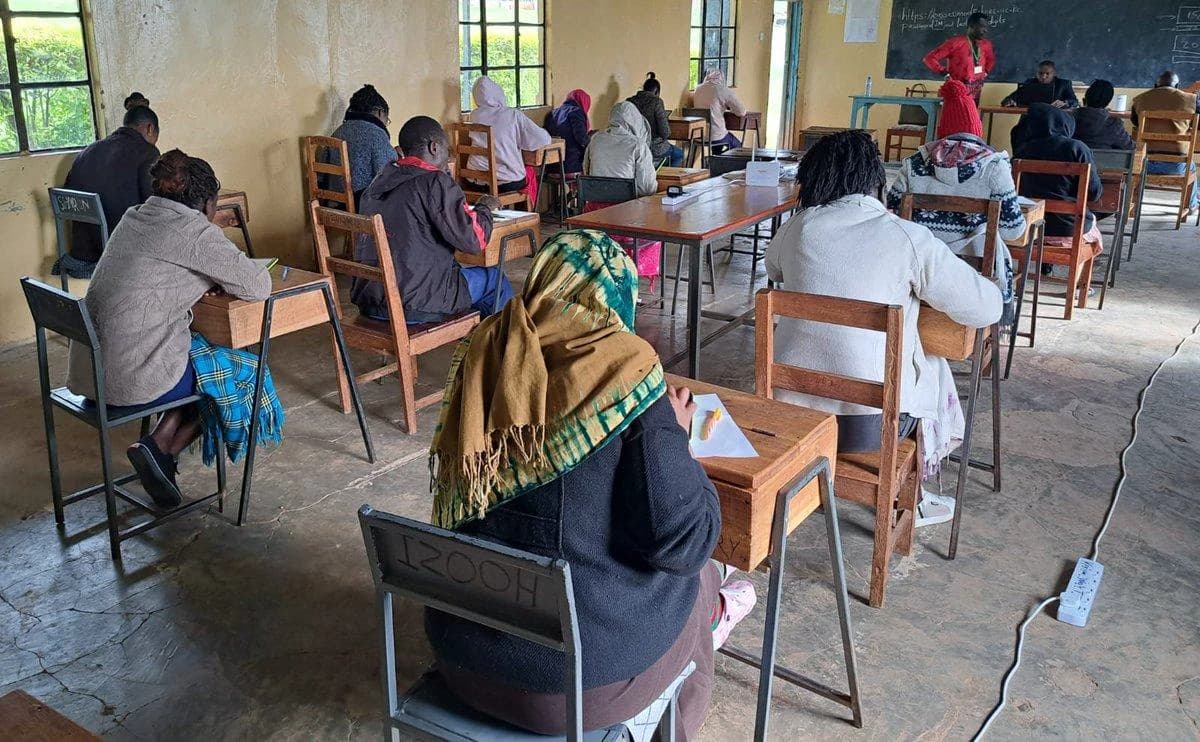
First, assess before difficulties widen. Teachers should use short diagnostic tasks, oral reading, comprehension exercises, mathematics problems and practical activities to identify exactly what learners have not mastered.
Second, provide targeted remedial teaching. Learners should receive additional instruction focused on their specific weaknesses. Small-group teaching, peer support, guided practice and structured catch-up sessions can complement regular classroom instruction.
Third, strengthen teacher capacity. Teachers need practical training in differentiated instruction, formative assessment, inclusive education and the use of assessment evidence to adjust teaching.
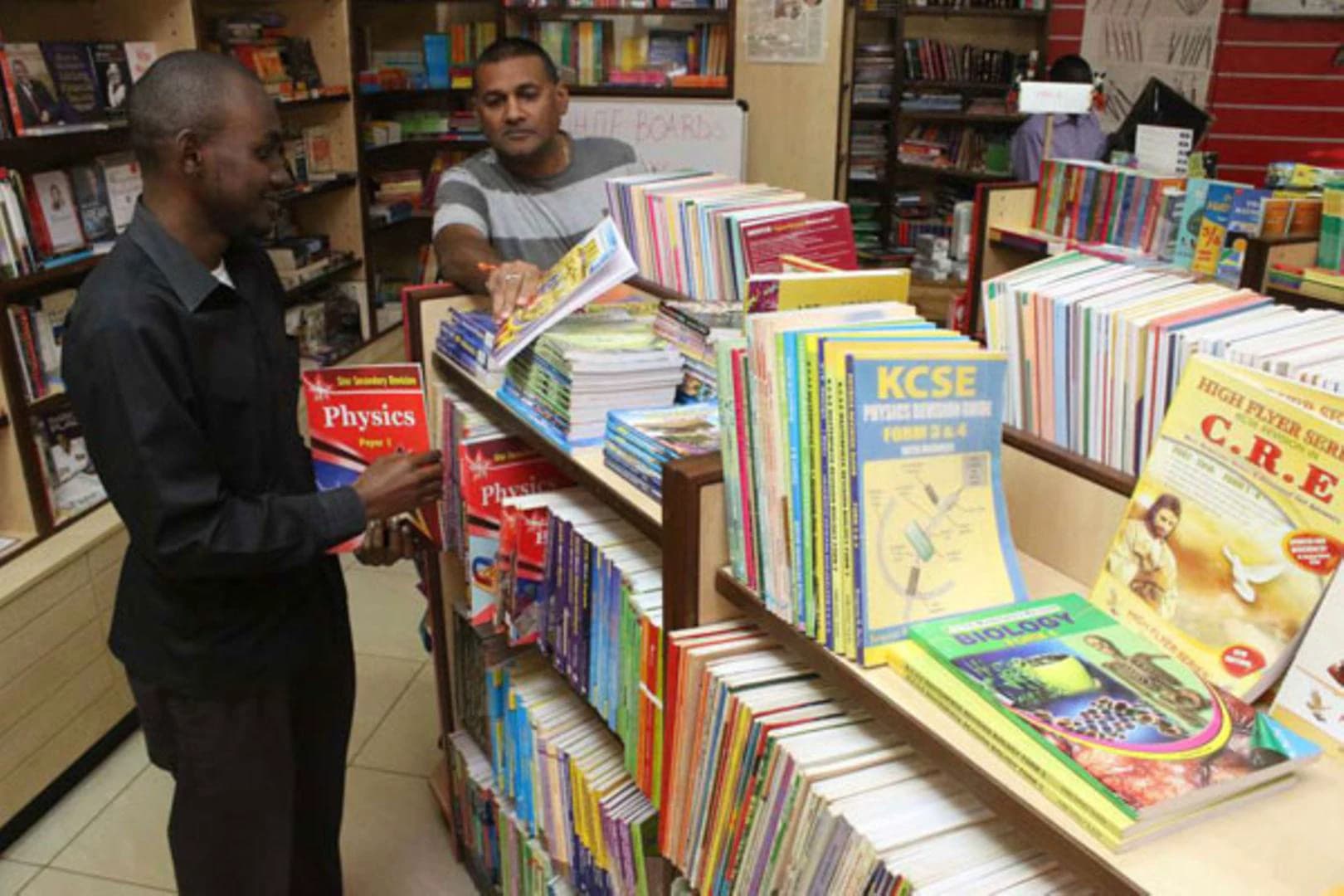
Fourth, improve access to learning resources. Schools require appropriate textbooks, reading materials, mathematics resources, functional laboratories, libraries, digital devices and accessible facilities.
Fifth, address attendance and retention. Schools should monitor absenteeism, engage families early and connect vulnerable learners with available welfare and financial support.
Sixth, make parents active partners. Reading at home, discussing schoolwork, monitoring attendance and maintaining communication with teachers can reinforce learning beyond the classroom.
Finally, measure improvement rather than merely record activity. Schools should track whether learners who receive additional support subsequently improve in reading, writing, numeracy and other targeted competencies. Assessment must lead to action, and intervention must be followed by evidence of progress.
The real test of CBE
Kenya's learning gaps are a warning that educational reform cannot be judged by enrolment, curriculum coverage or transition rates alone. These measures matter, but they must be accompanied by evidence that learners are acquiring the competencies they need.
Teachers must identify difficulties and respond early. School leaders must support effective teaching. Parents must reinforce learning at home, while education authorities must provide the staffing, infrastructure and resources required to make CBE work.
A learner who advances without essential skills is not being adequately prepared for the next stage of life. Kenya must therefore move from counting how many learners progress to establishing how many genuinely learn.
The success of education reform will be measured by whether children can read with understanding, reason mathematically, communicate confidently, use technology responsibly and apply knowledge to real-life challenges.
No learner should be written off because of poor performance, and no learning gap should be ignored because a child has moved to the next grade. Identifying the gap is the beginning; providing effective support is the responsibility; and demonstrated improvement is the result the education system must deliver.




Reader Discussion (0)
Sign in to comment