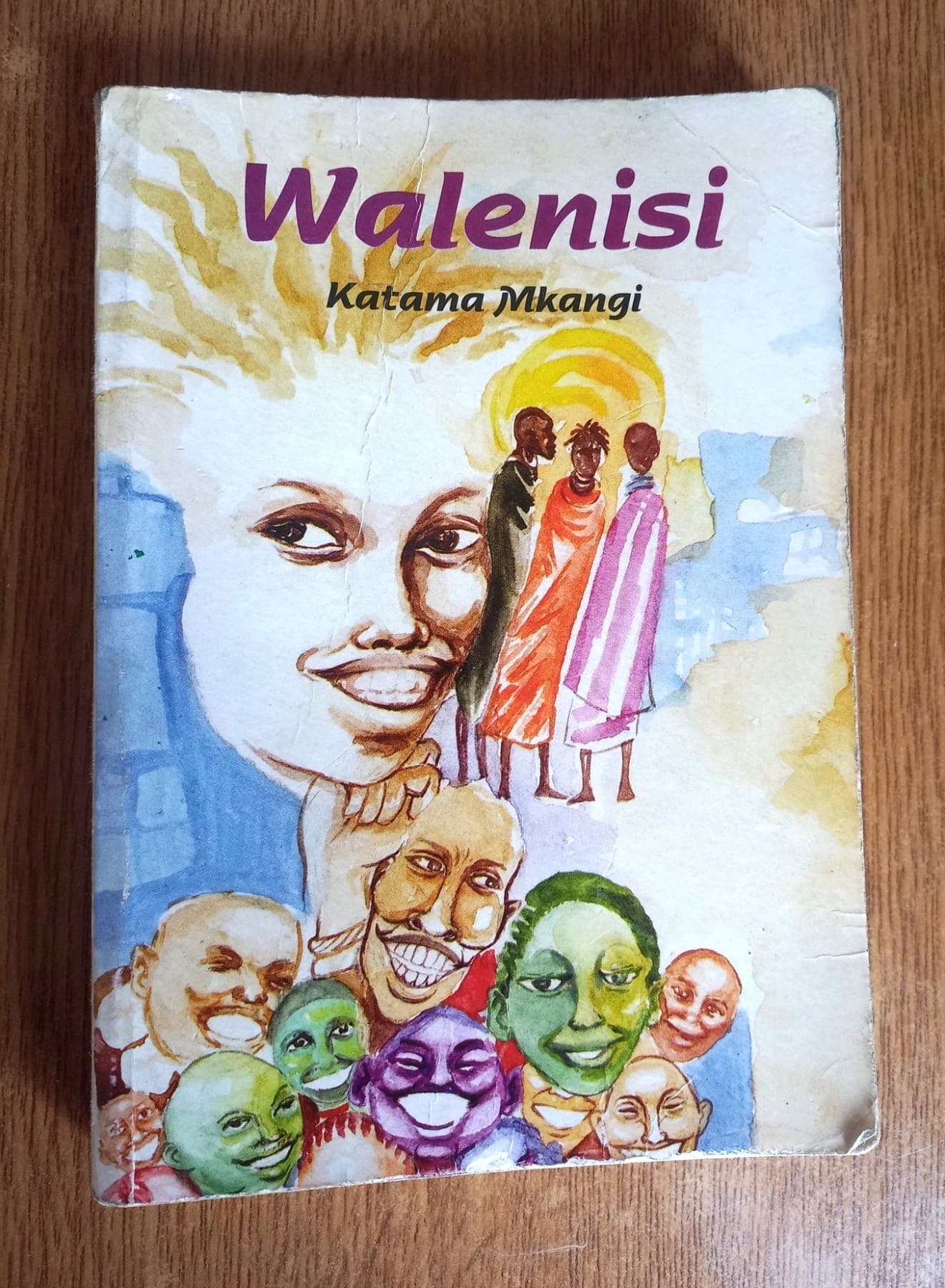
If there is one Kiswahili novel that every Kenyan learner and teacher must read in 2026, it is Walenisi by the late Katama G. Mkangi.
Published in 1995, Walenisi has for years been treated by some readers as just another secondary school set book to be summarised for examinations. That is a great disservice to what is arguably one of Kenya's most prophetic political novels.
The University of Georgia Press in the United States has selected Walenisi as one of five titles announced for its African Language Literatures in Translation series. Its English translation, They Are Us, by Richard Prins, is scheduled for publication in January 2027, a confirmation of its growing international literary recognition.
A journey that exposes political oppression
The story is simple but unsettling. A young man named Dzombo is condemned to death for challenging an oppressive system. Instead of being executed by conventional means, he is placed aboard a spacecraft intended to destroy him.
But Dzombo survives. His extraordinary journey takes him through space before he arrives on the planet Walenisi, where he encounters a society markedly different from the one he left behind.
The people of Walenisi have overcome a history of oppressive rule and established a society characterised by greater equality, justice and shared prosperity. Their experiences force Dzombo to reconsider the political and economic conditions in his own society.
Through this contrast, Mkangi exposes the injustices of dictatorship, exploitation and systems that deny ordinary citizens dignity and opportunity.
Mkangi wrote fiction, but he was writing about Kenya.
Why Walenisi remains relevant to Kenya
The political message of his novel is clear: political independence without meaningful freedom, justice and the ability to think independently is incomplete.
The oppressive systems portrayed in Walenisi can be interpreted as a criticism of neocolonialism, economic exploitation and political leadership that places power and wealth above the interests of ordinary citizens.
This is why the book is extremely relevant in Kenya today.
When our teachers and learners read about national debt, expensive loans tied to foreign conditions, multinational companies benefiting from local resources while communities remain poor, and leaders whose policies appear disconnected from the needs of citizens, they encounter questions that resonate with *Walenisi*.
The debate on Gen Z protests, youth unemployment and the loss of cultural identity can also be examined through the political questions Mkangi explored in his novel.
These are contemporary parallels rather than events literally depicted in the book, but they demonstrate the continuing relevance of its themes.
A powerful lesson in leadership and independent thinking
Politically, Walenisi is a very bold book.
Katama Mkangi was a human rights activist who suffered detention during the Moi era because of his political activities and opposition to authoritarian rule.
In Walenisi, he does not simply attack one tribe or one political party. He attacks a system.
He challenges the structures of oppression, inequality and exploitation that allow powerful individuals to prosper while ordinary citizens struggle.
He warns that societies cannot achieve meaningful freedom unless citizens develop the knowledge, courage and independence of thought needed to question injustice.
For learners, Walenisi is an eye-opener.
It exposes them to rich Kiswahili literary expression, but more importantly, it teaches critical thinking.
It encourages a Form Three student to ask, whenever a politician or a foreign agency promises heaven, who benefits from the arrangement? Who exercises power? And whose interests are being protected?
Teachers should take Walenisi beyond examinations
For teachers, the novel is a powerful tool for making Kiswahili relevant.
Instead of teaching it merely as an extraordinary journey to another planet, it should be taught as a mirror through which learners can examine politics, the economy and society today.
Its treatment of oppression, leadership, equality and social transformation provides opportunities for classroom discussion, literary analysis and independent reflection.
Walenisi is not just a novel to be read for examinations. It is a warning about the dangers of oppressive systems and a reminder that a different society is possible.
More than 30 years after its publication, Mkangi's message remains worth reading, questioning and discussing.


Reader Discussion (0)
Sign in to comment