







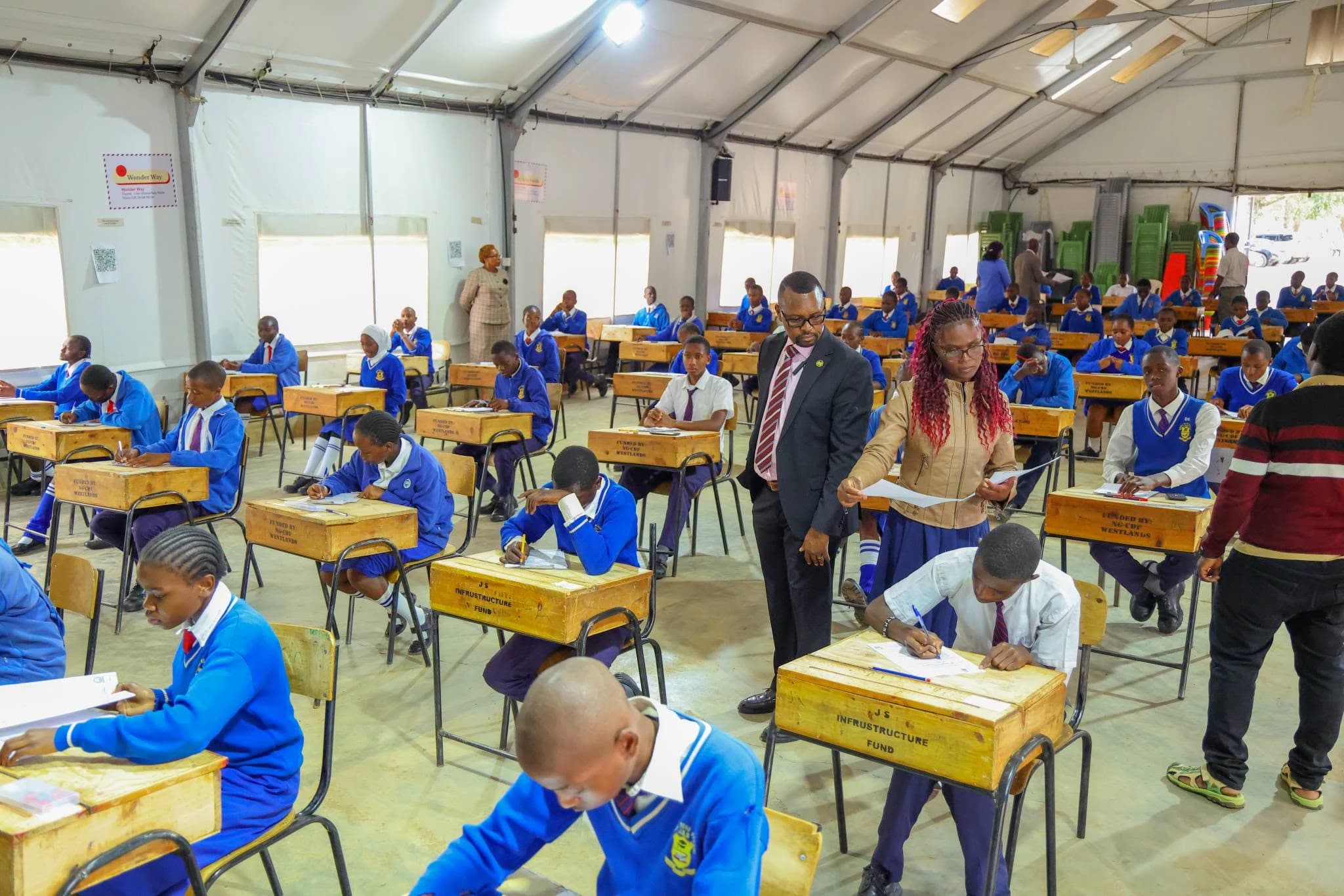

A school’s reputation is not built by its buildings, uniforms or examination trophies alone. It is shaped by the decisions made behind the principal’s office door.
From teacher morale and learner discipline to academic performance and institutional integrity, the principal’s leadership can transform an ordinary school into an institution of distinction or reduce a promising one to a shadow of its potential.
Why do some schools flourish while others, despite having comparable resources, qualified teachers and operating under the same education policies, struggle to achieve meaningful progress?
Why do teachers in some institutions demonstrate extraordinary commitment while their counterparts elsewhere appear professionally disconnected? Why do some schools develop reputations for discipline, innovation and academic excellence while others remain trapped in administrative challenges?
The answer is not always found in government funding, infrastructure, staffing levels or the curriculum. Sometimes, the most decisive difference is sitting in the principal’s office.
The principal is arguably the most influential individual in the daily life of a school. The occupant of that office shapes institutional direction, establishes expectations, influences professional relationships and creates the environment in which teachers and learners operate.
A principal can unlock an institution’s collective potential. Equally, poor leadership can suffocate initiative, destroy morale and encourage mediocrity.
School leadership must therefore never be reduced to an administrative appointment. It is a responsibility whose consequences extend into classrooms, families and the future of society.
A school reflects the quality of its leadership
A school is often described through its examination results, infrastructure, enrolment, discipline and co-curricular achievements. Yet these visible indicators tell only part of the story.
Behind them are decisions about people, priorities, resources and institutional values.
The principal determines whether the school operates as a coordinated professional community or as a collection of individuals pursuing disconnected responsibilities.
Where leadership is purposeful, teachers understand their roles, learners know what is expected of them, parents have confidence in the institution and resources are directed towards meaningful objectives.
Where leadership is weak, even well-equipped institutions can struggle with poor coordination, staff divisions and declining morale.
A magnificent school compound cannot compensate for a dysfunctional management culture. The real strength of a school is found in the quality of its relationships and the effectiveness of its leadership.
One of the greatest challenges facing school leadership is confusing administrative activity with institutional progress.
A principal may spend the entire day signing documents, attending meetings, preparing reports and handling correspondence. These responsibilities are necessary, but they do not automatically translate into educational excellence.
A school can be administratively busy without being educationally productive.
The modern principal must understand classroom realities, identify instructional weaknesses, support teachers and ensure that the curriculum produces meaningful learning experiences.
This responsibility is particularly important under Competency-Based Education (CBE).
CBE demands greater attention to competencies, creativity, critical thinking, communication, collaboration and individual talents. This transformation cannot succeed through circulars and staffroom announcements alone.
Teachers require professional guidance, resources and an enabling environment.
The principal must therefore become an instructional leader who understands curriculum implementation and appreciates the realities confronting teachers.
The question should not simply be whether teachers have completed their schemes of work, but whether learners are developing the competencies the curriculum intends to nurture.
Teacher morale is the true test of leadership
A principal’s real influence is often revealed not during formal speeches but in the staffroom.
This is where professional relationships are formed, concerns are discussed and institutional commitment is either strengthened or weakened.
Teachers are the engine of educational delivery. Their effectiveness, however, is influenced by the conditions under which they work.
Teachers need direction, but they also need respect. They need supervision, but equally need professional trust. They need accountability, but also deserve recognition.
A principal who regards teachers merely as employees who must obey instructions risks overlooking the human and professional dimensions of education.
The strongest leaders understand that motivation cannot be manufactured through threats.
A teacher who feels respected and professionally valued is more likely to develop ownership of the institution’s objectives.
This does not mean tolerating negligence. Leadership requires firmness, but firmness without fairness eventually becomes oppression, while authority without accountability becomes personal power.
An effective principal knows when to instruct, when to listen, when to correct and when to defend the professional dignity of teachers.
Some school leaders mistakenly measure effectiveness by how much fear they command.
They believe that unquestioned instructions and the absence of disagreement demonstrate strong leadership.
But silence is not necessarily agreement, and obedience is not necessarily commitment.
A school where teachers are afraid to express professional concerns may appear orderly while serious problems remain unresolved.
Fear can produce temporary compliance, but it rarely builds lasting institutional loyalty.
Respect is earned through competence, integrity, fairness and consistency.
A respected principal does not need to intimidate teachers to secure cooperation. Such a leader builds confidence through sound decisions and applies institutional rules fairly.
A fearful staff may work to avoid punishment. A committed staff works because it believes in the institution’s mission.
The objective of leadership should be to build the second kind of institution.
Every school has written rules and professional expectations. However, their effectiveness depends heavily on whether leaders demonstrate them.
A principal who demands punctuality must respect time. A leader who insists on honesty must demonstrate integrity. Someone who demands accountability must be prepared to account for personal decisions.
Leadership credibility is built through consistency between words and actions.
Teachers and learners observe how principals handle disagreements, manage resources, treat support staff and respond to mistakes.
A principal cannot preach teamwork while practising exclusion or build accountability through selective enforcement of rules.
The principal’s conduct becomes an unofficial curriculum through which the entire school learns what is acceptable.
Curriculum reforms, assessment responsibilities, learner welfare and technological changes require considerable professional commitment from teachers.
Principals must recognise that successful implementation of education policies depends on the support provided at school level.
It is not enough to transmit instructions from education authorities and expect teachers to implement them without difficulty.
The principal should promote mentorship, professional collaboration and continuous learning.
Where performance is unsatisfactory, leadership must establish the underlying causes.
Is the teacher lacking relevant skills? Are resources inadequate? Is there a motivation problem? Or is there genuine professional negligence?
Effective intervention must address the actual problem rather than merely punish its visible consequences.
A principal who develops teachers strengthens the institution far beyond the duration of an individual administrative appointment.
Great principals build institutions that outlive them
Academic performance remains important, but reducing the entire educational mission to examination grades creates a narrow understanding of institutional success.
Learners possess different abilities and talents. Some demonstrate exceptional academic potential, while others excel in sports, music, drama, technology, entrepreneurship and creative innovation.
Under CBE, identifying and nurturing these abilities is an essential responsibility.
A school should not become an examination factory that measures every learner using a single yardstick.
The principal must champion an environment where academic achievement goes hand in hand with character development, practical competencies, creativity and responsible citizenship.
The ultimate question is not simply how many learners attained particular grades, but whether the institution helped young people discover their abilities and prepared them for meaningful participation in society.
Some principals centralise every decision, discourage initiative and make the institution dependent on their personal presence.
Such leadership may create the appearance of control, but it does not build a sustainable institution.
An effective principal develops systems, empowers colleagues, delegates responsibility and encourages other teachers to assume leadership roles.
The true test is what remains after the principal leaves office.
Have teachers become more effective? Have institutional systems improved? Is there a positive school culture? Are learners better prepared for life?
The greatest principals do not seek to become indispensable. They build institutions capable of continuing to excel without them.
The principal’s office carries enormous influence, but that influence must be exercised with wisdom, humility and responsibility.
Behind every administrative file is a teacher. Behind every examination candidate is a learner. Behind every school budget is an educational obligation.
The true measure of a principal is not the number of people who fear the office, the frequency of official meetings or the authority exercised over teachers.
It is the positive difference made in the institution and the lives of the people entrusted to its care.
A principal does not become great by making a school revolve around one office.
A principal becomes great by inspiring commitment, developing people, strengthening institutions and making every member of the school community believe that excellence is possible.
That is the difference between occupying the principal’s office and providing leadership worthy of the institution.
Suggested photo caption: A school principal engages teachers during a staff meeting. Effective school leadership requires integrity, fairness, professional support and a shared commitment to improving learning outcomes while creating an environment where teachers and learners can thrive.




Reader Discussion (0)
Sign in to comment