The US state of Michigan has launched a literacy reform programme to address falling reading performance among primary school learners, placing teacher training, research-based instruction and early support for struggling readers at the centre of its efforts to reverse a decade-long decline.
The programme, called Every Child Reads, follows years of disappointing results. According to figures reported by WDIV ClickOnDetroit, 50 per cent of Michigan's third graders were proficient or better in English Language Arts in 2015. By 2026, the share had fallen to 38.2 per cent, the lowest in the 12-year history of the state's assessment. The decline has renewed debate over teaching methods, teacher preparation, policy consistency and the effectiveness of public spending on education.
Michigan's response offers a lesson for education systems elsewhere: improving literacy takes more than curriculum changes and examination reforms. It demands sustained investment in teachers, early identification of learning difficulties and accountability for what happens in the classroom.
Three priorities of the reform(Education News Kenya — https://educationnews.co.ke/news/lessons-for-kenya-as-michigan-commits-millions-to-literacy-as-reading-scores-hit-12-year-low)
The state's strategy rests on three priorities: an early start, proven teaching methods and extra support for struggling learners.
On the early start, Michigan is expanding free prekindergarten through its PreK for All initiative. The aim is to equip children with language, vocabulary and early literacy skills before they enter formal schooling, since the foundations of reading begin long before the first primary school lesson. By widening access to early childhood education, the state hopes to narrow school-readiness gaps and reduce the number of learners who start school without essential language and communication skills. The approach shifts attention from responding to poor reading after it appears to preventing difficulties through earlier preparation.
The second priority is intensive training for teachers in research-based reading instruction, commonly described as the science of reading. It emphasises the explicit teaching of phonics, phonemic awareness, fluency, vocabulary and comprehension, which help children recognise sounds, connect letters to sounds, read words accurately and understand what they read. Michigan is expanding training through the Language Essentials for Teachers of Reading and Spelling programme, known as LETRS, and is strengthening literacy coaching so that teachers receive practical guidance from specialists as they apply the new methods. The reforms are meant to close the gap between teachers understanding literacy theory and applying effective strategies in actual lessons. School districts are also being encouraged to adopt reading curricula aligned with research, to bring more consistency to instructional materials across schools.
The third priority is helping struggling learners earlier. Schools are expected to strengthen reading assessments, screen learners for characteristics associated with dyslexia and provide targeted interventions based on individual needs. Support measures include small-group instruction, tutoring and extra learning time before and after school and during holidays. The principle is to identify the specific difficulty, provide appropriate help and monitor whether it is working, instead of letting learners move through grades with unresolved reading problems.
How much Michigan is investing
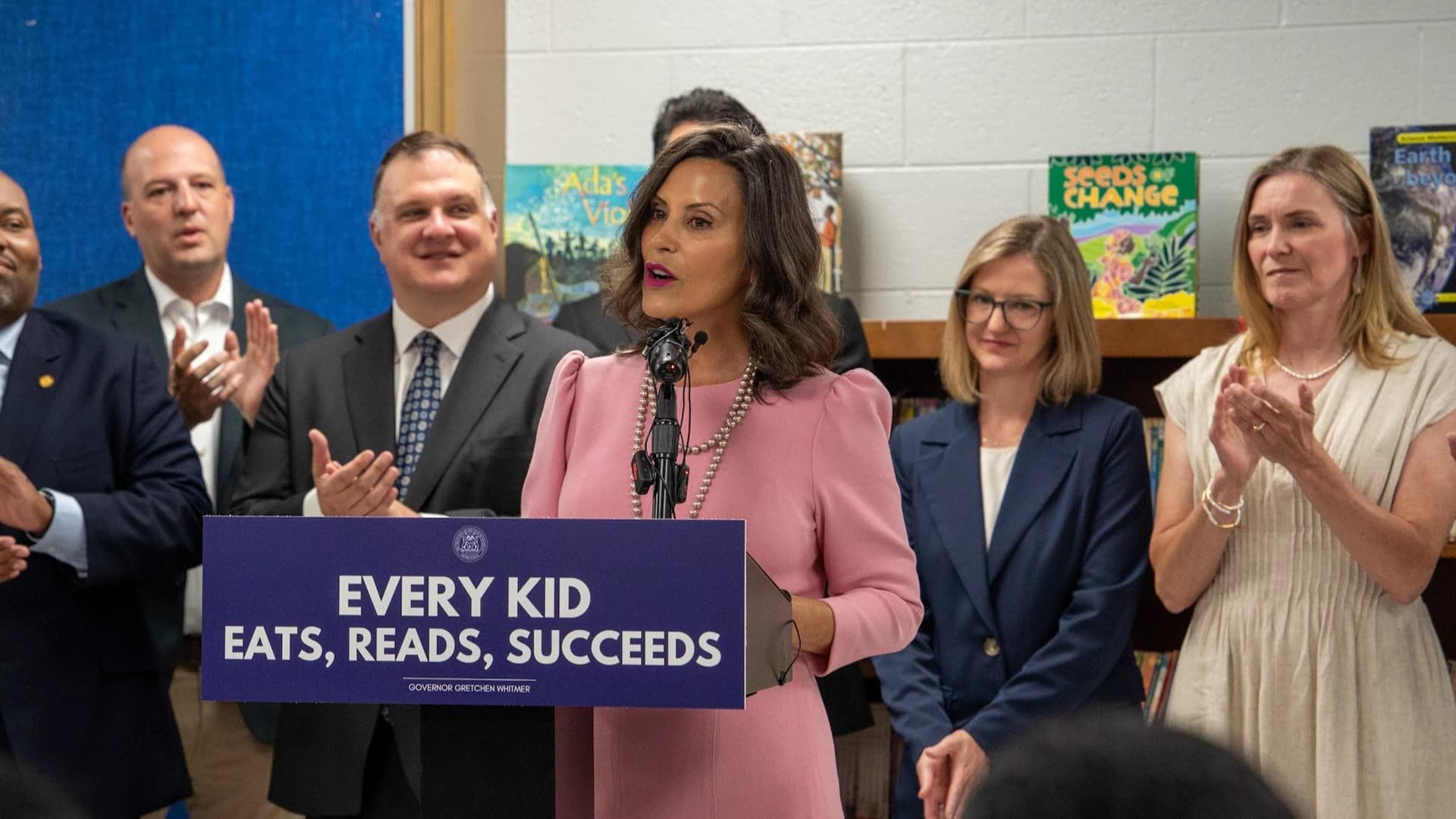
Governor Gretchen Whitmer initially proposed $625 million for literacy and student achievement in her 2026 budget proposal. According to the report, the education budget signed in July includes several allocations linked to Every Child Reads: $75 million for LETRS teacher training, $50 million to encourage the adoption of reading curricula aligned with the science of reading, $50 million for high-impact tutoring, $135 million for expanded before-school, after-school and summer learning programmes, and $10.5 million for literacy coaching. The allocations combine teacher development, instructional materials and direct learner support, instead of relying on a single intervention.
Michigan has also enacted legislation requiring science-of-reading training for elementary teachers and is moving towards broader early literacy and dyslexia screening requirements. The reforms are being introduced in phases, so their full impact will not be immediate.
Accountability will decide whether it works
Despite the funding, Michigan faces the difficult task of turning policy into measurable classroom improvement. Education leaders acknowledge that a new programme does not automatically produce better reading. Teachers must be properly prepared, schools must apply the approaches consistently and authorities must monitor progress.
Carey Wright, Maryland's state superintendent and a former Mississippi education leader, has stressed the importance of job-embedded coaching and consistent implementation. Mississippi's experience is often cited in American education debates as an example of how sustained attention to early reading can contribute to better outcomes.
Michigan must also deal with concerns about policy continuity. Changes in political leadership can mean shifting priorities, interrupted programmes and inconsistent implementation, so the challenge is to keep literacy reform a long-term commitment and not a temporary initiative tied to one administration.
What it means for Kenya's CBE
Michigan's experience raises questions for Kenya as it implements the Competency-Based Education (CBE) curriculum. Foundational literacy is essential across the curriculum, since learners who struggle to read and understand instructions may also have difficulty in mathematics, science and other learning areas.
Kenya can learn from Michigan's approach in several ways. Early identification of reading difficulties should be strengthened, so that learners are supported before they fall far behind. Teacher professional development should focus on practical classroom skills, including phonics, comprehension, vocabulary and differentiated instruction. Schools need suitable reading materials and structured intervention programmes for learners who have not mastered the basics. Assessment results should trigger remedial support and not only identify learners performing below expectations, and authorities should monitor implementation and learning outcomes consistently to ensure that funding and policy commitments lead to measurable gains.
None of this means Kenya should simply copy Michigan's model. The two systems operate under different financial, institutional and social conditions, and any adaptation would have to reflect Kenya's curriculum, teacher deployment, class sizes, language environment and resources. The central principle still applies: education reforms should be judged by what learners can actually do, not by the policies announced or the money allocated.
Michigan's literacy decline developed over many years, and reversing it will take sustained effort. Every Child Reads combines early childhood preparation, research-based instruction, teacher training, literacy coaching and targeted help for struggling learners. Its success will depend on whether these measures are carried out consistently and whether later assessments show genuine improvement.
For Kenya and other countries pursuing curriculum reforms, the wider message is that foundational literacy cannot be left to teachers alone, or treated as a problem to be addressed only when learners fail examinations. It needs coordinated action by governments, school leaders, teachers, families and education specialists. In the end, the success of any literacy strategy will be measured not by the size of its budget or the number of programmes launched, but by whether more children can read accurately, understand what they read and use it to learn independently.






Reader Discussion (0)
Sign in to comment