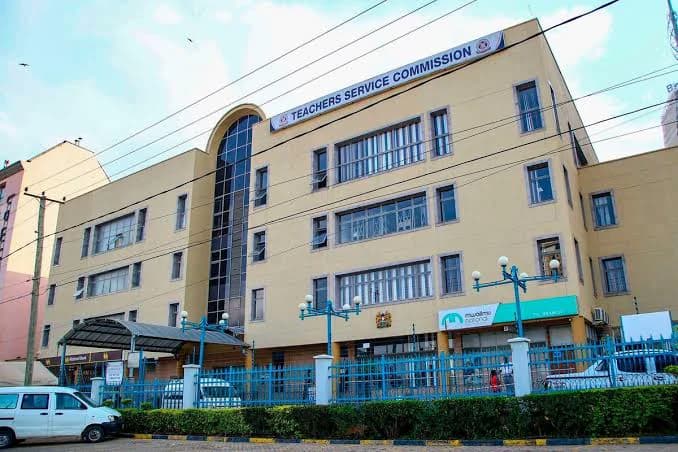
Junior Secondary School (JSS) teachers are demanding that the Teachers Service Commission (TSC) restore leadership positions lost by teachers who were deployed from primary schools to teach Grades 7 to 9, arguing that the transition has erased administrative experience accumulated over years.
The affected teachers include those who served as Senior Teachers, Deputy Headteachers and Heads of Department (HODs) before deployment. While they retained their teaching positions after moving to JSS, many say their administrative responsibilities and status did not move with them.
They are now asking TSC to either reinstate the substantive positions they held before deployment or establish equivalent JSS leadership positions that recognise their experience.
The demand has opened a new front in the continuing debate over how JSS teachers should be managed, promoted and placed within Kenya's education system.
Teachers who previously served as Senior Teachers say their experience in supervising colleagues, coordinating school programmes, supporting discipline and assisting school administration should count when leadership positions are assigned in JSS.
Those who served as Deputy Headteachers similarly want their previous management experience recognised, rather than being treated solely as classroom teachers after deployment.
HODs are making a related case. Having previously coordinated departments, supervised teachers and monitored curriculum implementation, they argue that such responsibilities should provide a basis for appointment to equivalent positions within JSS.
Their argument is that deployment should change the level at which a teacher works, not wipe out professional experience already earned.
They also want previous administrative service to be considered when TSC conducts promotions and makes appointments to leadership positions in JSS.
The demands come against the backdrop of an unusual administrative arrangement in which JSS operates within primary school establishments, with JSS teachers often reporting through primary school headteachers.
Teachers argue that the arrangement has created uncertainty over who should exercise authority over JSS, how leadership positions should be allocated and how resources should be managed.
The JSS Teachers Association, led by chair James Odhiambo, has been pushing for a more independent administrative arrangement, arguing that the needs of adolescent learners and JSS teachers are not always adequately addressed through structures designed around primary education.
Among the proposals advanced by teachers are separate Boards of Management, dedicated capitation and a clearer command structure for JSS.
The argument is not simply about administrative titles. Teachers say a properly defined structure would also determine who qualifies for leadership, how those positions are filled and how experienced teachers can progress professionally.
The leadership dispute is closely linked to concerns over the career progression of teachers deployed to JSS.
Many teachers moved from primary schools to teach Grades 7 to 9 without a corresponding change in job group, even as their teaching responsibilities shifted to a different level of the basic education system.
Teachers therefore want a career structure that recognises their qualifications, teaching experience, previous administrative service and the specialised demands of handling JSS learners.
The issue has also featured in discussions around the review of the Career Progression Guidelines (CPG), with the Kenya Union of Post Primary Education Teachers (KUPPET) pressing TSC to address the structure and progression of JSS teachers.
The union has argued that career progression must reflect the realities of the restructured education system rather than leaving teachers deployed to JSS in positions that do not adequately recognise their responsibilities.
The latest demand for restoration of administrative positions has consequently strengthened the wider campaign for greater JSS independence.
Teachers contend that if JSS is to remain a distinct stage of basic education, its staffing and leadership arrangements must also be clearly defined.
They want a system in which teachers who already possess leadership experience can compete for appropriate JSS positions rather than losing their previous administrative standing simply because of deployment.
Reader Discussion (0)
Sign in to comment