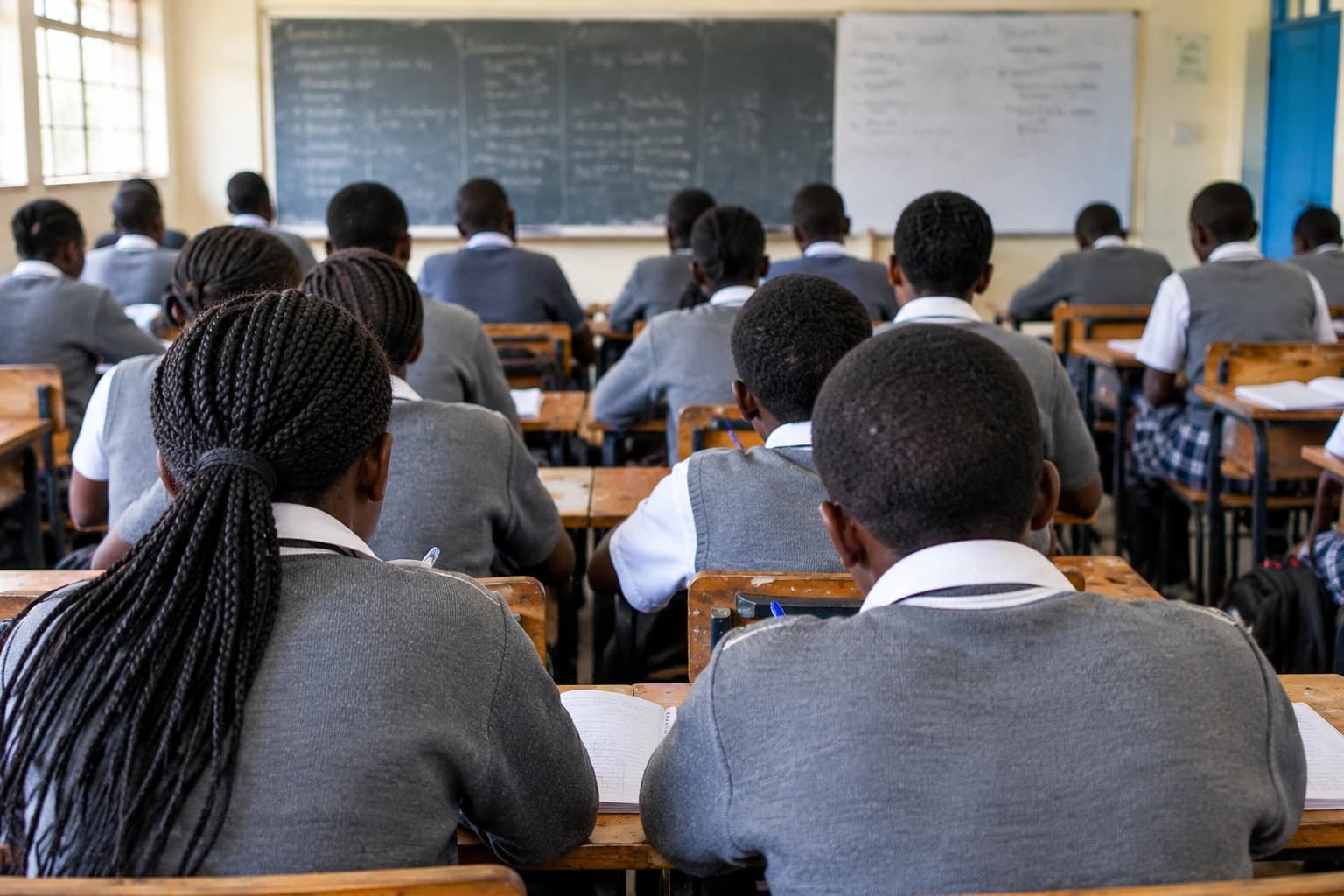
JSS learners are dangling precariously between two educational worlds—primary-school teachers who have nurtured them through childhood and JSS teachers now expected to steer them through adolescence—and the strain is becoming increasingly visible in classrooms, particularly in urban and peri-urban schools.
The challenge confronting Junior Secondary School (JSS) is bigger than a question of unruly learners. It is a difficult passage between childhood and adolescence, occurring at a time when learners are becoming more independent, questioning authority, seeking peer acceptance and navigating profound physical, emotional and social changes.
The challenge appears particularly pronounced in urban and peri-urban areas, where schools are confronting rapidly changing learner behaviour, intense peer influence, digital exposure, population pressure and growing demands on teachers. These areas often sit at the intersection of rapid urbanisation and changing family and social structures, creating an environment in which traditional forms of parental and school authority can be tested more frequently.
For many learners, the habits and relationships developed in primary school do not automatically disappear when they enter JSS. Yet the expectations of the new environment can be markedly different. They encounter more teachers, new subjects, greater academic demands, different classroom routines and increased responsibility for their own learning.
The learner is therefore caught between worlds: no longer a primary-school child, but not yet a mature secondary-school student.
That gap can create confusion and resistance, particularly where expectations are inconsistent between teachers, parents and school administrators. A learner who was closely guided by one primary teacher may suddenly find themselves moving between several JSS teachers, each with different teaching styles, classroom rules and expectations.
For teachers, the transition is equally demanding. Primary teachers have traditionally played a highly nurturing role, while JSS teachers are expected to combine subject teaching with the guidance required by adolescents. The distinction is not always clear, and the learner can become the unintended casualty when the two approaches fail to connect.
This is where the growing concern over JSS indiscipline becomes more complicated.
Reports of defiance, classroom disruption, absenteeism, bullying, fighting, disrespect for teachers, destruction of school property and misuse of digital devices cannot simply be dismissed as evidence of a badly behaved generation. They may also reveal a system struggling to adjust to the developmental needs of learners moving through a critical stage of life.
In urban and peri-urban settings, these pressures can be intensified by rapid population growth, crowded schools, diverse social backgrounds and constant exposure to digital and commercial influences. Learners may also move between different social environments, making the task of establishing a common school culture more demanding.
But this should not be interpreted to mean that indiscipline is an exclusively urban problem. Rural schools face their own challenges, and learner behaviour is shaped by a combination of family, community, school and individual circumstances.
Digital influence and peer pressure
The environment surrounding today's learner has changed dramatically. Social media, smartphones and the internet have created powerful alternative sources of information, entertainment, language and behavioural influence.
A learner can leave the classroom physically but remain connected to a digital world that continues shaping attitudes and relationships. Cyberbullying, inappropriate online content, social media challenges, recording and sharing incidents involving teachers or fellow learners, and misuse of digital devices can extend school indiscipline beyond the classroom and into homes and online spaces.
Peer pressure adds another layer. Adolescents often attach enormous importance to acceptance by their peers. Behaviour that attracts attention or status within a group can quickly spread, while a learner who behaves responsibly at home may behave differently when surrounded by classmates seeking recognition.
Yet blaming learners alone would ignore the adults and institutions surrounding them.
Parents remain central to discipline. Schools cannot successfully cultivate values that are consistently undermined outside the classroom. Communication between parents and teachers therefore needs to extend beyond academic performance to include behaviour, attendance, relationships and significant changes in a learner's attitude.
The home-school relationship becomes particularly important when disciplinary action is required. When parents automatically reject every school intervention, or when schools communicate only after a problem has escalated, opportunities for early correction are lost.
Teachers, meanwhile, are carrying a responsibility that extends beyond delivering curriculum content. Under Competency-Based Education (CBE), they are expected to nurture competencies, values, social skills and responsible citizenship.
That requires teachers to understand the developmental stage of the children they teach.
Managing adolescents demands classroom-management skills, emotional intelligence, patience, counselling awareness and an understanding of adolescent behaviour. A teacher may know a subject exceptionally well but still struggle if the classroom environment requires constant negotiation of authority.
Teacher authority is therefore critical. A classroom cannot function effectively when rules are unclear or consequences are unpredictable. Learners quickly notice inconsistencies between teachers, departments and school administrators.
Discipline is more effective when expectations are clear, consequences are fair and rules are consistently applied. Authority should not depend on fear. It should be anchored in a school culture where learners understand boundaries and accept responsibility for their choices.
But discipline should not become a permanent contest between teachers and learners.
Counselling and learner support
Listening to children does not mean surrendering authority. Schools can create structured opportunities for learners to discuss concerns about their learning environment, relationships, academic workload, peer pressure and school rules. Such conversations can reveal problems before they become disciplinary crises.
Some misconduct may also be a symptom rather than the original problem. Academic frustration, family difficulties, neglect, peer conflict, emotional struggles and difficulties adjusting to adolescence can manifest themselves through absenteeism, aggression, withdrawal or classroom disruption.
This makes counselling and mentorship particularly important in JSS.
Schools should also avoid labelling every difficult learner simply as "indisciplined". Some behavioural challenges may be connected to learning difficulties, communication problems or other unmet educational needs. Early identification and appropriate support can prevent children from being repeatedly punished for challenges that require educational or professional intervention.
Safeguarding must similarly remain central. Bullying, violence, sexual harassment, exploitation, substance exposure and serious threats to learner safety should not be treated as ordinary misbehaviour. Some cases require protection measures, counselling, parental involvement and professional intervention.
The transition into JSS itself deserves greater attention. Learners need structured orientation not only to new subjects and assessment requirements but also to relationships, technology, school rules, responsibilities and the realities of adolescence.
The transition should be a bridge, not a cliff.
That bridge also requires closer cooperation between primary and JSS teachers. Information about learners' strengths, challenges, learning needs and behavioural patterns should not disappear when a child moves from one level to another.
A learner should not feel as though they have entered an entirely different educational universe simply because they have crossed from primary into JSS.
The physical environment matters too. In some urban and peri-urban schools, rapid population growth can place pressure on classrooms, facilities and teacher availability. Overcrowding and limited supervision can make classroom management considerably harder, leaving teachers with fewer opportunities to identify early warning signs or provide individual attention.
Academic pressure can also fuel indiscipline. Learners who repeatedly struggle academically may become disengaged, develop negative attitudes towards school or use disruptive behaviour to mask frustration. Discipline strategies that ignore learning difficulties may therefore address the symptom while leaving the cause untouched.
Shared responsibility for discipline
The example set by adults is equally powerful. Learners watch how teachers, parents and school leaders handle disagreement, mistakes, responsibility and authority. Schools cannot effectively teach respect if the adults around learners consistently model disrespect or inconsistency.
Positive reinforcement should therefore complement corrective discipline. Responsibility, punctuality, honesty, cooperation, improvement and good citizenship should receive recognition rather than allowing misconduct to become the main route through which learners attract attention.
Where wrongdoing occurs, restorative approaches can also help. A learner should understand who was affected, why the behaviour was harmful and what can be done to repair the damage. Accountability becomes more meaningful when it produces learning rather than humiliation.
None of this means schools should abandon firm boundaries. Learners need limits, consequences and accountability. The crucial question is what those consequences are designed to achieve.
The purpose of discipline should be to correct behaviour, protect learners and teachers, restore order and help children develop self-control—not simply to win a confrontation.
Teacher welfare must also be part of the equation. Teachers who feel unsupported when dealing with persistent misconduct can become emotionally exhausted. Clear disciplinary procedures, professional support and strong school leadership are therefore essential to maintaining healthy learning environments.
Ultimately, the JSS discipline challenge is a shared responsibility. Parents provide the foundation, primary and JSS teachers must build continuity, school leaders establish systems, counsellors provide specialised support and learners must accept responsibility for their choices.
The central issue is therefore not whether JSS learners are becoming more difficult.
It is whether the education system has built a strong enough bridge between the child leaving primary school and the adolescent entering JSS.
If that bridge is weak, learners will continue dangling between two educational worlds—too old to be treated as primary children, yet too young to be expected to navigate adolescence without deliberate guidance.
Kenya's response must therefore go beyond punishment. It must strengthen the transition, equip teachers, involve parents, support learners, establish consistent school cultures and recognise the realities of growing up in a digital age.
The ultimate measure of JSS discipline should not be how effectively schools silence difficult learners, but how successfully they help young people move from dependence to responsible independence.
A school has not truly won the discipline battle when children simply obey; it has won when they learn to make responsible choices even when nobody is watching.



Reader Discussion (0)
Sign in to comment