


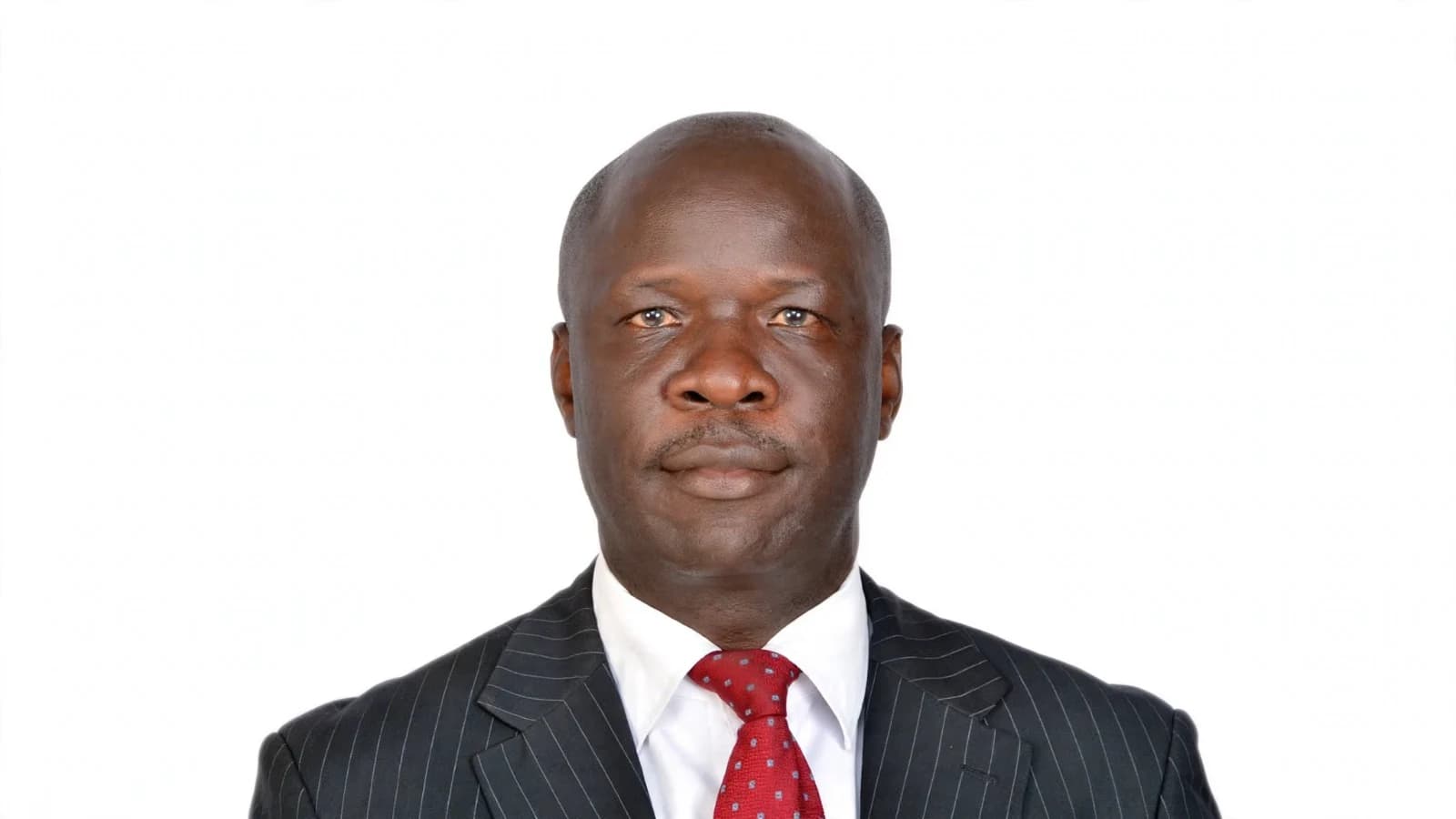





The appointment of Cheptumo Ayabei as Teachers Service Commission (TSC) Commission Secretary and Chief Executive Officer (CEO) has plunged the Commission into another legal battle. A fresh petition seeks to invalidate his appointment barely a day after he was announced as the successful candidate.
The petition, filed by Fredrick Bikeri at the Milimani High Court on November 17, 2026, is the latest chapter in a prolonged recruitment controversy that has already seen court interventions, a cancelled recruitment exercise and fresh advertisements. At the centre of the dispute is whether TSC has consistently observed the constitutional principles of transparency, accountability, fairness and merit in filling one of the most influential positions in Kenya's education sector.
Bikeri's petition questions the transparency of the latest recruitment, particularly how the Commission reduced 124 applicants to five shortlisted candidates and whether the interview arrangements were handled fairly.
According to the petitioner, TSC received 124 applications but did not sufficiently disclose the criteria, evaluation framework and scoring system used to shortlist only five candidates. He also alleges that candidates had initially been informed that interviews would begin at 9am, but the Commission later changed the schedule without proper notice.
He argues that these circumstances raise questions about whether all applicants received equal treatment and whether the recruitment was conducted strictly on merit. He describes the process as allegedly arbitrary, discriminatory and potentially influenced by considerations other than merit.
Bikeri wants the High Court to declare Ayabei's appointment unconstitutional, illegal, null and void. He is also seeking conservatory orders barring Ayabei from assuming office or exercising the powers of Commission Secretary and CEO until the case is determined, and an order compelling TSC to conduct a fresh recruitment exercise.
Judge David Mburu has reportedly certified the matter as urgent and directed TSC and Ayabei to respond within three days. The matter is scheduled for mention on Monday, November 23, 2026.
Certification of urgency should not be confused with an injunction. Through the reported directions alone, the court has not nullified Ayabei's appointment or stopped him from performing his duties. Such restrictions would require further judicial orders.
TSC Chairman Jamleck Muturi has defended the recruitment, maintaining that Ayabei emerged as the successful candidate among the five shortlisted applicants and that the process complied with constitutional requirements.
The Commission has also distanced itself from a score sheet circulating on social media, which purported to show Robert Odette scoring 96 per cent and finishing first, while Ayabei allegedly scored 57 per cent and finished fourth. TSC has dismissed the document as fake, insisting that it should not be mistaken for official recruitment results.
The first challenge: Mombasa
The latest petition cannot be understood without examining the earlier court decisions that have repeatedly interrupted the recruitment process.
The first major legal challenge emerged in May 2025 through a petition filed by Thomas Mosomi Oyugi at the Mombasa Employment and Labour Relations Court. The initial advertisement had been issued on May 6, 2025, with applications closing on May 19, giving interested applicants only 13 days.
The Mombasa court intervened and issued interim orders restraining TSC from proceeding with the recruitment while the legal issues were being considered. On January 29, 2026, the court dealt with TSC's preliminary objections and the application for conservatory orders. The earlier interim restrictions were subsequently vacated, allowing the recruitment process to proceed.
The legal controversy did not end there. On July 31, 2026, Judge K. Ocharo delivered a ruling on Oyugi's application seeking judicial recusal and the interruption of the judgment process. The ruling dealt with the recusal dispute and the attempted withdrawal of the petition. It should not be confused with a final determination of every substantive constitutional issue raised in the original case.
The second challenge: Kiambu
A second significant challenge emerged in Kiambu through Petition No. 006 of 2026, filed by Simon Kariu Kimaita. The case proved particularly consequential because the court identified specific procedural shortcomings in TSC's original recruitment advertisement.
The first concern was the application period. The advertisement ran from May 6 to May 19, 2025, giving candidates only 13 days instead of the minimum 14 days required under the Commission's Human Resource Policies and Procedures Manual. The second was the failure to disclose the proposed remuneration attached to the CEO position. The court found that these shortcomings violated the applicable recruitment requirements and directed TSC to restart the recruitment exercise.
The Kimaita proceedings also considered the statutory qualifications for the CEO position. The petitioner had questioned requirements relating to an Education degree, at least 10 years of relevant experience and a minimum of five years in senior management. The court upheld the applicable requirements under Section 16(2)(b) and (c) of the TSC Act. This meant that although TSC had to restart the process, it was not free to disregard the statutory qualifications governing the position.
Following the September 17, 2026 decision, TSC issued a fresh advertisement on September 29, beginning another recruitment exercise. After receiving applications and conducting interviews, the Commission announced Ayabei as the successful candidate on November 16, 2026. Barely 24 hours later, Bikeri filed the latest petition.
The new case introduces a different dimension to the controversy. Whereas the Kiambu proceedings exposed shortcomings in the original advertisement, the latest petition focuses on the shortlisting and interview stages of the second recruitment exercise. Compliance with an earlier court judgment does not automatically exempt a subsequent recruitment process from constitutional scrutiny, and TSC must still demonstrate that its fresh exercise complied with the principles of fair competition, merit, transparency and accountability.
Articles 10, 27 and 232 of the Constitution provide important benchmarks for public appointments. Article 10 establishes national values and principles of governance, Article 27 guarantees equality and freedom from discrimination, while Article 232 sets standards for public service, including fair competition and merit in appointments.
The court may therefore be required to examine whether the shortlisting criteria were objective, whether the interview arrangements were communicated fairly and whether the Commission can produce records supporting its final decision. An important question is whether TSC must disclose the evaluation framework and recruitment records to show how it arrived at the final five candidates. Although applicants' personal information deserves protection, transparency and accountability remain essential in public appointments.
The circulating score sheet also requires caution. Since TSC has disowned the document, its alleged scores cannot be treated as authenticated evidence of the candidates' actual interview performance. The court will ultimately have to consider evidence from both sides rather than rely on social media claims or speculation.
The possible consequences of the latest petition are significant. If conservatory orders are granted, Ayabei could temporarily be prevented from exercising the CEO's functions while the case proceeds. If the application is declined, he could continue performing his duties as the substantive petition is heard. The court could also direct TSC to produce recruitment records, evaluation reports and other relevant documents.
If the substantive petition succeeds, the appointment could eventually be quashed, depending on the final orders. Conversely, dismissal of the petition would allow the appointment to survive this particular legal challenge.
For teachers, the prolonged controversy raises wider concerns about institutional stability at a time when the Commission is expected to address pressing challenges affecting the profession. These include teacher shortages, promotions, career progression, acting appointments, remuneration, professional development, deployment and the implementation of Competency-Based Education (CBE).
The Commission Secretary and CEO is responsible for the day-to-day administration of an institution that manages hundreds of thousands of teachers. Prolonged uncertainty surrounding the office can therefore attract considerable attention from educators and education stakeholders. The bigger question is whether the Commission can show that its recruitment procedures are sufficiently transparent to withstand judicial scrutiny and restore confidence in the institution.
The November 23 proceedings will be closely watched, particularly over whether the court will issue interim orders, demand additional recruitment records or give directions for hearing the substantive petition. For now, Ayabei remains the announced appointee, and no reported substantive ruling in the Bikeri case has invalidated his appointment.
The unfolding dispute is a reminder that public appointments are not judged merely by the identity of the successful candidate. The legality, fairness and credibility of the process are equally important. For TSC, the challenge is to demonstrate that the second recruitment exercise corrected the shortcomings identified in the first and complied with the constitutional standards governing public service appointments. For teachers, the hope is that the legal contest will produce clarity and allow the Commission to concentrate on managing the teaching profession and improving the delivery of education in Kenya.



Reader Discussion (0)
Sign in to comment