When people talk about online education, the conversation usually revolves around technology, platforms and the quality of the content. But there's another question that often gets overlooked: what happens to the student? Do they become more independent? Do they learn to take responsibility for their time and their results? Or do they lose some of the skills traditionally developed in a conventional school environment? There are answers to these questions, and they're backed by research.
What the research shows
A 2026 study compared readiness for self-regulated learning among graduates of local schools and international programmes. The findings were telling: the type of academic qualification students received in secondary school was the only independent predictor of their level of self-regulation and readiness for independent learning, with students holding international qualifications, including A-levels and similar programmes, scoring significantly higher on these measures.
Another meta-analysis, published in the journal Online Learning, looked at 15 studies involving school and university students. It found that self-regulated learning strategies have a moderate but consistent effect on learning outcomes in online and blended environments, meaning students who know how to plan, monitor and adjust their work tend to perform significantly better in distance learning.
A further review covering 42 studies and more than 11,000 participants confirmed that time management, effort regulation and metacognitive strategies are directly linked to academic performance in online learning environments.
Why it works
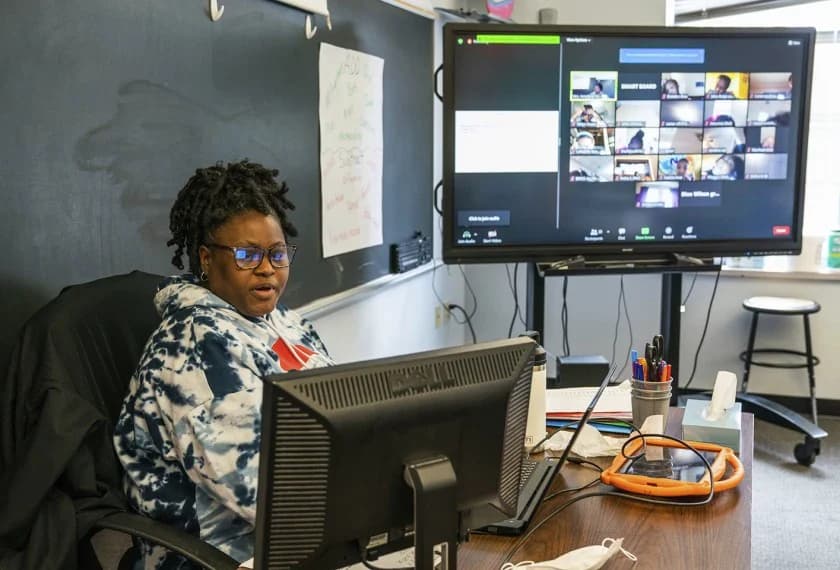
"One of the defining features of distance learning is that it removes much of the external structure provided by a traditional classroom. The teacher isn't constantly there to keep you on track. No one reminds you about every deadline. No one checks every page of your work," said Mr Kareem, a mathematics and physics teacher at Virtual International School.
That can be uncomfortable, especially at first. One student who studied online in Australia put it this way: "Sometimes you just want someone to tell you what to do."
But students who adapt to this environment gain something more valuable: the ability to take action without constant external pressure. In a 2026 study that followed students from Years 1 through 9, 84 per cent demonstrated the ability to manage themselves without external reminders, 80 per cent showed proactive behaviour, and 79 per cent were able to set priorities independently.
An interesting gap emerged in how learning outcomes are perceived. Parents tend to evaluate education through grades in maths, languages, science and other subjects. Students themselves, however, place greater importance on responsibility, listening skills, collaboration, initiative and self-organisation.
What this means for families
For parents considering international online education, the question isn't simply whether distance learning is "better" or "worse." The more important question is what skills it helps students develop.
The data point to a clear pattern: online learning requires students to be more independent, and with the right support, that challenge can become a genuine opportunity for growth. Students who learn to manage their time, set goals and achieve them without constant supervision gain more than just a school-leaving qualification; they develop a set of skills they can carry with them into university, the workplace and everyday life.
Reader Discussion (0)
Sign in to comment