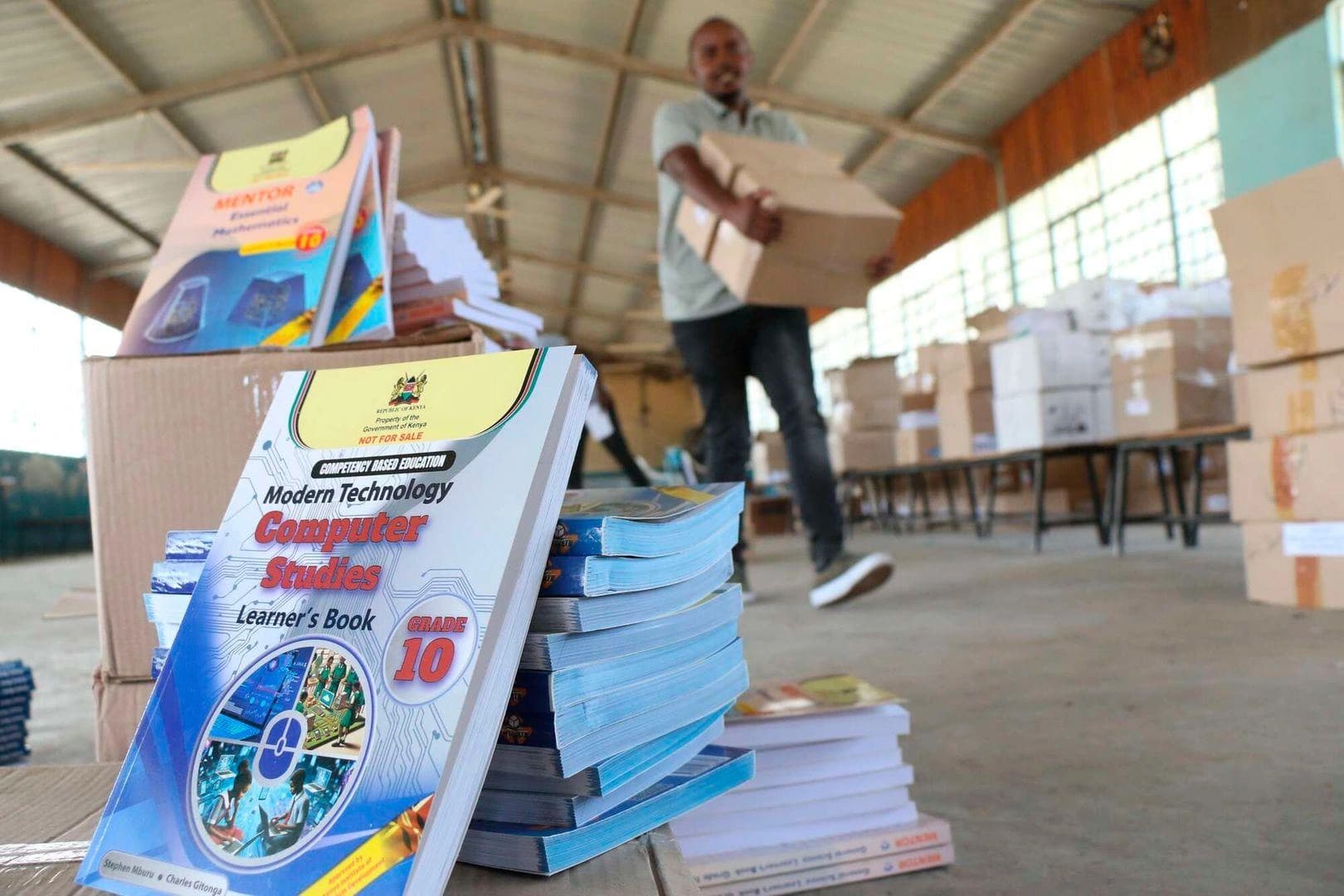
Some Grade 10 classrooms have as few as nine textbooks for 50 learners, exposing a serious shortage of instructional materials in Kenya’s senior school system and raising fresh concerns about the implementation of the Competency-Based Education (CBE) curriculum.
The Kenya Institute of Curriculum Development (KICD) has acknowledged the shortfall, saying changes in learners’ subject choices after admission to senior school disrupted initial textbook demand projections, leaving some schools with supplies that do not match the subjects learners are studying.
Speaking at Joel Omino Senior School in Kisumu, KICD Deputy Director of Secondary Education Subira Neema said the original printing and distribution plans were based on subject preference data collected while learners were still in junior school.
However, some learners changed their subject combinations after joining Grade 10, shifting between Science, Technology, Engineering and Mathematics (STEM), Social Sciences and Arts-related pathways. The changes created discrepancies between the textbooks delivered to schools and the actual number of learners taking particular subjects.
Neema said principals of public senior schools had been directed to submit updated enrolment figures to facilitate supplementary printing and distribution.
The admission places the availability of learning materials at the centre of concerns surrounding the transition to senior school education, where learners are expected to pursue specialised pathways based on their interests, abilities and future aspirations.
Learners bear the brunt
The reported shortage means some learners must share textbooks, take turns using the few available copies or rely on teachers’ notes and alternative learning materials.
With some schools reportedly having only nine books for a class of 50 learners in certain elective subjects, access to individual study materials remains a major concern.
The consequences could extend beyond classroom inconvenience. Learners need textbooks to complete assignments, conduct research, revise independently and reinforce concepts taught by their teachers.
Where books are insufficient, teachers may have to spend additional time preparing notes and organising shared learning materials, potentially reducing the time available for practical activities, individual support and competency-based assessment.
The shortage also raises questions about equity. Schools with adequate resources may be better positioned to support learners than those that depend heavily on government-supplied textbooks, particularly where parents cannot afford to purchase additional copies.
Subject changes expose planning gaps
KICD's explanation points to the challenge of forecasting textbook demand during a major curriculum transition.
Collecting subject preferences in junior school provides an initial basis for estimating demand, but those preferences can change when learners enter senior school and settle on their final subject combinations.
The difficulty arises when procurement and distribution plans are not adjusted quickly enough to reflect those changes.
A more responsive system would link learner registration, senior school placement, confirmed subject choices, textbook procurement and distribution. Updated enrolment data would allow education authorities and publishers to identify shortages earlier and direct additional copies to schools with the greatest need.
Schools holding excess copies in some subjects could also be considered for redistribution arrangements, where appropriate, to help address shortages elsewhere.
Although changing subject choices have been cited as a factor, the immediate task is to establish the full scale of the deficit and determine whether other supply, approval or distribution delays have contributed to the problem.
Parents face the cost of the shortage
The textbook deficit has raised concerns that families could be forced to buy commercial copies to compensate for inadequate supplies.
Such a development would place additional pressure on households already meeting the costs of uniforms, transport, meals and other school requirements.
Parents who can afford extra books may be able to provide their children with additional learning materials, while those facing financial difficulties may have little choice but to rely on shared textbooks or handwritten notes.
This could widen disparities between learners at a time when the education system is expected to provide equitable access to learning opportunities.
The Ministry of Education and KICD therefore face pressure to ensure that the shortage is addressed through coordinated procurement and distribution rather than shifting the financial burden to parents.
Schools also need clear guidance on how to support learners while awaiting additional supplies, particularly those who cannot afford privately purchased textbooks.
Approvals and distribution under scrutiny
The reported challenges associated with the preparation and approval of new senior school titles add another dimension to the shortage.
The availability of textbooks depends on several connected stages, including curriculum development, evaluation and approval of instructional materials, procurement, printing and distribution.
KICD is responsible for curriculum development and the evaluation and approval of instructional materials, while the Ministry of Education and relevant procurement and distribution partners must coordinate the provision of resources to schools.
Delays at any stage can affect whether approved textbooks reach learners when they are needed.
Supplementary printing will therefore need to be supported by accurate enrolment figures, the availability of approved titles and an efficient delivery system capable of reaching affected schools promptly.
The Ministry and KICD must also communicate clearly with school administrators about expected deliveries and interim arrangements to minimise disruptions to teaching and learning.
A test of senior school implementation
The Grade 10 textbook shortage exposes the practical challenges of translating curriculum reforms into effective classroom learning.
Under CBE, senior school learners are expected to pursue pathways that allow them to develop relevant knowledge, competencies and skills. But these ambitions depend on adequate textbooks, qualified teachers, appropriate facilities and reliable learning support.
The immediate priority is to establish which schools and subjects are most affected, verify actual enrolment figures and expedite the supply of missing books.
In the longer term, education authorities will need to improve demand forecasting, coordinate textbook production with confirmed subject choices and strengthen distribution systems so that changes in enrolment do not leave learners without essential materials.
The shortage also offers an opportunity to review how schools report changing subject combinations and how quickly the national system responds to emerging needs.
For learners already attending Grade 10 classes, the issue is urgent. Every day spent studying without adequate instructional materials places additional pressure on teachers and learners as the school calendar advances.
The success of senior school education will depend not only on the pathways offered to learners but also on whether schools can provide the resources required to deliver them. Curriculum reform cannot fulfil its promise if learners are admitted into specialised programmes but lack sufficient textbooks to study their chosen subjects.




Reader Discussion (0)
Sign in to comment