- MPs have scheduled public hearings in 31 counties from September 14 to 25, 2026, on six education reform Bills.
- The Bills propose re-establishing KUCCPS, replacing KNEC with KNEAC, repealing the HELB Act, and creating a new Kenya Teachers Training College.
- The committee has invited stakeholders unable to attend in person to submit written memoranda to the Clerk of the National Assembly by September 24, 2026.
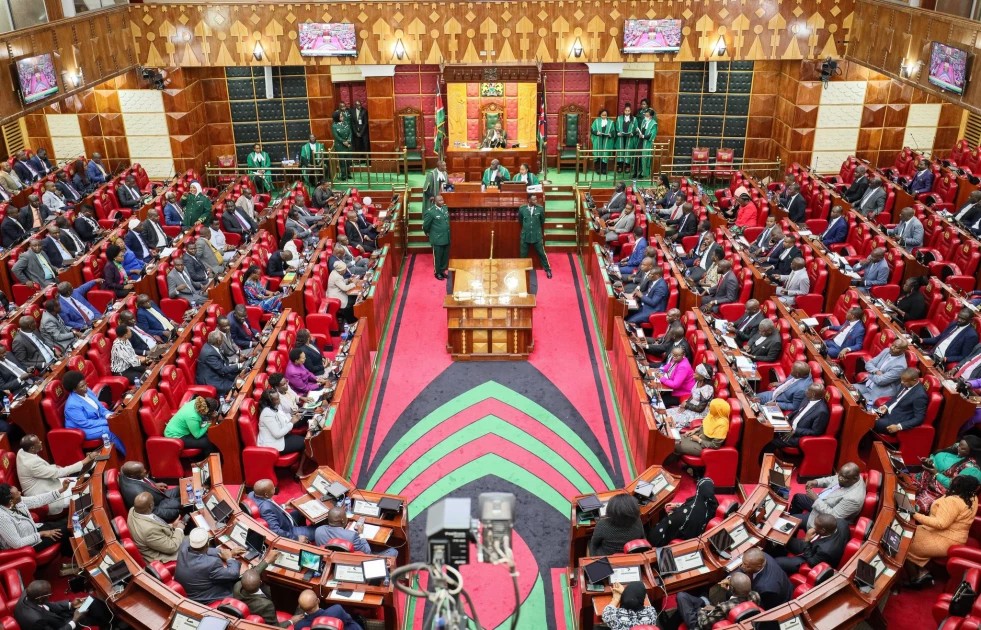
The National Assembly’s Departmental Committee on Education will hold public hearings in 31 counties from September 14 to 25, 2026. The sessions invite Kenyans to give their views on six education reform Bills.
Coordinated under Article 118(1)(b) of the Constitution, the hearings will run county by county. They will end with a final session at Parliament Buildings in Nairobi.
The Tertiary Education, Placement and Funding Bill (No. 49 of 2026) proposes re-establishing the Kenya Universities and Colleges Central Placement Service (KUCCPS). It also creates a Tertiary Education Funding Authority (TEFA).
The Bill would repeal the Higher Education Loans Board (HELB) Act. In part, it also amends the Universities Act and the Technical and Vocational Education and Training (TVET) Act with regard to funding.
Under the proposed law, TEFA would grant loans and scholarships to eligible students from a dedicated Loans and Scholarships Fund. Notably, private institutions would be allowed to request and receive loan and scholarship funding directly, rather than only through students.
The placement service would prioritise students for public tertiary institutions first. Only where no public vacancies exist would a student be placed in a private institution, and students would study abroad only where no comparable course exists locally.
The Basic Education Bill (No. 50 of 2026) seeks to repeal and replace the Basic Education Act. It gives effect to the constitutional right to free and compulsory basic education under Article 53(1)(b).
ALSO READ:
HELB: Missed funding during an academic year may not be recoverable after graduation
Among its provisions, the Bill spells out which functions of basic education fall to the national government and which to counties. It also sets out how quality assurance will be coordinated in basic education.
Further, the Bill establishes a Fund for the administration of scholarships and bursaries, with reserved allocations for learners with special needs. Granting institutions would carry reporting obligations under the proposed law.
The Cabinet Secretary would gain a coordinating role over primary and secondary education administration, including monitoring learner performance in public schools. Additionally, the Bill creates the Kenya Education Management Information System (KEMIS) to hold education data nationally, alongside the Kenya Institute of Special Education (KISE) and the National Council for Education in Marginalised Communities (NACEMA).
The Kenya National Educational Assessments Council (KNEAC) Bill (No. 51 of 2026) would replace the Kenya National Examinations Council (KNEC), established under Cap. 214A. KNEAC would take over KNEC’s certification functions as the successor body for national assessments.
The new council would confirm the authenticity of certificates and diplomas issued to candidates who have sat its assessments. Meanwhile, the Bill also carries consequential amendments to the Universities Act intended to streamline how institutions offer certificate and diploma courses.
TSC launches nationwide training needs assessment ahead of September 10 deadline
Beyond that, it introduces a penalty for mounting an academic programme that has not been approved. It also requires the Commission for University Education to consult relevant statutory bodies before approving new university programmes, and creates offences relating to examination malpractice.
The Pre-Service Education and In-Service Training Bill (No. 52 of 2026) would establish a Kenya Teachers Training College (KTTC) responsible for pre-service teacher education. A School of Education would be created under the Act to support this mandate.
The Bill further provides a framework for registering teacher training institutions, including colleges that have since transitioned into university campuses or branches. Such institutions would be required to consult existing statutory bodies before mounting new training programmes or offering in-service courses for teachers.
The Kenya National Qualifications Framework (KNQF) (Amendment) Bill (No. 53 of 2026) seeks to amend the framework governing curriculum development and academic qualifications. It proposes replacing the Kenya Institute of Curriculum Development’s (KICD) current council with a reconstituted membership, and establishes a database of national qualifications.
Similarly, the Kenya Institute of Curriculum Development (Amendment) Bill (No. 54 of 2026) would amend the Curriculum Development Act (Cap. 271A) to streamline the Institute’s operations. It replaces the office of Director with a Chief Executive Officer (CEO) and restructures membership of the Institute’s Council.
The Bill also obliges the Cabinet Secretary to consult the Council before making regulations under the Act.
ALSO READ: Insecurity leaves Kerio Valley children out of school as residents demand lasting solution
The sessions will begin in Tana River, Uasin Gishu, Kilifi and Elgeyo-Marakwet on September 14, before moving through Mombasa, Trans Nzoia, Kwale and Kakamega the next day. Subsequent stops include Kisumu, Makueni, Taita Taveta and Homa Bay, followed by Machakos, Kisii, Embu and Kericho, then Meru, Narok, Kirinyaga and Kajiado.
The committee resumes on September 21 in Wajir and Turkana. It then covers Kiambu, Nakuru, Murang’a and Baringo, followed by Nyeri, Nyandarua, Isiolo and Laikipia, before the Nairobi finale.
Stakeholders unable to attend in person can submit written memoranda to the Clerk of the National Assembly. Submissions can be hand-delivered to Parliament Buildings or emailed by 5:00 pm on September 24, 2026. Copies of the Bills are available on the Parliament website.
By Benedict Aoya
Get more stories from our website: Education News
To write to us or offer feedback, you can reach us at: editor@educationnews.co.ke
You can also follow our social media pages on Twitter: Education News KE and Facebook: Education News Newspaper for timely updates.
>> Click here to stay up-to-date with trending regional stories