- Parliament has launched an inquiry into the remittances made by schools to teacher associations, with some principals summoned to testify, even as Director of Field Services Nelson Sifuna acknowledged funding shortfalls but denied confirming the kickback allegations.
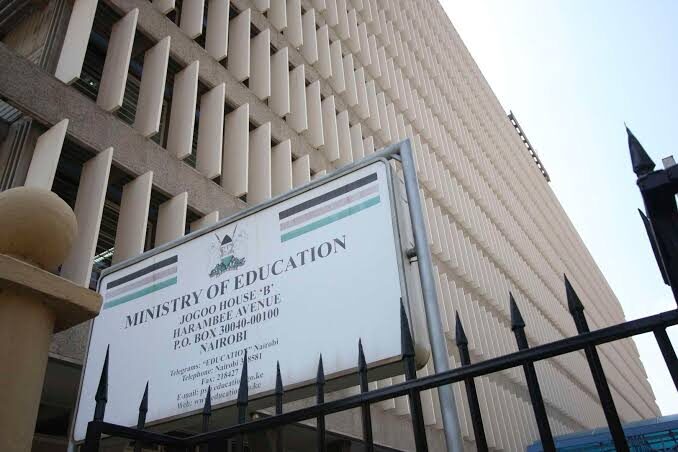
The Ministry of Education (MoE) has been rocked by a major scandal which involves senior figures at Jogoo House who have been accused of receiving kickbacks from School Activity funds channeled through field officers and consequently passing over the arising shortfalls to schools.
The top oficials pocket an estimated Shs. 17.5M per year in direct bribes from the field offices with possible additional payoffs from money raised illegally from schools to finance school sports across the country.
Interviews with various field officers and principals of schools confirmed that corrupt officials at MoE are demanding huge bribes from the funds allocated to the regional offices for purposes of organizing school co-curricular activities. This in effect creates an artificial shortfall on the funding of the activities which then forces the fraudulent officials to push the burden to hapless schools.
Under the crooked arrangement, each sub-county in the country is expected to part with Shs.30,000 in kickbacks from the allocation they receive and out of an estimated 400 such entities across the country, the shady officers rake in a cool Shs.12M without breaking a sweat.
Counties on the other hand are expected to forfeit Shs.100,000 to oil the pockets of top lackeys at MoE and given that there are 47 Counties in the country, a total of Shs.4.7M is collected in the ‘operation ’, which goes into individual pockets. Similarly, Regional Directors are required to release Shs.100,000 to grease the hands of the senior officials and with eight provincial entities in the country, Shs.800,000 is collected in the exercise.
Field officers confirmed that the kickbacks are collected in cash through trusted chain of junior officers who then deliver the loot to the fat cats at the MoE headquarters. The regional officers pointed fingers at two senior officers at Jogoo House who are known to be the masterminds of the racket.
Under MoE protocols, field officers receive money through a vote dubbed ‘Authority to Incur Expenses (AIE) to plan and run school sporting activities at their respective levels. MoE releases these funds to Sub-County, County and Regional Directors, in that order, to organize and finance school games. Sub-counties then sponsor learners through various sports categories to the county level while winners at county level are resourced by the county office and taken to regionals. Regional qualifiers then proceed for national competitions.
According to field officers who spoke to Education News in confidence, each of the tiers receive a substantial allocation to meet the costs of sponsoring students and teachers to participate in the sporting events. They say Sub-counties get about Ksh4.5 Million in MoE disbursements while Counties receive between Shs15-22 million for the same purpose. On the other hand, regions get between Shs.29-33 Million to take care of games activities at the provincial level. It is part of these funds that are re-routed back to Jogoo House officials in form of bribes.
TVET CDACC showcases skills certification at Nairobi International Trade Fair
Despite this funding, the greedy MoE officials proceed to demand that schools mobilize resources to meet shortfalls in meeting the costs of sponsoring sports activities. It has been established that officers pursue these payments through teachers’ associations, namely the Kenya Primary School Heads Association (KEPSHA) and its counterpart, the Kenya Secondary Schools Heads Association (KESSHA), which contact school heads to collect the money on the officers’ behalf. This happens without an official circular from the MoE as is the standard, advising schools to raise the money towards that exercise.
Schools receive roughly Ksh850 to Ksh1,000 per child per year under Government capitation to cover activities at school level and these funds are only expected to identify talent at schools and prepare learners for sub-county games.
“ We don’t understand why we are being told to fund games beyond the school level yet the official policy is to prepare students for sports at the school level up to sub-county competitions; then the MoE field offices take over from there using the funding allocated to them”, quipped a principal of a school in the North-Rift.
On paper, the system looks watertight, but in practice, it has become a conduit for graft.
Even as this happens, officials are demanding that schools remit Ksh600 per learner to sub-county offices, ostensibly to cover sports competitions from the local to the national level. Field officers who spoke to this paper confirmed that indeed they collect this money and are even signatories of the KEPSHA and KESSHA Accounts created for that purpose.
They explained that out of the Shs.600, the respective sub-county retains Shs.300 to organize the games at that level while Ksh150 goes to the county and regional levels, respectively for the same exercise.
According to the principals, the funds are hardly accounted for, and all they get are receipts issued by treasurers of the head teachers’ associations and not the MoE as required by law. In effect, schools find themselves drained of resources they need to prepare students for sports events. Interestingly, the same MoE officials to issue official receipts to the Government confirming amounts received in their accounts in form of capitation.
Questions are now being raised in Parliament about the money channelled to KESSHA by schools, and the matter has become the subject of an inquiry at the August House. The questionable remittances to the teacher associations to cover school sports have drawn the ire of the lawmakers with some principals summoned to appear before them this week.
Efforts to reach Principal Secretary (PS) for Basic Education John Ololtuaa to confirm or deny the allegations were unsuccessful, as he did not respond to messages sent to his phone. An attempt to reach Director General Dr. Elyas Abdi was similarly futile, as he did not take calls.
However, the Director of Field Services, Nelson Sifuna, responded and acknowledged that funding for school sports was insufficient and MoE had to request schools to chip in to get the co-curricular to run smoothly.
“Funding of co-curricular activities is a huge task given that the sector has expanded over the years to include primary, JSS, Special Needs Institutions, secondary and even teachers’ colleges,” Sifuna said. “The ministry has to cover expenses of 23 different categories of sports, including drama and music, besides the allowances for various officials overseeing each activity.”
He insisted that MoE was open in its dealings and said it issues official circulars to schools from time to time guiding schools on modalities of running the Activity Fund.
Sifuna was categorical that money disbursed to field officers to finance school sports was too little to cover all the necessary costs and cited music, which he said runs 601 classes of activities, with winners drawn from counties across the country all the way to the national level.
“How do we get all these funds to cover all these activities? We have been forced to openly declare these shortfalls to school heads, and we deliberate together and agree on how they can help” he said.
The official declined to comment on the allegations that some officers received kickbacks from the allocations disbursed to field offices.
By Adan Ibrahim and Benedict Aoya
Get more stories from our website: Education News
To write to us or offer feedback, you can reach us at: editor@educationnews.co.ke
You can also follow our social media pages on Twitter: Education News KE and Facebook: Education News Newspaper for timely updates.
>> Click here to stay up-to-date with trending regional stories