- KIPPRA has identified severe teacher shortages and staffing imbalances in Kenya’s early childhood education system, particularly in Garissa, Wajir and Mandera counties.
- The report has attributed these gaps to weak coordination between national and county governments and unpredictable, inconsistent financing.
A new report has laid bare significant weaknesses in how Kenya delivers early childhood education, pointing to staffing shortages, poor coordination between national and county governments, and unstable financing as key factors undermining learning outcomes, particularly for children in arid and semi-arid counties.
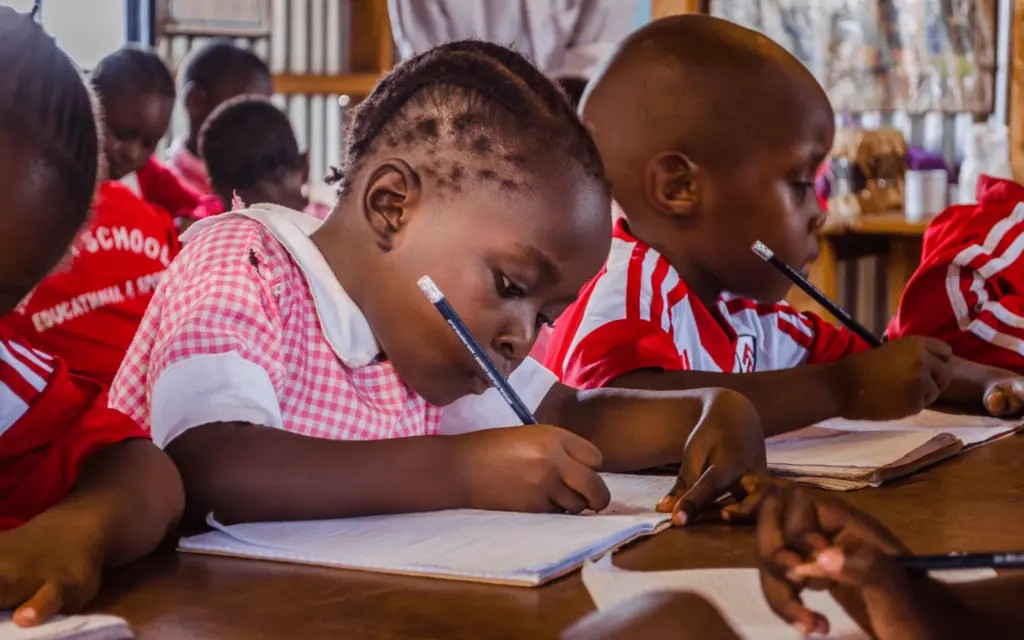
The findings, released by the Kenya Institute for Public Policy Research and Analysis (KIPPRA), paint a troubling picture of overcrowded classrooms and thinly stretched teaching staff in some of the country’s most vulnerable regions. In Garissa, Wajir and Mandera counties, pupil-teacher ratios have soared to 1:69, 1:54 and 1:42 respectively, far above the national benchmark of between 1:20 and 1:25.
“Extreme teacher shortages and high pupil-teacher ratios persist across ASAL counties,” the report states, underscoring how children in these areas are receiving significantly less individual attention during the critical formative years of their education.
Much of the dysfunction, according to KIPPRA, stems from how responsibility for early childhood education (ECE) is split across two levels of government. Counties handle the day-to-day delivery of pre-primary education, while national bodies such as the Ministry of Education and the Teachers Service Commission (TSC) retain authority over policy, standards, curriculum and teacher development. The report finds that these institutions frequently operate in isolation rather than as a coordinated system, leaving gaps in teacher management, curriculum rollout, supervision and reporting that make it difficult to pin down accountability when service delivery falters.
Teacher deployment adds another layer of complexity. The report notes that recruitment and posting decisions are sometimes shaped by political or informal considerations rather than actual need, while many teachers remain reluctant to take up postings in remote or hardship areas. This has produced a paradox in some counties, where more than 500 teachers have reportedly been recruited, yet numerous remote schools remain without any formally deployed teacher.
To address this, KIPPRA is calling for a transparent, data-driven recruitment and deployment system that channels teachers toward areas with the most acute shortages. It also recommends establishing a joint national-county framework, bringing together the Ministry of Education, TSC, the Council of Governors and the Intergovernmental Relations Technical Committee, to clearly delineate responsibilities for staffing, financing, standards and quality assurance.
ALSO READ:
CS Murkomen delivers uniforms to learners at his former school in Elgeyo Marakwet
Funding shortfalls undermine early learning
Financing emerges as an equally pressing concern. Counties currently allocate limited and inconsistent resources to ECE, with many programmes leaning heavily on contributions from parents and development partners to stay afloat. According to KIPPRA, the absence of predictable, ring-fenced funding has repeatedly delayed teacher recruitment, stalled infrastructure projects and left learning facilities inadequately equipped.
Mandera County offers a stark example: planning documents from the county have previously cited budget constraints and insufficient allocations as reasons for shortfalls in building ECE classrooms, model learning spaces and toilets. In response, KIPPRA recommends setting minimum ECE financing floors within county budgets and integrating early learning infrastructure and staffing needs more deliberately into County Integrated Development Plans.
Data gaps compound these challenges. Inconsistent record-keeping within the Education Management Information System makes it difficult for national and county authorities to accurately track enrolment figures, teacher deployment, learning outcomes and infrastructure needs, weakening their ability to direct resources where they are most needed. The report also flags weak regulatory oversight and a heavy reliance on informal ECE provision as further risks, noting that limited inspection and professional support leave some centres operating entirely outside established quality assurance frameworks.
Recommendations Point to Systemic Reform
KIPPRA argues that meaningfully strengthening early learning in Kenya will require reforms that go well beyond individual classrooms. Among its recommendations are the creation of a permanent intergovernmental ECE working group, stronger planning and quality assurance capacity at the county level, transparent and needs-based teacher recruitment, and the development of integrated, real-time education data systems.
ALSO READ: Concerned teacher urges TSC to recognise advanced qualifications in promotions
The institute stresses that investment in early childhood education carries consequences that extend far beyond the classroom. Quality early learning lays the foundation for literacy and numeracy, supports children’s social and cognitive development, and can help narrow inequalities affecting children from disadvantaged backgrounds. For ASAL counties, where poverty and vulnerability are already more pronounced, closing these early learning gaps could shape long-term human capital development and future access to economic opportunity.
By Masaki Enock
Get more stories from our website: Education News
To write to us or offer feedback, you can reach us at: editor@educationnews.co.ke
You can also follow our social media pages on Twitter: Education News KE and Facebook: Education News Newspaper for timely updates.
>> Click here to stay up-to-date with trending regional stories