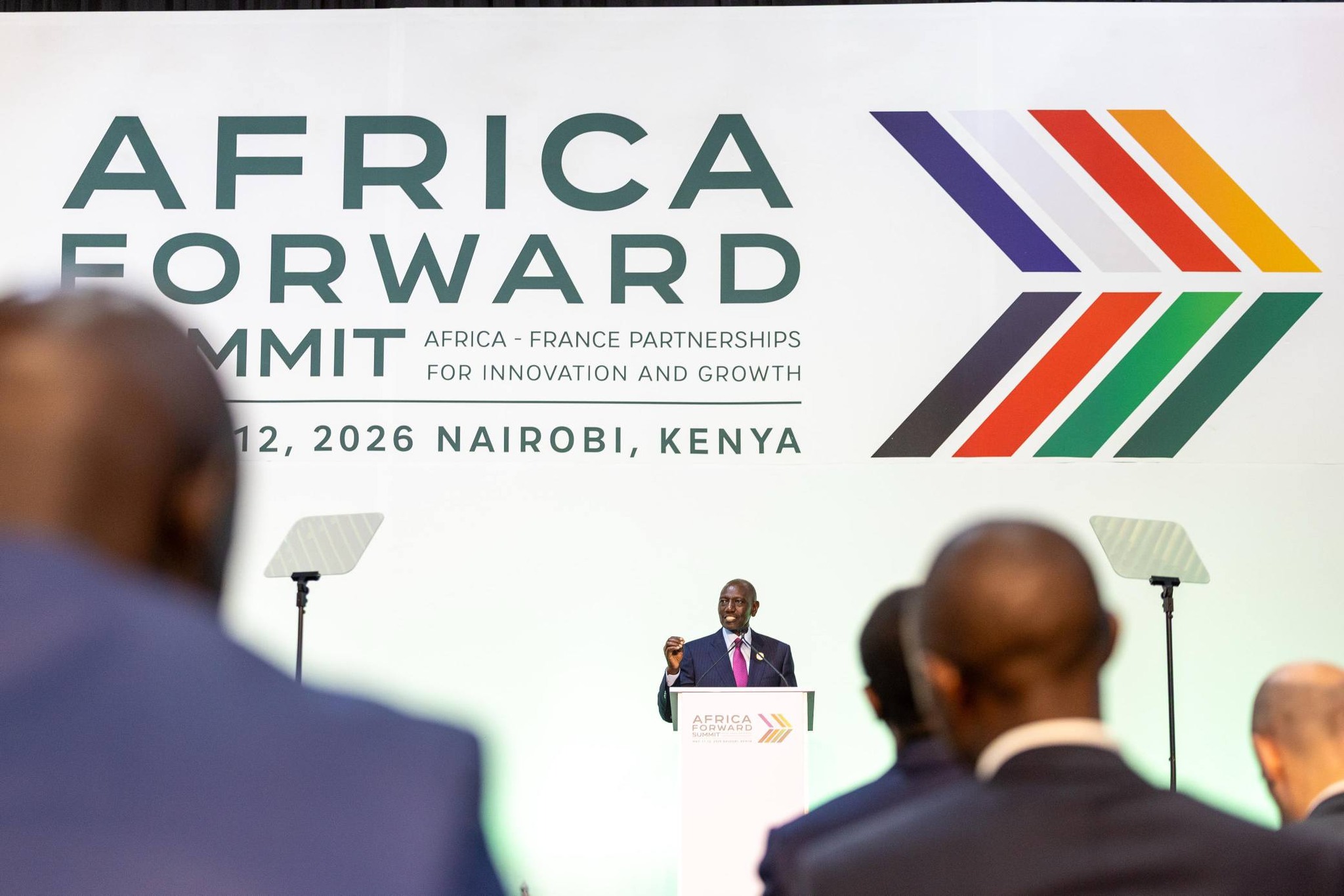
Inside the Africa Forward summit led by French President Emmanuel Macron and hosted in Kenya, the discussions stretch far beyond diplomacy and political symbolism. Beneath the speeches and policy engagements lies a deeper and more urgent conversation about education, economic productivity, population growth, and the future balance of global power between France and Africa.
One of the most striking realities dominating the summit discussions is the economic comparison between France and the entire African continent. France, with a population of roughly seventy million people, commands an economy valued at more than 3.3 trillion US dollars. Remarkably, this figure is almost equal to the combined GDP of the whole African continent, which is home to more than 1.4 billion people spread across fifty-four nations.
This comparison immediately exposes a powerful global imbalance. A single European nation with a relatively small population produces nearly the same economic output as an entire continent filled with vast natural resources, enormous labour potential, and one of the youngest populations on earth. Inside the summit halls, this contrast becomes more than a statistic—it becomes the foundation of the entire education and economic debate.
France’s economic strength is built on industrial efficiency, technological advancement, structured education systems, strong research institutions, and high productivity per citizen. Its economy thrives through aerospace engineering, luxury industries, advanced manufacturing, banking systems, scientific innovation, and highly organised labour structures. Education in France has long been designed not merely to produce graduates, but to sustain industrial competitiveness and economic sophistication.
Africa presents a different but equally powerful reality. The continent possesses immense demographic strength, natural wealth, agricultural capacity, and rapidly expanding digital markets. Yet much of its economic potential remains underdeveloped due to uneven industrialisation, infrastructure limitations, unemployment pressures, and education systems struggling to match labour market demands.
ALSO READ:
Parallels between the Africa Forward Summit and heads of state summit in Fathers of Nations set book
This is why education dominates nearly every major discussion inside the Africa Forward summit. Leaders and policymakers repeatedly stress that Africa’s greatest challenge is not population growth itself, but whether education systems can transform that population into productive human capital. The summit strongly argues that the future of Africa’s economy will not be determined primarily by minerals, oil, or raw materials, but by the quality of education, skills training, innovation systems, and technological adaptation.
At the centre of these discussions lies a difficult but unavoidable question: how can a continent with more than one billion people produce roughly the same economic output as a country with only seventy million citizens?
The answer repeatedly points back to productivity, skills, industrialisation, and education alignment.
France demonstrates what happens when education systems are directly connected to economic structures. From technical institutes to research universities, the French model feeds industries with specialised labour, innovation capacity, and technological expertise. Africa, however, continues to face a mismatch between classroom learning and economic realities. Millions of graduates enter labour markets each year without the practical skills required by rapidly changing economies.
This is why the summit places enormous emphasis on technical and vocational education and training (TVET). Delegates argue that traditional academic systems alone cannot absorb Africa’s rapidly growing youth population into productive sectors. Skills-based education, apprenticeships, digital literacy, and industry-linked training are increasingly viewed as the key pillars of future economic transformation.
Digital transformation itself emerges as one of the summit’s most urgent themes. Artificial intelligence, online learning systems, digital entrepreneurship, data science, and technological innovation are redefining how economies function globally. France contributes advanced technological systems and research infrastructure, while Africa contributes youthful adaptability, rapid mobile technology adoption, and large untapped digital markets.
Within this larger framework, Kenya occupies a strategic and symbolic role. Kenya is repeatedly described as a gateway to East Africa and one of the continent’s leading innovation ecosystems. Its strength in mobile banking, digital entrepreneurship, educational reforms, and regional influence positions it as a practical example of how education can directly feed economic growth and technological transformation.
Nairobi increasingly symbolizes the new African economic narrative—one driven not only by natural resources, but by innovation, startups, digital infrastructure, and youthful enterprise. Inside the summit, Kenya becomes a living laboratory where the connection between education and economic productivity can already be observed in real time.
The summit also reflects a broader shift in France–Africa relations. Historically, interactions were often shaped by aid dependency and political influence. Inside the Africa Forward discussions, however, the language changes significantly. The focus moves toward partnership, investment, innovation, and co-development. France seeks strategic engagement with Africa’s growing markets and demographic energy, while Africa seeks systems, skills, technology transfer, and industrial partnerships capable of accelerating development.
ALSO READ:
CEMASTEA expands STEM mentorship drive to boost science learning in Taita Taveta schools
Population dynamics remain central throughout the discussions. France faces the pressures of an ageing society and slower labour force growth. Africa faces explosive demographic expansion and the enormous challenge of educating millions of young people entering labour markets every year. Education therefore becomes the bridge connecting Europe’s industrial experience with Africa’s demographic momentum.
Research and innovation partnerships also receive significant attention. French and African institutions are increasingly collaborating in climate science, agricultural technology, healthcare innovation, renewable energy systems, and artificial intelligence. These partnerships are viewed not only as academic exercises, but as engines of economic competitiveness in the modern world.
Inside the summit, one conclusion becomes impossible to ignore: education is no longer preparation for the economy—it is the economy itself. It determines labour productivity, innovation speed, industrial growth, technological capacity, and global competitiveness. Nations that successfully align education with economic realities will dominate the future global order.
The Africa Forward summit therefore positions education as the central mechanism through which Africa can transform its demographic weight into economic power. Without education reform, population growth risks becoming economic pressure. With effective education systems, however, Africa’s youth population could become one of the greatest economic forces of the 21st century.
Ultimately, the comparison between France and the entire continent of Africa is not merely about GDP figures. It is about systems, productivity, skills, innovation, and human capital development. France demonstrates the economic power of structured education and industrial maturity. Africa represents the sleeping giant of global economics—rich in people, resources, and future potential.
The Inside the France–Africa summit, the message grows increasingly clear: the future global economy will not belong simply to nations with wealth or resources, but to those capable of transforming education into productivity and population into prosperity.
By Hillary Muhalya each year without the practical skills required by rapidly changing economies.
This is why the summit places enormous emphasis on technical and vocational education and training (TVET). Delegates argue that traditional academic systems alone cannot absorb Africa’s rapidly growing youth population into productive sectors. Skills-based education, apprenticeships, digital literacy, and industry-linked training are increasingly viewed as the key pillars of future economic transformation.
Digital transformation itself emerges as one of the summit’s most urgent themes. Artificial intelligence, online learning systems, digital entrepreneurship, data science, and technological innovation are redefining how economies function globally. France contributes advanced technological systems and research infrastructure, while Africa contributes youthful adaptability, rapid mobile technology adoption, and large untapped digital markets.
Within this larger framework, Kenya occupies a strategic and symbolic role. Kenya is repeatedly described as a gateway to East Africa and one of the continent’s leading innovation ecosystems. Its strength in mobile banking, digital entrepreneurship, educational reforms, and regional influence positions it as a practical example of how education can directly feed economic growth and technological transformation.
Nairobi increasingly symbolizes the new African economic narrative—one driven not only by natural resources, but by innovation, startups, digital infrastructure, and youthful enterprise. Inside the summit, Kenya becomes a living laboratory where the connection between education and economic productivity can already be observed in real time.
The summit also reflects a broader shift in France–Africa relations. Historically, interactions were often shaped by aid dependency and political influence. Inside the Africa Forward discussions, however, the language changes significantly. The focus moves toward partnership, investment, innovation, and co-development. France seeks strategic engagement with Africa’s growing markets and demographic energy, while Africa seeks systems, skills, technology transfer, and industrial partnerships capable of accelerating development.
Population dynamics remain central throughout the discussions. France faces the pressures of an ageing society and slower labour force growth. Africa faces explosive demographic expansion and the enormous challenge of educating millions of young people entering labour markets every year. Education therefore becomes the bridge connecting Europe’s industrial experience with Africa’s demographic momentum.
Research and innovation partnerships also receive significant attention. French and African institutions are increasingly collaborating in climate science, agricultural technology, healthcare innovation, renewable energy systems, and artificial intelligence. These partnerships are viewed not only as academic exercises, but as engines of economic competitiveness in the modern world.
Inside the summit, one conclusion becomes impossible to ignore: education is no longer preparation for the economy—it is the economy itself. It determines labour productivity, innovation speed, industrial growth, technological capacity, and global competitiveness. Nations that successfully align education with economic realities will dominate the future global order.
The Africa Forward summit therefore positions education as the central mechanism through which Africa can transform its demographic weight into economic power. Without education reform, population growth risks becoming economic pressure. With effective education systems, however, Africa’s youth population could become one of the greatest economic forces of the 21st century.
Ultimately, the comparison between France and the entire continent of Africa is not merely about GDP figures. It is about systems, productivity, skills, innovation, and human capital development. France demonstrates the economic power of structured education and industrial maturity. Africa represents the sleeping giant of global economics—rich in people, resources, and future potential.
Inside the France–Africa summit, the message grows increasingly clear: the future global economy will not belong simply to nations with wealth or resources, but to those capable of transforming education into productivity and population into prosperity.
By Hillary Muhalya
You can also follow our social media pages on Twitter: Education News KE and Facebook: Education News Newspaper for timely updates.
>>> Click here to stay up-to-date with trending regional stories
>>> Click here to read more informed opinions on the country’s education landscape