A terrifying and deeply familiar crisis has gripped the country’s education sector. Between May and June 2026, an alarming surge in school fire outbreaks has left parents panicking, infrastructure in ashes, and the government scrambled for answers.
Data from recent security and education briefs reveals a disturbing trend: what began as isolated incidents has rapidly evolved into a coordinated wave of school fires across multiple counties, claiming the lives of dozens of children and destroying millions in property.
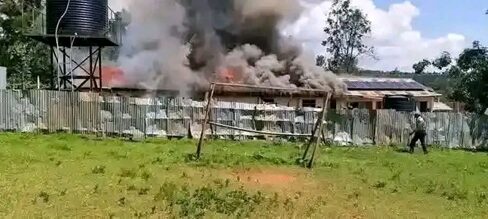
The current crisis exploded in the early hours of May 28, 2026, at Utumishi Girls Academy in Gilgil, Nakuru County. At approximately 1:00 AM, a fast-moving fire ripped through a dormitory housing 202 students. The aftermath was catastrophic, 16 young girls lost their lives, and 79 others were left injured.
Investigators later revealed a chilling reality the fire was intentionally set using paraffin and a matchstick to ignite a mattress near the dormitory’s primary exit. Because the school matron allegedly failed to open the emergency door, the panicked students were forced to scramble through a single doorway to escape.
ALSO READ;
Since the tragedy at Utumishi Girls, copycat incidents and sudden outbreaks have aggressively multiplied into early June. At least four major boarding schools have been severely hit or completely burned down within this brief window:
Utumishi Girls Academy (Nakuru County); The epicentre of the current wave, where a dormitory was completely gutted, Isiolo Girls High School (Isiolo County); Suffered extensive property damage in a late-night inferno. Njia High School (Meru County); A dormitory block was reduced to a shell following a sudden evening fire. Bukhalarire Secondary School (Busia County); Faced severe destruction as local emergency services battled a massive infrastructure blaze.
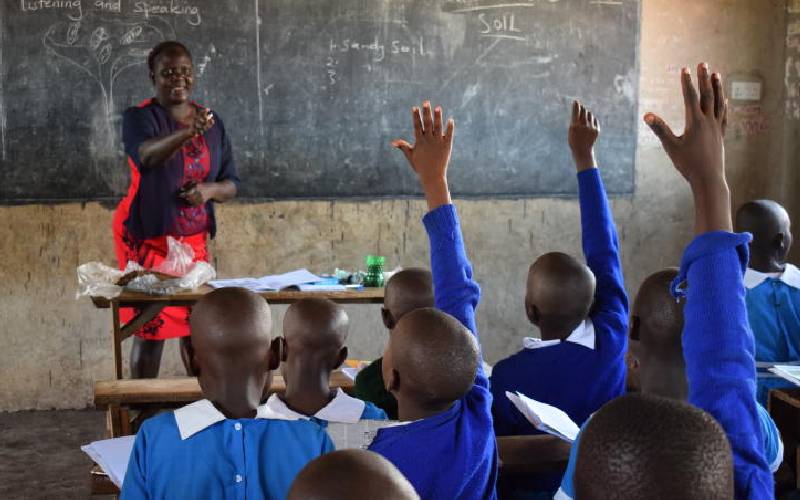
The mood on school compounds is a mixture of intense grief and severe stress. School staff are finding themselves on the front lines of an unfolding disaster.
“We are living in constant fear,” said a senior teacher from a national school in central Kenya, speaking on condition of anonymity. “The children are restless. Two of my colleagues actually heard rumors that something was being planned last month, but nobody took it seriously until the match was struck. We aren’t just teachers anymore; we are night watchmen.”
Civil society groups and education experts are placing the blame squarely on a broken system and a failure to learn from the past, drawing parallels to the 2024 Hillside Endarasha Academy fire that killed 21 boys.
In a scathing press release, the Elimu Bora Working Group highlighted a systemic failure of safety infrastructure:
“Investigations repeatedly show carelessness, weak enforcement of safety rules, poor emergency readiness, and ongoing problems within institutions responsible for protecting students. Safety checks must be active, ongoing, and open not something that only happens after a tragedy.”
While electrical faults are occasionally blamed, investigative bodies like the Directorate of Criminal Investigations (DCI) and independent researchers pinpoint two main drivers behind the recent May–June outbreaks.
Malicious Arson and Copycat Behavior as seen in the Utumishi Girls case, where nine students were remanded by a Naivasha court, fires are actively being lit by disgruntled learners. Historically, students use arson to protest harsh school terms, exam stress, restricted parental visits, or poor living conditions.
The “Trapped” Reality: The high casualty numbers are directly linked to gross safety violations. Dormitories are severely overcrowded, windows are illegally barred with iron grills, and emergency doors are routinely locked from the outside to prevent students from sneaking out turning dormitories into death traps when fires start.
Facing intense public outrage and demands for accountability, the government has launched an aggressive, multi-agency crackdown.
Education Cabinet Secretary Julius Ogamba and Interior CS Kipchumba Murkomen have announced immediate, sweeping directives to halt the crisis:
Immediate Dissolution and Disciplinary Action from the Ministry of Education has dissolved the Board of Management at Utumishi Girls, and school administrators nationwide face immediate prosecution if found violating safety codes.
Mass Inspections where the Ministry’s Quality Assurance and Standards teams have been ordered to conduct aggressive, unannounced spot-checks across all boarding institutions.
Zero Tolerance on Locks in various schools. Schools have been given a strict directive to remove all window grills and ensure that emergency exits remain unlocked and staffed 24/7.
With more than 350 schools closed for safety non-compliance since 2024, the government insists it will not hesitate to shut down any institution putting children’s lives at risk. For anxious parents across the nation, however, the real test will be whether these promises translate to safe dormitories before another match is struck.
Doricah Malachi, Communication and media student.
You can also follow our social media pages on Twitter: Education News KE and Facebook: Education News Newspaper for timely updates.
>>> Click here to stay up-to-date with trending regional stories
>>> Click here to read more informed opinions on the country’s education landscape