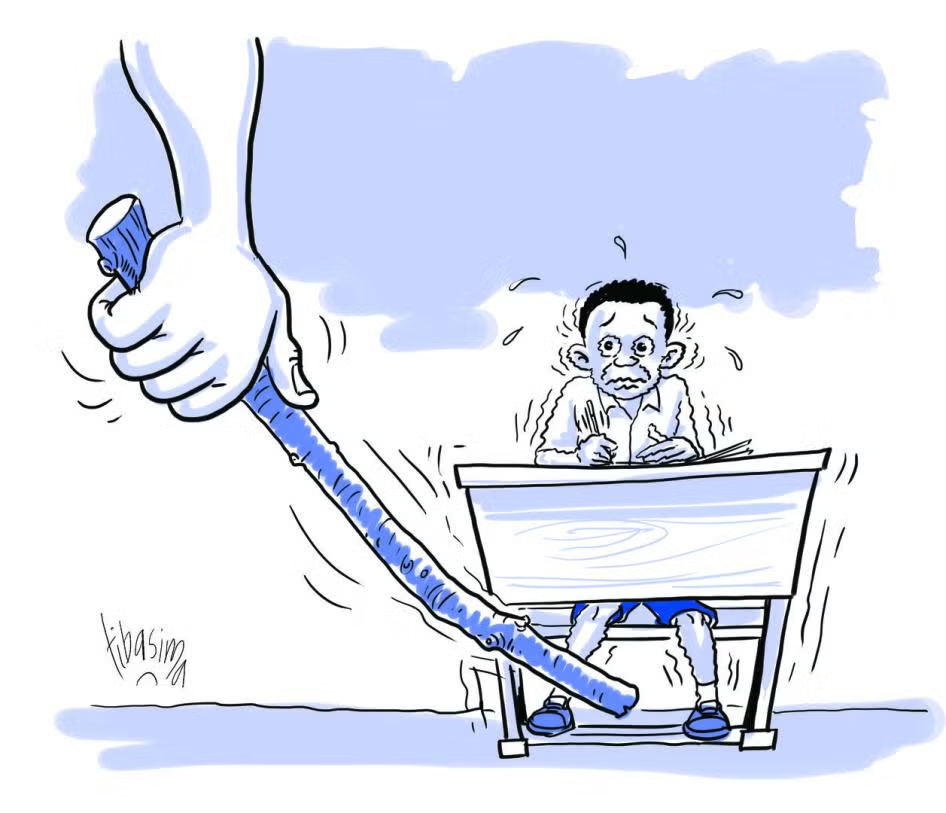
One of the most painful experiences many adults still remember from school is not necessarily failure in examinations or difficult assignments. It is humiliation.
Years later, former learners may forget specific lessons, but they vividly remember the teacher who embarrassed them before classmates, mocked their mistakes publicly, or made them feel small and worthless in front of others.
This reality reveals an important truth every educator must understand: public humiliation destroys confidence.
Unfortunately, humiliation is still normalised in many classrooms under the excuse of discipline, motivation, or academic pressure. Some teachers insult weak learners openly. Others compare children negatively with top performers. Some use sarcasm, ridicule, shouting, or emotionally hurtful comments to force compliance or performance.
Such methods may create temporary silence or fear, but they rarely build genuine learning confidence.
A classroom should be a place of intellectual safety
Learners should feel free to attempt answers, ask questions, make mistakes, and participate without fear of embarrassment. The moment learners begin fearing humiliation, participation declines. Confidence weakens. Learning becomes associated with anxiety instead of growth.
Fear is not the same as respect.
Many teachers mistake intimidation for effective classroom management. Learners may appear disciplined externally, yet internally they are emotionally withdrawn, anxious, or resentful. Some become silent not because they understand the content, but because they fear attracting attention. Others stop trying altogether.
This is especially dangerous for struggling learners. Children who already doubt their abilities become even more discouraged when embarrassed publicly. Instead of motivating improvement, humiliation reinforces feelings of inadequacy. A learner who repeatedly hears statements such as “You are lazy,” “You will never pass,” or “Why are you so slow?” gradually begins believing those labels internally.
Words shape self-perception deeply.
Teachers occupy positions of authority and influence. What educators say carries enormous psychological weight. A careless statement may remain in a learner’s mind for years. Some adults still remember humiliating remarks made by teachers decades earlier because emotional wounds often outlast academic memories.
Unfortunately, some schools still promote humiliation indirectly through their culture
Learners are ranked publicly and mocked for poor performance. Weak students are forced to stand before assemblies. Punishments are administered in ways designed more to shame than to guide. Mistakes become opportunities for ridicule instead of correction.
Such practices damage emotional well-being significantly.
Children are human beings with dignity. Even when discipline is necessary, correction should preserve self-worth. A learner can be corrected firmly without being degraded publicly. Strong discipline and emotional respect can coexist.
Excellent teachers understand this balance.
They correct behaviour privately whenever possible. They address mistakes constructively. They focus on improvement instead of personal attacks. They separate behaviour from identity. Saying “This answer is incorrect” is very different from saying “You are stupid.” One addresses the work; the other attacks the learner personally.
That distinction matters greatly.
Humiliation also affects classroom participation
Learners who fear embarrassment stop volunteering answers. They avoid asking questions even when confused. Some become passive observers rather than active participants in learning. Creativity declines because learners fear making mistakes publicly.
Yet mistakes are essential for learning.
No child masters concepts perfectly on the first attempt. Education should therefore encourage intellectual risk-taking. Learners should feel safe enough to try, fail, ask, improve, and grow. Classrooms driven by fear suppress this natural learning process.
Public humiliation can also damage relationships between teachers and learners.
Trust weakens when learners associate teachers with embarrassment. Instead of viewing teachers as guides or mentors, students begin seeing them as threats. Emotional distance grows. Communication becomes shallow. In some cases, learners develop hatred toward specific subjects simply because of negative experiences with teachers.
A humiliating mathematics teacher may produce fear of mathematics itself.
A mocking language teacher may destroy confidence in communication.
A sarcastic science teacher may silence curiosity permanently.
The emotional environment of the classroom matters greatly.
Modern education increasingly recognises the importance of mental and emotional well-being. Anxiety, depression, low self-esteem, bullying, and emotional distress among learners are rising concerns globally. Schools, therefore, have a responsibility to create psychologically safe environments.
Humiliation moves education in the opposite direction.
Importantly, public embarrassment does not affect all learners equally
Some children appear emotionally strong externally but carry deep internal pain silently. Others become rebellious as a defence mechanism. Some withdraw socially and academically. Teachers cannot always predict how deeply humiliation affects individual learners.
This is why professional educators choose caution with words and disciplinary methods.
Parents, too, are becoming more sensitive about emotional treatment in schools. Families today want institutions where children are disciplined responsibly without emotional abuse. Parents understand that confidence affects both academic performance and long-term personal development.
A confident learner participates more actively, communicates more freely, and approaches challenges with greater resilience. Protecting learner dignity, therefore, supports academic success itself.
Teachers should instead cultivate encouragement-based classrooms. This does not mean lowering standards or avoiding correction. Rather, it means correcting in ways that build growth instead of shame.
Constructive feedback works better than insults.
Private guidance works better than public embarrassment.
Encouragement works better than ridicule.
Even high-performing learners require emotionally healthy environments. Pressure without support eventually creates burnout, fear, or unhealthy perfectionism. Excellent teaching, therefore, balances accountability with empathy.
Importantly, educators must remember that teaching extends beyond content delivery. Teachers shape human beings. They influence self-esteem, emotional development, confidence, communication skills, and future attitudes toward learning.
The classroom is not merely an academic space. It is also an emotional environment.
READ ALSO: Teachers who refuse school administration’s corrections are doing themselves no good
Ultimately, learners flourish where they feel respected, valued, and safe enough to grow. Correction is necessary in education, yes, but humiliation is not. Public embarrassment may produce temporary compliance, but it often damages confidence permanently.
The best teachers challenge learners without destroying their dignity. They maintain discipline without cruelty. They correct mistakes without attacking identity.
Because true education should build human beings, not break them.
By Ashford Kimani
Ashford teaches English and Literature in Gatundu North Sub-county and serves as Dean of Studies.
You can also follow our social media pages on Twitter: Education News KE and Facebook: Education News Newspaper for timely updates.
>>> Click here to stay up-to-date with trending regional stories
>>> Click here to read more informed opinions on the country’s education landscape