At the onset of second term of school calendar, it is instructive to note: It is the longest term. Unfortunately, this is the term some boarding schools experience wild wave of unrest. Therefore, educators should remain alert and vigilant. Unrest is a feeling of disturbance and dissatisfaction in people. Unrest in schools, manifest as disaster.
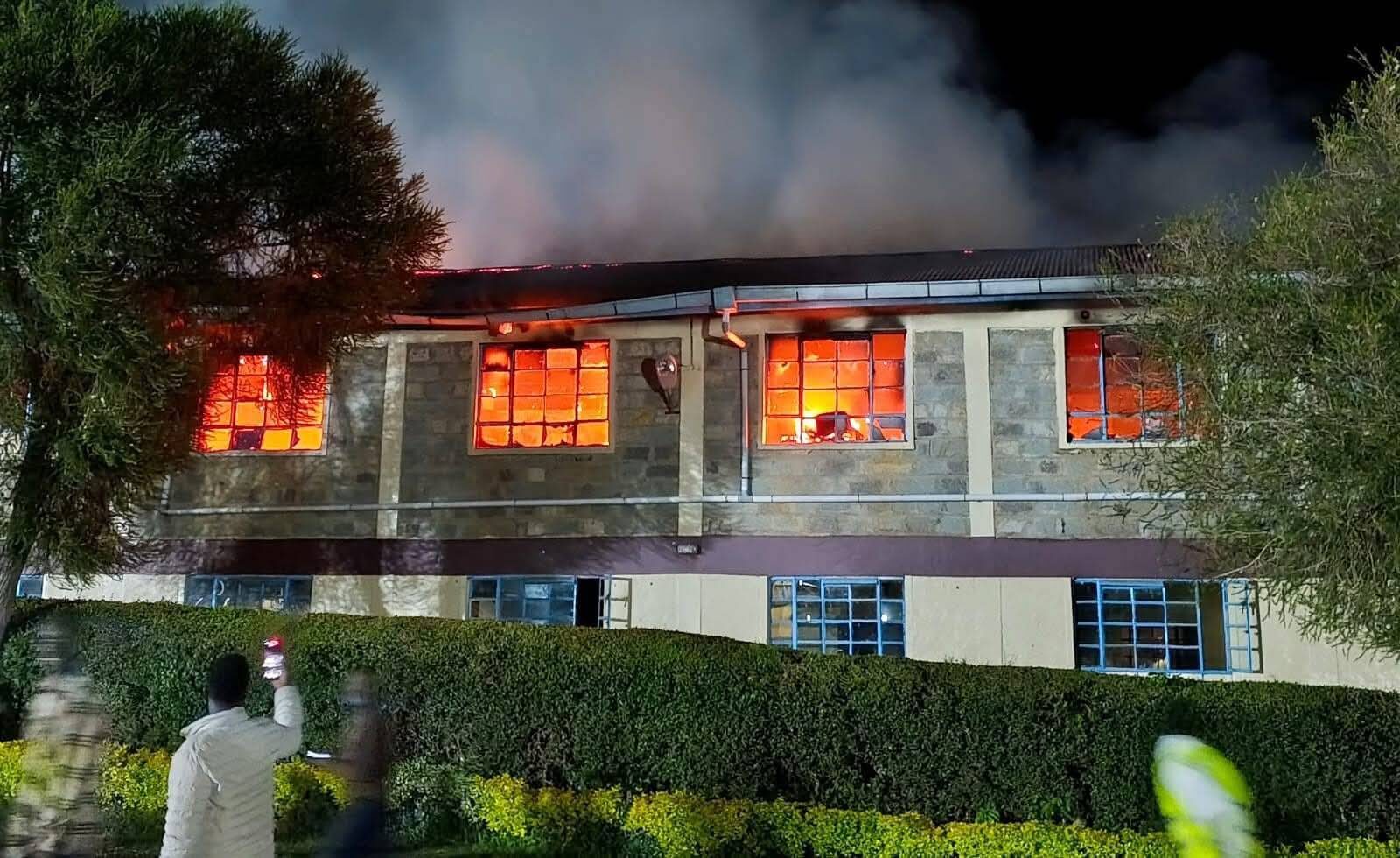
Disrupting teaching and learning process. For instance, there are occasional flash floods that sweep schools without a tad of mercy. There are sad fire incidences that raze down schools without a tinge of clemency. Disaster can strike anywhere anytime. Meaning, no school is immune to cataclysmic occurrences.
No wonder, before things go south, it is imperative to take caution. For fore-warned is fore-armed. Principals should pore over, and implement every ambit of raft of recommendations as spelt out in the Safety Standards Manual for Schools in Kenya (2008).
Ideally, disasters manifest as accidents, explosions in science laboratories, invasion by wild animals or armed people and outbreak of contagious disease. In a morbid sense, we all remember how Covid-19 pandemic wreaked havoc in March 2020. Disaster can be breakdown of essential services such as water, transport and electricity.
Then, we have spate of unrest and strikes. Many a time, it is not easy to fight and defeat disasters, especially the ones beyond human comprehension and control. Albeit, Principals should explore practical ways of mitigating catastrophes through disaster preparedness, disaster relief and disaster recovery. Of no to inferno, schools should focus on fire prevention, fire safety and fire eradication.
Back to the oeuvre of the safety manual, schools should keep students posted on escape routes when fire shows its ire. Dormitories should be built in strict adherence to security and safety standards. Dormitories should be clean, salubrious and properly ventilated. Spaces between beds should be at least 1.2 metres.
ALSO READ:
Parents raise concerns over remedial fee at Ng’araria girls’ school in Murang’a
Corridors or pathway spaces should not be less than 2 metres. Sharing of beds is utterly wrong because it promotes aberrant behaviour. So, admissions should be tied to bed capacities at all times. It is dangerous to lock dormitory doors from outside when learners are inside. Conversely, dormitories should be locked at all times when learners are elsewhere.
Every dormitory should have a door at each end, and an additional clearly labeled emergency exit at the middle. Fire extinguishing equipment should be placed at each exit, with fire alarms fitted at easily accessible points.
Likewise, there should be fire assembly points where students can gather as school authorities take roll call in morbid moments. Advisedly, maintain well-equipped emergency aid kits, fully-furnished with whistles, fire extinguishers and basic equipment for first aid. Focus on regular drills. Preferably every term. On evacuation procedures for fires and accidents.
Focus on fire prevention measures. For instance, the kitchen should be at the right place. Focus on safety of electric cables. Somewhat, for the sake of holistic safety, it is incumbent upon the government to design and implement compulsory school safety training course for principals, teachers, students and staff. Schools should employ enough security guards with basic training in disaster management and mitigation. Schools should focus on stringent measures to curb bullying.
Moreover, classrooms should be properly lit and ventilated. The size of buildings should adhere to the specifications of the Ministry of Education (MoE). Classrooms should accommodate number of learners in line with the provisions of the MoE circular on Health and Safety Standards in Educational Institutions (2021). The doorways should be adequate for emergency purposes, open outwards, and should not be locked from outside at any time when learners are on board.
For storeyed buildings, the stairways should be wide enough and located at both ends of the building without obstructions. The construction of stairways should accommodate learners with special needs. Handrails in the stairs should be strong and firmly fixed. Corridors should be well-lit and ventilated. Schools should deal firmly with drug abuse which impair irresolute judgement of most students, turning them into arsonists.
Schools should install CCTV cameras for purposes of surveillance and vigilance. Ubiquity of teachers in charge of boarding is important. Schools should teach peaceful ways of resolving conflict in Life Skills Education. Then, both students and staff should be trained on school safety. Again, teens love food. Therefore, give them good food while focusing on both quality and quantity.
In turn, in third term when there are no inter-school activities, remember to stage some internal co-curricular activities to assist teens expend excess energies. Select, train and induct a strong Student Council. Enforce school rules and regulations with tact. The Discipline Committee should handle discipline cases judiciously and justly without oiling cogs of corruption.
Ostensibly, Principals should fix leadership lapses in the school. Arouse a sense of responsibility in all and sundry. Principals and Deputies should avoid high-handedness. Give room to guided democracy. Embrace dialogue and “open-door policy”. Get feedback and address issues raised by both staff and students. Practise soft power and flexibility as a soft skill.
ALSO READ:
Kakamega School medical facility set for renovation as Kenya Power foundation moves in
Let there be peaceful co-existence among all stakeholders. Beware of meddlesome and troublesome people. Manage change in the new station. Work well with the community. Do away with bad blood in administration. Do not balkanise staff through “divide-and-rule”. Handle resistance with discretion and wisdom. Train and trade staff. Construct and re-construct teams.
Organise and re-organise departments. Determine and discern enemies within. For in Gem, where I was born and brought up, our venerable elders say, the hyena can only enter the compound using the hole created by the family dog. Above all, pray, as you remain vigilant: to detect and uproot seeds of discord or division. In Matthew 13:25, we read, “But while men slept, the enemy came and sowed tares among the wheat and went his way.”
Furthermore, Principals should strike beautiful balance in their leadership style. I recommend a page-turner titled The Leader Who Had No Title, where Robin Sharma posits that leaders should be tough, but tender. Courageous, but compassionate.
Firm, but fair. Strong, but sincere. Consequently, combination of leadership approaches will wipe reproach. Remember, the leadership style depends on situation at hand. Create open sessions where students can air their grievances without victimisation. Organise well-thought-out activities to assist students steam-off, love school, gain joy and enjoy learning. Explore creative activities that can arouse sense of pride and belonging in learners. With that, they will not vandalise school property when the push comes to a shove.
Finally, we should never forget raft of recommendations in The 2001 Naomi Wangai Report whose thesis was this: Students’ Discipline and Unrest in Secondary Schools. The report established – shedloads of “mock” exams served to Form Four candidates as they prepare to sit and write KCSE exams, can cause chaos. More so, when the purpose of exam is not well-thought-out.
Therefore, right at the onset, and in the course of time, keep explaining to Form Four candidates the reason for running an examination system as one of the Best Academic Practices after completion of syllabus. For force, threats and intimidations may not work well in these times and climes. More so, among these Gen Zs.
Advisedly, engage impactful speakers with enough expertise and experience. Strengthen the psycho-social and spiritual programmes. Teacher-counsellors to be proactive to imbue students with hope and help. As they address the attitude of finitude, hebetude and lassitude. Empower Peer Counsellors. Work closely with the church through chaplains. Parental engagement and empowerment is important because discipline begins at home.
By Victor Ochieng’
Victor Ochieng’ rolls out talks and training services in schools. vochieng.90@gmail.com. 0704420232
You can also follow our social media pages on Twitter: Education News KE and Facebook: Education News Newspaper for timely updates.
>>> Click here to stay up-to-date with trending regional stories
>>> Click here to read more informed opinions on the country’s education landscape