- Education equips leaders with the knowledge and critical thinking skills needed to make informed decisions.
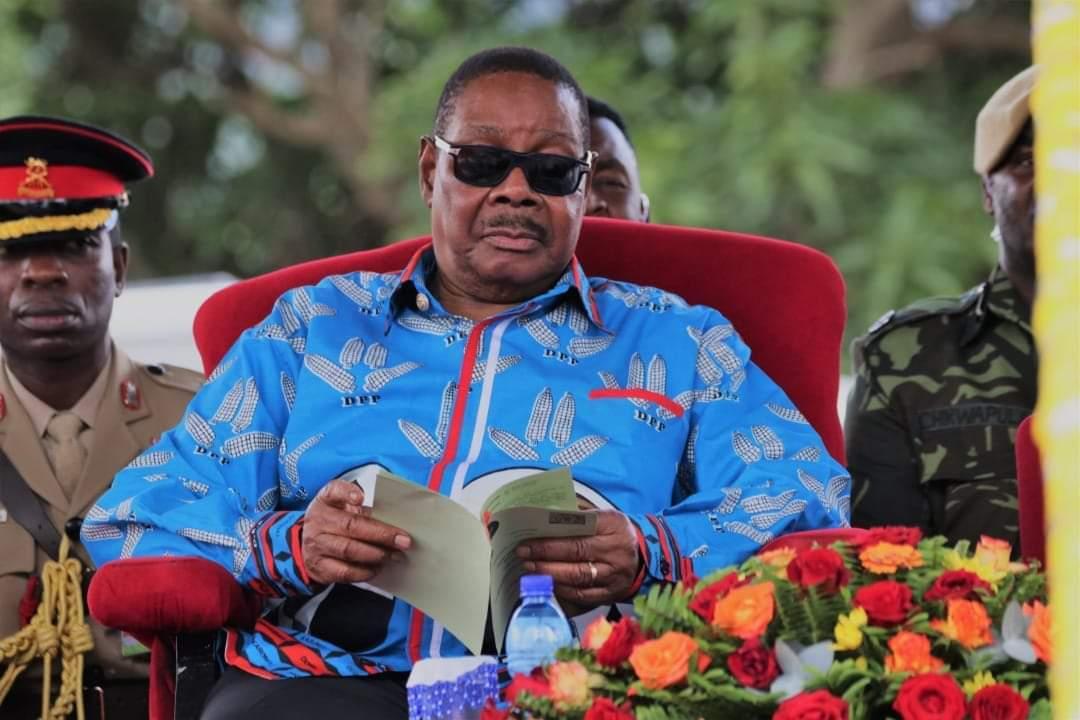
- Former Malawi President Arthur Peter Mutharika’s academic journey illustrates the value of higher education in public leadership.
- Strong educational foundations remain essential for effective governance, institutional transformation and national development.
Although wisdom is widely associated with effective leadership in any institution, education also contributes significantly to the successful management of institutions and nations.
Like any institution, a country requires sound leadership to achieve social and economic development, and education remains one of the key drivers of that progress.
Former Malawi President Arthur Peter Mutharika is regarded as one of Africa’s most highly educated heads of state.
He earned his Bachelor of Laws (LL.B.) degree from the University of London in 1965 before proceeding to Yale University in the United States, where he obtained a Master of Laws (LL.M.) in 1966 and a Doctor of the Science of Law (J.S.D.) in 1969.
Before joining active politics, Mutharika spent several decades in academia, teaching at universities in the United States and Africa. His academic appointments included Haile Selassie I University (now Addis Ababa University) in Ethiopia and Rutgers University in the United States. He also served as a visiting professor and consultant at various international institutions.
Reflecting on his academic background, Mutharika said during an address at the University of Oxford in 2017: “I grew up in a family where my parents were educators, and I myself spent all my life in higher education at seven universities on three continents.”
Earlier, he had attended Dedza Secondary School in Malawi, an institution known for producing several prominent national leaders.
He later established himself as a professor with expertise in international justice, international economic law and comparative constitutional law.
Before becoming President of Malawi, Mutharika also served in his brother’s administration as Minister of Justice and Constitutional Affairs, Minister of Education, Science and Technology, and Minister of Foreign Affairs.
READ ALSO: Ogamba rallies secondary school principals to support CBE, calls for unity to stabilise schools
Indeed, education and leadership go hand in hand in transforming institutions, strengthening governance, and driving national development. A well-educated leader is often better equipped to analyse complex challenges, formulate sound policies, and make informed decisions that advance the social and economic well-being of a country.
By Martin Ruto
You can also follow our social media pages on Twitter: Education News KE and Facebook: Education News Newspaper for timely updates.
>>> Click here to stay up-to-date with trending regional stories
>>> Click here to read more informed opinions on the country’s education landscape