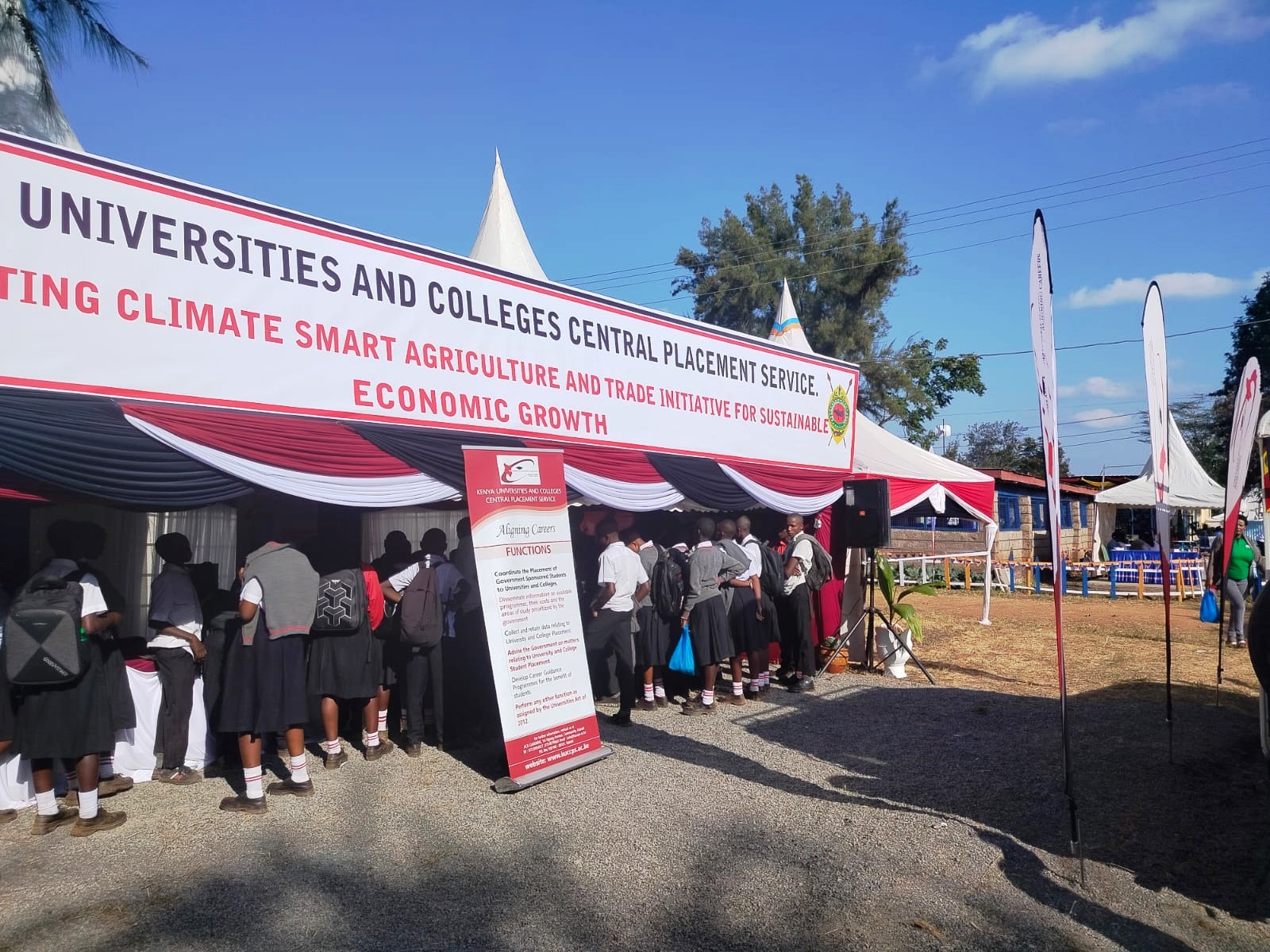
The introduction of the automated placement system by the Kenya Universities and Colleges Central Placement Service (KUCCPS) marked a defining shift in Kenya’s education landscape, fundamentally changing how students transition from secondary school into universities, colleges and Technical and Vocational Education and Training (TVET) institutions.
The system replaced a long-standing manual and often unpredictable admission process with a centralized digital platform that relies on academic merit, structured criteria and institutional capacity. Over time, this transformation has not only enhanced efficiency and fairness but also ensured that arbitrary manipulation of placement criteria has largely been eliminated, reinforcing a transparent, consistent and merit-based system that continues shaping the futures of thousands of learners each year.
Merit-based and transparent placements
Under the leadership of Dr. Agnes Mercy Wahome, the placement system has continued evolving into a more accountable and data-driven mechanism for managing higher education admissions. One of its most significant achievements has been the elimination of human interference in placement decisions, a factor that previously raised concerns about favoritism, bias and unequal access to opportunities.
Today, the system strictly applies KCSE performance, subject cluster requirements and institutional capacity to determine placement outcomes, ensuring that every learner competes on an equal footing based purely on merit and academic qualification.
The automation has significantly improved efficiency in student placement management. Every year, hundreds of thousands of candidates apply for courses across universities and colleges in Kenya, a scale that would have been extremely difficult to manage manually. The digital system processes applications simultaneously, matches qualifications to available programmes and releases results within a shorter and more predictable timeframe.
This efficiency has enabled institutions to plan admissions, staffing and academic calendars more effectively, while students benefit from faster feedback, reduced uncertainty and improved transition into higher education.
Expanding access and strengthening TVET
Beyond efficiency, the system has expanded access to higher education opportunities in ways that promote inclusivity and national integration. Through the online application platform, students from all regions of the country, including remote and marginalized areas, can apply for courses without physically travelling to institutions.

The automated placement system has also strengthened meritocracy within Kenya’s education system. Competitive programmes such as Medicine, Engineering, Law and Pharmacy are now allocated strictly based on academic performance and cluster points. This has motivated students to take KCSE examinations more seriously because performance directly determines career pathways.
Despite the intense competition for university programmes, the system has also played a major role in expanding TVET pathways. Students who fail to secure highly competitive degree courses are increasingly being directed into technical and vocational institutions. This shift has gradually reshaped societal attitudes toward TVET education, positioning it as a valuable and practical pathway rather than a second option.
Pressure, career alignment and emotional impact
However, the heightened merit-based competition has intensified pressure among students. As demand for popular courses continues to rise while available spaces remain limited, cut-off points have increased significantly. Many students who perform well academically still miss out on preferred programmes due to stiff competition.
This has created emotional strain, anxiety and uncertainty among candidates during placement periods, especially where high grades do not guarantee admission into dream courses.
The article further notes that some learners are placed in programmes that were not their first choice due to limited capacity or inadequate career guidance during application. Such mismatches between passion and placement may later contribute to academic dissatisfaction, reduced motivation or course changes.
The emotional impact of placement outcomes also extends to parents and guardians, many of whom view university admission as a defining moment in a learner’s life.
National planning and future challenges
Another significant contribution of the automated system has been improved educational planning and policy formulation. Because placement data is centralized, policymakers can monitor enrollment patterns, course demand, institutional capacities and workforce trends more effectively.
The article argues that this information is important in identifying skill shortages and aligning education with national priorities in sectors such as healthcare, engineering, ICT, manufacturing and education.
READ ALSO: Why strong marriages and stable families are important in child development
At the same time, the article raises concerns about overreliance on examination performance as the sole determinant of opportunity. It questions whether examinations alone can fully capture a learner’s creativity, talent or potential, highlighting the need for a more holistic education system that balances academic performance with skills, interests and abilities.
Ultimately, the KUCCPS automated placement system remains one of the most significant milestones in Kenya’s education transformation. While it has improved fairness, transparency, efficiency and national coordination, its long-term success will also depend on strong career guidance, emotional support and human-centered policies that help learners pursue paths aligned with both ability and passion.
By Hillary Muhalya
You can also follow our social media pages on Twitter: Education News KE and Facebook: Education News Newspaper for timely updates.
>>> Click here to stay up-to-date with trending regional stories
>>> Click here to read more informed opinions on the country’s education landscape