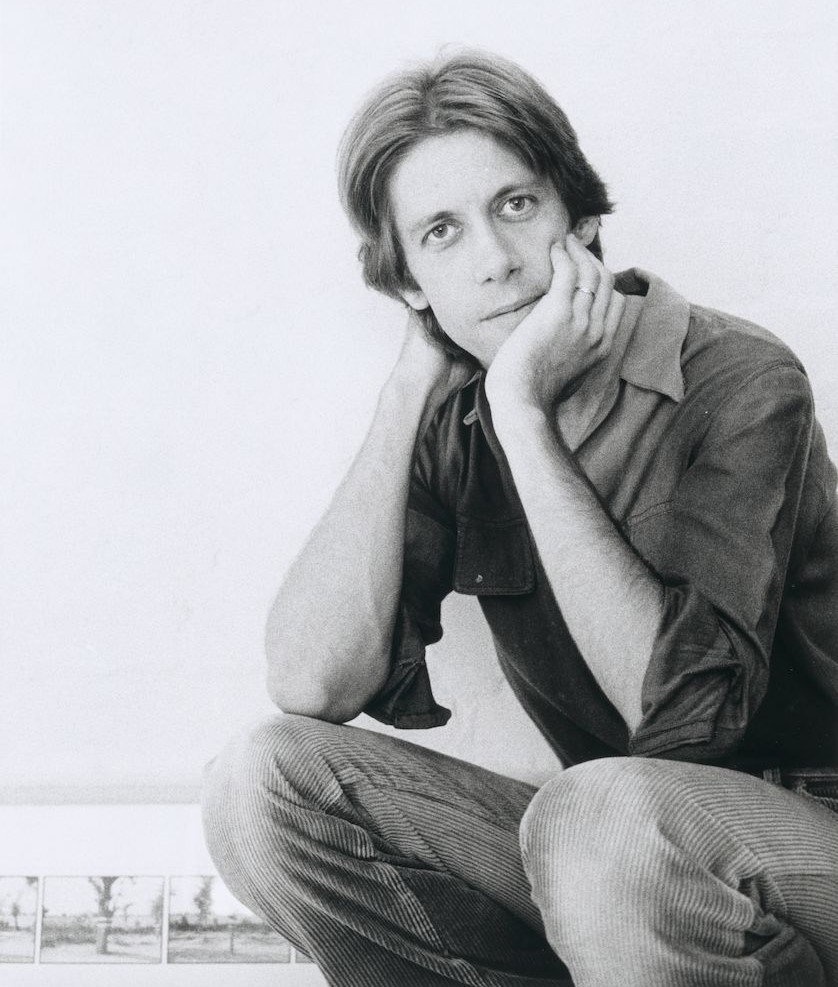
- Ashford Kimani reflects on the remarkable five-decade friendship between Australian artist Tom Carment and poet Robert Gray.
- Their relationship reveals how friendship, art and shared observation can shape creative lives across generations.
- Beyond literary achievement, the story explores ageing, memory and the enduring value of lifelong companionship.
Some friendships become part of the architecture of a life. They survive changes of address, careers, disappointments, illness and age, accumulating memories until the friendship itself becomes a kind of personal history.
For Australian artist and writer Tom Carment, a friendship lasting roughly half a century with poet Robert Gray has been precisely that.
Carment’s recollections offer more than a portrait of a celebrated poet. They reveal how an artist can learn to see the world differently through companionship with another imaginative mind. The story is ultimately about poetry, but it is equally about observation, loyalty, ageing and the quiet intimacy of knowing another person over decades.
Carment is himself a distinguished painter and writer. Born in Sydney in 1954, he has spent much of his career painting landscapes, portraits and still lifes, usually working directly from life. His own account of his artistic practice describes it as a form of reportage: the external world appears in landscapes, while friendships and relationships emerge through portraits and still lifes.
That philosophy makes his friendship with Gray especially significant. Both men were observers, although they worked in different mediums. One used paint and drawing; the other used language. Yet both were interested in the small, easily overlooked details through which an entire world can be revealed.
Two artists, two ways of seeing
Carment’s early years as an artist placed him in the extraordinary artistic milieu of Sydney’s Lavender Bay. In 1974, at just 19, he moved into a small flat there. The neighbourhood was then a gathering place for artists, with figures such as Brett Whiteley and Peter Kingston among those who helped create its bohemian atmosphere.
It was an environment in which artistic life and ordinary life were inseparable. Harbour ferries, conversations, music, gardens, arguments, parties and friendships all became part of the creative landscape.
That sensibility remained with Carment. His later work would repeatedly return to the people and places around him, treating everyday experience not as background material but as something worthy of sustained attention.
His friendship with Gray belongs to this broader tradition of Australian artistic companionship. It was not simply an association between two accomplished figures. It was a relationship built through shared experiences, conversations and the gradual accumulation of ordinary moments.
This is perhaps what makes long friendships so valuable to writers and artists. They provide witnesses.
A friend remembers the person one was before success, before recognition and before reputation hardened into public identity. A friend remembers the awkward years, the experiments, the ambitions, the mistakes and the private jokes. In old age, such memories become increasingly precious because they preserve versions of a person that official biographies rarely capture.
Carment’s recollections of Gray therefore invite us to think about the difference between a public literary figure and the private human being behind the work.
Gray’s poetry is celebrated for its attention to the natural world and to the seemingly insignificant details of everyday existence. His work can make an ordinary landscape, object or domestic scene suddenly luminous. Carment’s own artistic practice operates in a similar territory. His paintings are often small and intimate, attentive to light, place and the physical presence of things.
The friendship between them consequently becomes a meeting of two forms of attention.
There is something profoundly Australian about this shared attentiveness to landscape. The Australian literary and artistic tradition has often been preoccupied with the relationship between people and the land, but Gray and Carment approach that relationship without necessarily requiring grand gestures. A harbour, a road, a tree, a house, a face or a changing patch of light can be enough.
Friendship becomes an archive
This is also why memories of friendship can become works of art in their own right. Memory edits. It selects. It places particular moments beside one another and discovers connections that may not have been visible when the events occurred.
Carment’s reflections are therefore not merely reminiscences. They are acts of looking back.
Perhaps the most moving dimension of a friendship lasting fifty years is the way it changes meaning with age. In youth, friendship can seem effortless and permanent. In later life, its survival becomes an achievement. Friends become custodians of one another’s histories.
Illness and physical decline can make that role even more profound. Carment has written about Gray’s poem The Dying Light, reflecting on Gray’s final years and on the uncomfortable realities of ageing and failing bodies. He notes the intimacy of having recently pushed his old friend in a wheelchair, connecting Gray’s experience with the poem’s meditation on his own mother.
Here, poetry ceases to be an abstract literary exercise. It becomes a way of confronting mortality.
That may be the deepest lesson of the fifty-year friendship. Great art does not remove us from ordinary life. It teaches us to look more closely at it.
What remains after fifty years
The friendship between Carment and Gray demonstrates how creative lives are shaped not only by books, exhibitions and prizes, but also by companionship. Behind every celebrated artist or writer lies a network of people who witnessed the journey.
Carment’s memories remind us that friendship can itself become an archive. It preserves voices, places, gestures and moments that would otherwise disappear.
After fifty years, what remains is not merely the memory of a famous poet. It is the accumulated record of two lives spent paying attention—to landscapes, to people, to art, to ageing and, above all, to the extraordinary richness hidden inside ordinary days.
In the end, perhaps that is what it means to have truly seen the world beside another person: not simply to have shared the same years, but to have helped each other notice what those years contained.
By Ashford Kimani
Ashford is a teacher of English and Literature and writes on education and social affairs.
You can also follow our social media pages on Twitter: Education News KE and Facebook: Education News Newspaper for timely updates.
>>> Click here to stay up-to-date with trending regional stories
>>> Click here to read more informed opinions on the country’s education landscape
>>> Click here to stay ahead with the latest national news.