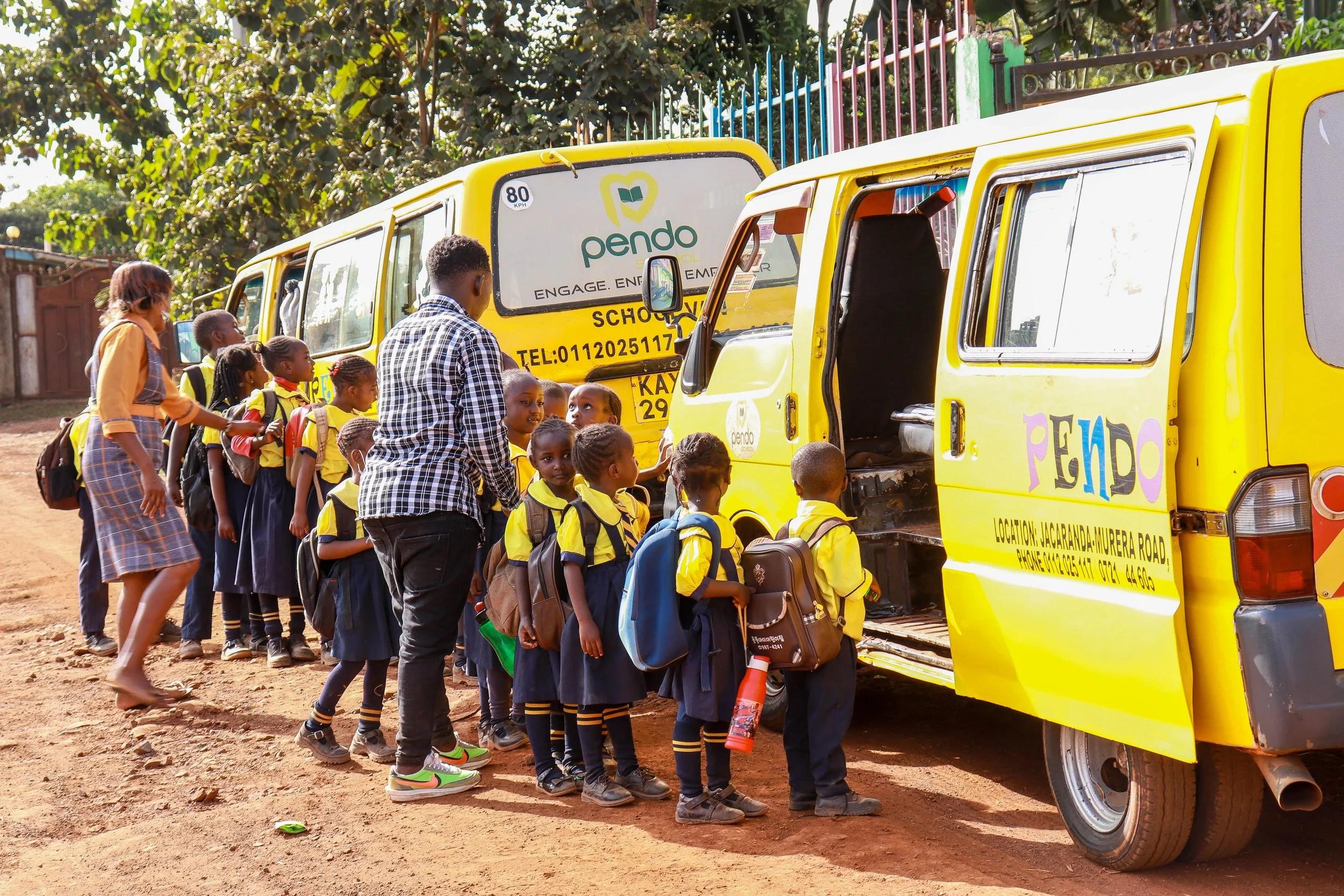
- Third Term reopening will put thousands of learners back on school buses, vans and other vehicles.
- Parents should look beyond convenience and establish whether vehicles, drivers and safety arrangements meet required standards.
- Hillary Muhalya argues that parental responsibility should continue even after children board their school transport.
As Kenyan schools prepare to reopen for the Third Term, thousands of parents will once again watch their children climb into school buses, vans and other vehicles before waving goodbye and returning to their daily routines.
But here is the uncomfortable question: Do parents really interrogate the safety of the vehicles carrying their children, or do they simply wait for the van or bus, bid the child goodbye and assume everything will be fine?
For many families, school transport has become a routine part of the school day. Once a child is collected from the gate or roadside, parents often have little idea about the condition of the vehicle, the qualifications of the driver, the number of passengers on board or whether basic safety requirements are being observed.
Yet these are precisely the questions parents should be asking.
A convenient ride is not necessarily a safe ride
The fact that a vehicle has been transporting learners for years does not automatically make it safe.
Parents should establish whether the vehicle has undergone the required inspection, whether it has valid licensing and insurance, and whether it is authorised to transport school-going children.
They should also pay attention to the physical condition of the vehicle.
Are the tyres in good condition? Are the brakes functioning properly? Do the headlights, indicators and mirrors work? Is the vehicle properly maintained?
These may sound like questions for mechanics or transport operators, but they are ultimately questions about the safety of someone’s child.
Who is behind the wheel?
Parents should also know who is driving their children.
Is the driver appropriately licensed? Is the driver experienced in handling school-going children? Does the driver observe speed limits and traffic rules?
A parent should not wait for an accident to discover that a driver had a history of reckless driving or that the vehicle was being operated without the necessary requirements.
The same scrutiny should extend to attendants and other personnel responsible for learners during the journey.
Parents should also establish whether children are required to use seat belts and whether the vehicle carries learners within its approved capacity.
Overcrowding should never be normalised.
A vehicle packed beyond its approved capacity can make an emergency evacuation more difficult and increase the potential consequences of a crash.
Parents should also ask whether speed-control and monitoring systems are functioning properly.
The goodbye should not be the end of parental responsibility
There is nothing wrong with trusting a school or transport provider.
But trust should be accompanied by vigilance.
Before the Third Term begins, parents can speak to school administrators and transport providers about the arrangements for their children.
They can ask who operates the vehicle, how frequently it is serviced, whether it has undergone the required inspection, what safety equipment is available and what emergency procedures are in place.
Parents should also talk to their children.
Learners should know that they must remain seated, use seat belts where provided, avoid distracting the driver and follow instructions from the driver or attendant.
They should never put their heads, hands or other body parts outside a moving vehicle.
A child’s safety cannot be delegated entirely
As schools reopen and traffic increases on Kenyan roads, learner transport deserves serious attention from parents, schools, drivers and regulators.
The responsibility cannot rest entirely with the school.
Parents are the first line of concern when it comes to their children’s safety.
So, before simply standing at the gate, watching the bus disappear down the road and saying, “Bye, see you later,” perhaps there is one more question every parent should ask:
Have I actually checked whether the vehicle carrying my child is safe?
READ ALSO: Why learner safety must come before rigid school timetables as CS Ogamba answers Parliament
Because when it comes to school transport, a parent’s responsibility should not end with waving goodbye.
By Hillary Muhalya
Get more stories from our website: Education News
To write to us or offer feedback, you can reach us at: editor@educationnews.co.ke
You can also follow our social media pages on Twitter: Education News KE and Facebook: Education News Newspaper for timely updates.
>>> Click here to stay up-to-date with trending regional stories