- The National Parents Association wants CEMASTEA expressly included in the Bill to support continuous teacher training.
- Parents say quality learning requires competent teachers who receive structured support throughout curriculum implementation.
- The Association also seeks clear statutory recognition for CEMASTEA’s specialised teacher development and STEM programmes.
Parents’ lobby group, the National Parents Association (NPA), has called for the inclusion of the Centre for Mathematics, Science and Technology Education in Africa (CEMASTEA) in the Basic Education Bill, 2026.
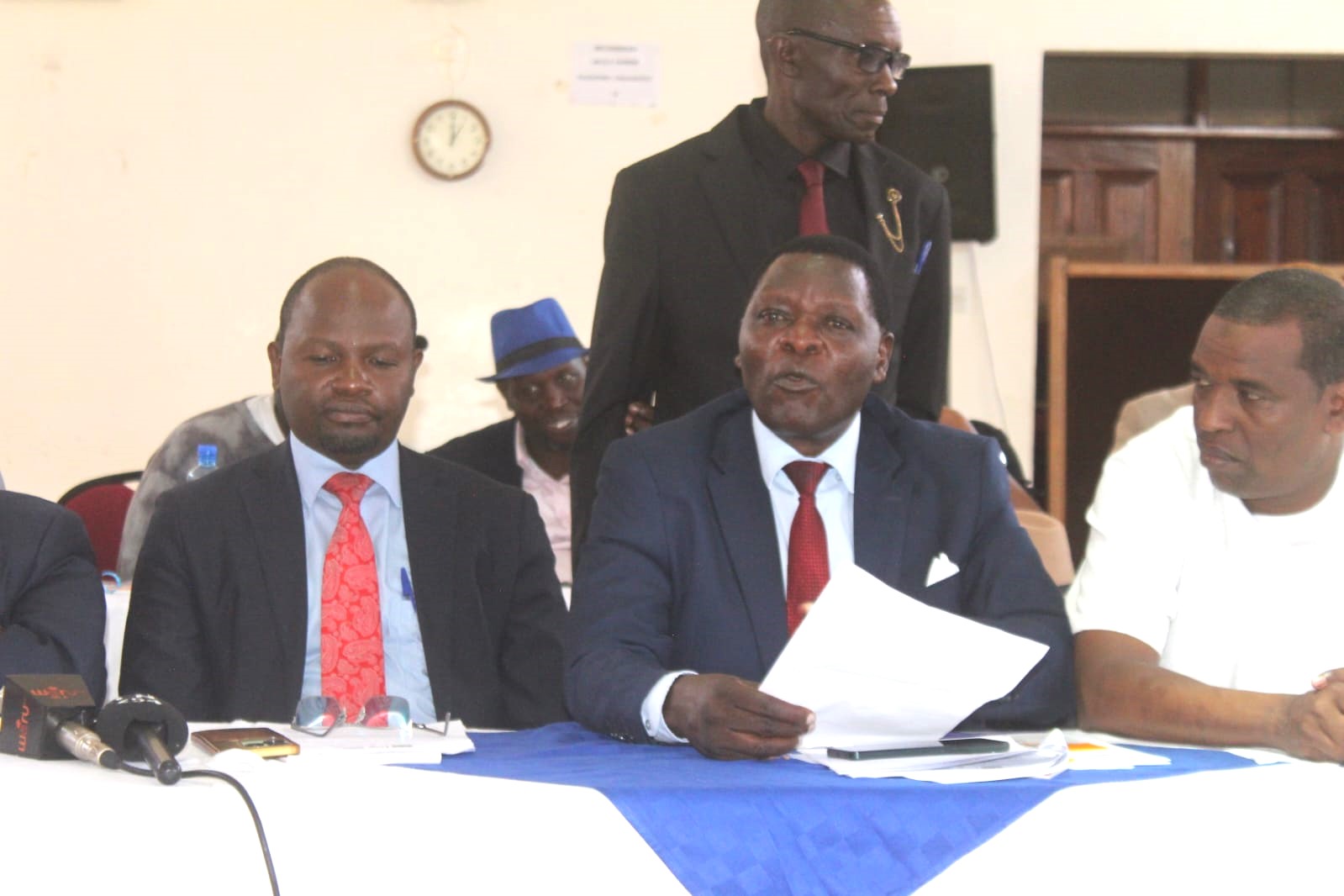
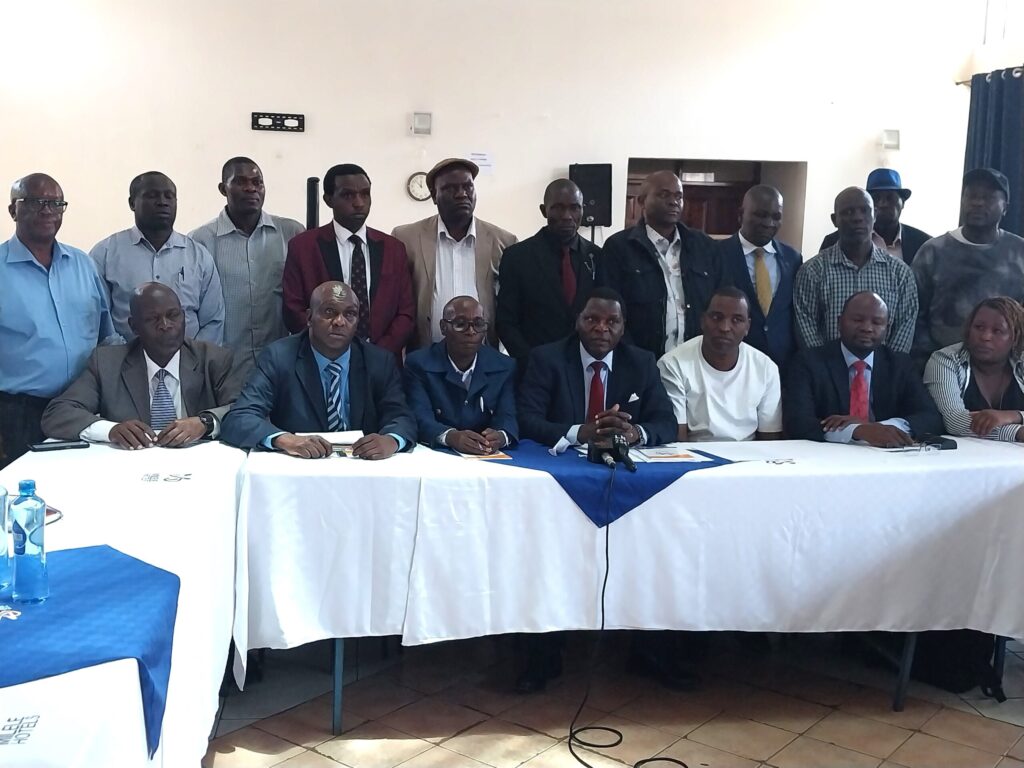
Speaking during the Association’s media briefing at Milele Hotel in Nairobi’s South C on October 3, 2026, National Chairman David Silas Obuhatsa stated that, in their memorandum, they had asked the National Assembly’s Education Committee, under the leadership of Tinderet MP Julius Melly, to amend the Basic Education Bill, 2026 to include CEMASTEA as the institution providing continuous, structured and needs-based in-service training for all teachers at primary, junior and senior school levels.
They have also asked for the establishment of CEMASTEA as an independent corporate body with a clear statutory identity and appropriate governance structure under the Basic Education Bill, 2026.
“As parents, we want our children not merely to attend school, but to learn, develop their talents and compete successfully in a changing world. The quality of their education depends significantly on the continuous professional development of their teachers and the availability of institutions capable of responding to emerging educational needs. Teacher capacity development should be a continuous national responsibility protected by law under the basic education framework,” said Obuhatsa.
Teacher development essential
According to the NPA, parents are concerned about the future of their children, and the country needs an education system that equips learners not only with knowledge but also with the skills and competencies to solve problems and participate in the ever-changing world.
The Association noted that the right to free and compulsory basic education must include the right to quality learning delivered by competent, adequately prepared and continuously supported teachers, adding that the implementation of Competency-Based Education (CBE) has introduced new learning areas, teaching methods, technologies and assessment approaches across primary, junior and senior school.
NPA states that this has necessitated continuous in-service training to ensure that teachers remain professionally equipped to implement the curriculum as intended.
“A curriculum cannot be effectively implemented without adequately prepared teachers. Teachers require continuous professional development in curriculum reforms, subject-specific teaching methods, assessment and emerging areas of education. The transition to Junior School demonstrated this need. CEMASTEA responded by providing targeted in-service training, thereby strengthening teachers’ capacity to implement new learning areas,” said Obuhatsa.
He added: “At Senior School, CEMASTEA has supported teachers in adopting new teaching methods as envisioned in the curriculum. Such interventions demonstrate the importance of maintaining a permanent institutional mechanism for teacher capacity development.”
Teacher-parent partnership
According to the lobby group, the advent of the CBE framework brought renewed hope among parents regarding employability, and strengthening Science, Technology, Engineering and Mathematics (STEM) subjects in basic education will go a long way towards narrowing the mismatch between education and future industry opportunities.
They have also expressed concerns about the slow uptake of STEM education in Kenya, citing reasons such as social paradigms at the household level, which have played a significant role in influencing below-average learner preference for STEM, especially among girls.
They affirmed that CEMASTEA has been and remains parents’ preferred partner within the basic education structure at the institutional level for promoting parental empowerment and engagement in STEM through structured teacher-parent STEM promotion partnerships and resourcing.
The Association also notes that CEMASTEA’s contribution extends directly to learners, which parents recognise through teacher capacity development, and that CEMASTEA provides an important platform for enhancing learners’ competencies by strengthening teachers’ professional capacity.
“CEMASTEA provides opportunities for learners through Holiday STEM Boot Camps, where children engage in practical STEM activities, innovation, coding, robotics and problem-solving beyond the regular classroom.”
The parents note that, through the Kenya Mathematical Olympiad (KMO), supported by CEMASTEA and its partners, talented learners have been identified, nurtured and prepared to participate in national and international mathematics competitions. They stated that the pathway has enabled Kenyan learners to progress to global platforms, including the Pan African Mathematics Olympiad (PAMO) and the International Mathematical Olympiad (IMO).
“These programmes demonstrate that a specialised national institution can contribute not only to teacher development but also to the identification and development of learners’ talents, competencies and career aspirations,” said Obuhatsa.
The parents, through their Association, have raised concerns that the omission of CEMASTEA from the proposed legislative framework under the Basic Education Bill, 2026 may weaken institutional capacity developed over almost 30 years.
They added that the proposed corporate status should not be viewed merely as an administrative change. Rather, it would create clarity in responsibility, accountability and institutional capacity for supporting teacher in-service education and training.
“We therefore submit that CEMASTEA should expressly be introduced as a distinct and specialised national institution for teacher capacity development under the Basic Education Bill, 2026, rather than being subsumed into a broader institutional arrangement that may dilute its specialised teacher in-service education and training,” said Association Chairman Obuhatsa.
They further stated that parents are essential partners in basic education and CBE implementation, observing that while CEMASTEA’s primary mandate is to provide in-service training for teachers, its programmes and stakeholder engagement have helped parents understand their role in parental engagement.
The Association notes that parents believe successful CBE implementation requires strong institutions, adequately prepared teachers, real-life learning, appropriate resources and sustained professional support.
They further reiterated that parents can reinforce learning at home by encouraging curiosity, creativity, problem-solving, experimentation, reading, digital literacy and interest among learners.
READ ALSO: When family crises enter the classroom: Why schools must look beyond behaviour
They said CEMASTEA ought to be given an expanded mandate to interact with and reach all teachers, who would, in turn, empower parents for effective engagement in line with the Guidelines on Parental Empowerment and Engagement.
By Roy Hezron
Get more stories from our website: Education News
To write to us or offer feedback, you can reach us at: editor@educationnews.co.ke
You can also follow our social media pages on Twitter: Education News KE and Facebook: Education News Newspaper for timely updates.
>> Click here to stay up-to-date with trending regional stories