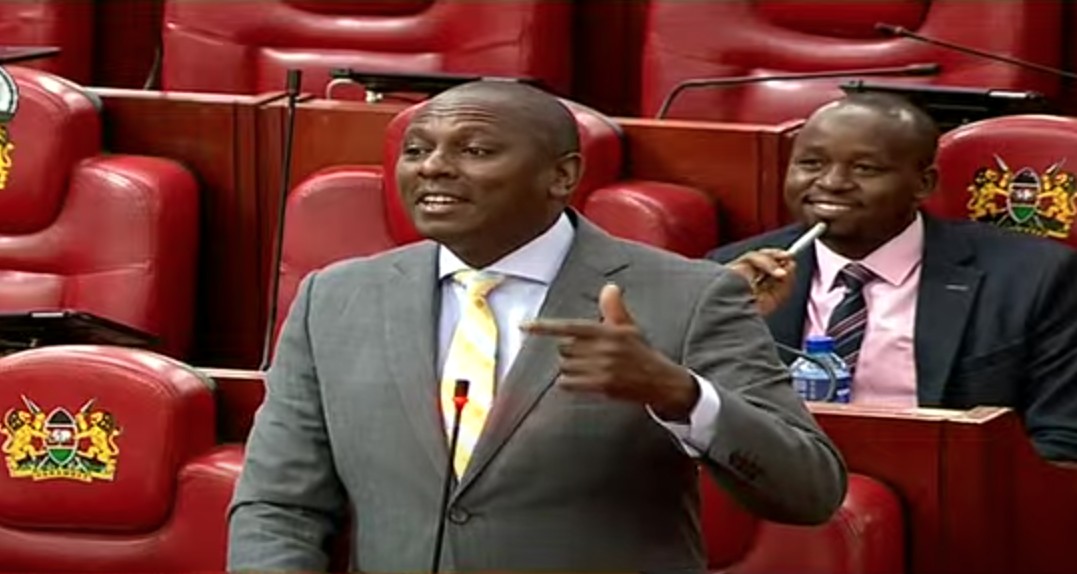
- MP Gathoni Wamuchomba has called for school buses to receive special road priority to improve learner safety on Kenyan roads.
- The Senate has left unresolved a motion to annul the Traffic (School Transport) Rules, 2026, with the matter repeatedly deferred since June.
- Parliament has been urged to define clear circumstances, such as pick-up and drop-off points, under which motorists would be required to give way to school buses.
Kenya could be heading for a new road-safety regime for school buses after Githunguri MP Gathoni Wamuchomba called for vehicles carrying learners to be given special priority on public roads.
Wamuchomba wants school buses to receive preferential treatment to enable learners to reach schools and other destinations safely and on time, arguing that motorists do not accord school transport vehicles sufficient consideration. Speaking in Parliament on Wednesday, September 30, 2026, the MP said she was particularly concerned about the treatment of school buses by public transport operators. “Unfortunately, our roads are not fair to them. Our roads are not very forgiving to our learners, our children,” Wamuchomba said.
Her intervention followed delays encountered by students travelling to Parliament, bringing into sharp focus the daily difficulties school buses face while navigating Kenya’s congested roads. The proposal would, however, require a change or addition to the existing traffic framework, since school buses are not currently placed in the same general right-of-way category as emergency vehicles.
Kenyan traffic law already provides special treatment for certain emergency vehicles. Drivers are required to give way to authorised emergency vehicles using prescribed warning signals, including ambulances and fire engines, while police vehicles also have specific protections when operating in circumstances covered by traffic law. Wamuchomba’s proposal differs in that she wants school buses carrying children to receive a distinct form of road priority, potentially placing them in a specially protected category. That would require Parliament and the relevant transport authorities to clearly establish when the priority applies, how motorists should respond, what warning signals would activate it and what penalties would apply to motorists who ignore it. It would also need to distinguish between a school bus simply travelling through traffic and one that has stopped to collect or release learners.
ALSO READ:
Bomet University student hugs tree in appeal for help with fees
Existing School Transport Rules Remain Unresolved in the Senate
The debate comes only months after Kenya gazetted a specialised legal framework for school transport. The Traffic (School Transport) Rules, 2026, were published as Legal Notice No. 11 of 2026 in the Kenya Gazette Supplement on February 13, 2026. The rules, made under the Traffic Act, cover licensing of school transport providers and school vehicles, obligations of transport providers, school-vehicle attendants, crossing guards and safety requirements for school vehicles, including reflectorised red stop mechanical signal arms fitted to qualifying school vehicles.
However, Parliament subsequently scrutinised the rules. The Senate’s Select Committee on Delegated Legislation considered Legal Notice No. 11 and proposed that the Senate annul the Traffic (School Transport) Rules under Section 18 of the Statutory Instruments Act. A motion to adopt the committee’s report and annul the rules was then placed before the Senate, but the record does not show a completed annulment. On June 17, July 16, July 23, July 29, August 5, September 10 and September 17, the motion appears in the Senate record as deferred. The rules should therefore not be described as having been definitively annulled, though the unresolved parliamentary process means the regulatory position should be treated as unsettled rather than final.
The regulations cover several areas of school transport, including licensing of school transport providers, road licences for school vehicles, suspension and revocation of licences, school-vehicle attendants, crossing guards, vehicle safety requirements, and reflectorised red mechanical stop-signal arms. These provisions are aimed primarily at learner safety and the accountability of school transport operators. Wamuchomba’s proposal goes a step further, addressing not just the condition and operation of the school bus itself, but how other motorists interact with that bus on the road.
Boarding and Alighting Seen as the Riskiest Moments
The strongest case for additional protection arises when children are boarding or leaving a school bus. A stationary school bus can conceal children from approaching motorists, and learners may cross the road immediately after alighting, while motorists travelling behind or towards the bus may have limited visibility. A school-bus priority system could therefore potentially be designed around designated school zones, pick-up and drop-off points and other locations where learners are most exposed, rather than granting every school bus unrestricted priority throughout its entire journey. Parliament could instead define specific circumstances in which motorists must slow down, stop or give way.
The proposed change also raises a wider issue about Kenya’s roads around schools. Giving buses priority would not eliminate the need for clearly marked pedestrian crossings, speed-control measures, road signs around schools, safe bus bays, traffic-calming infrastructure, trained crossing guards, properly inspected school vehicles, qualified drivers and enforcement against dangerous overtaking. The safety of learners ultimately depends on the entire road environment, not only on the vehicle carrying them.
ALSO READ: Governor Wavinya orders removal of encroachers from school land in Mwala
Kenya already has a dedicated school-transport regulatory framework in Legal Notice No. 11 of 2026, although its parliamentary fate remains unresolved. What Wamuchomba is now proposing is an additional protection: special road priority for vehicles transporting learners. If Parliament takes up the proposal, lawmakers will have to decide whether school buses should receive priority throughout their journeys or only under specified circumstances, particularly when children are being collected or dropped off, and reconcile any new priority system with the existing Traffic Act and the contested 2026 school-transport framework.
For parents and schools, the central issue remains straightforward: children should be able to travel between home and school without avoidable road danger. The parliamentary debate now shifts the question from how school buses should be regulated to how the entire road system should respond when a vehicle carrying children is on the road.
By Hillary Muhalya
Get more stories from our website: Education News
To write to us or offer feedback, you can reach us at: editor@educationnews.co.ke
You can also follow our social media pages on Twitter: Education News KE and Facebook: Education News Newspaper for timely updates.
>> Click here to stay up-to-date with trending regional stories