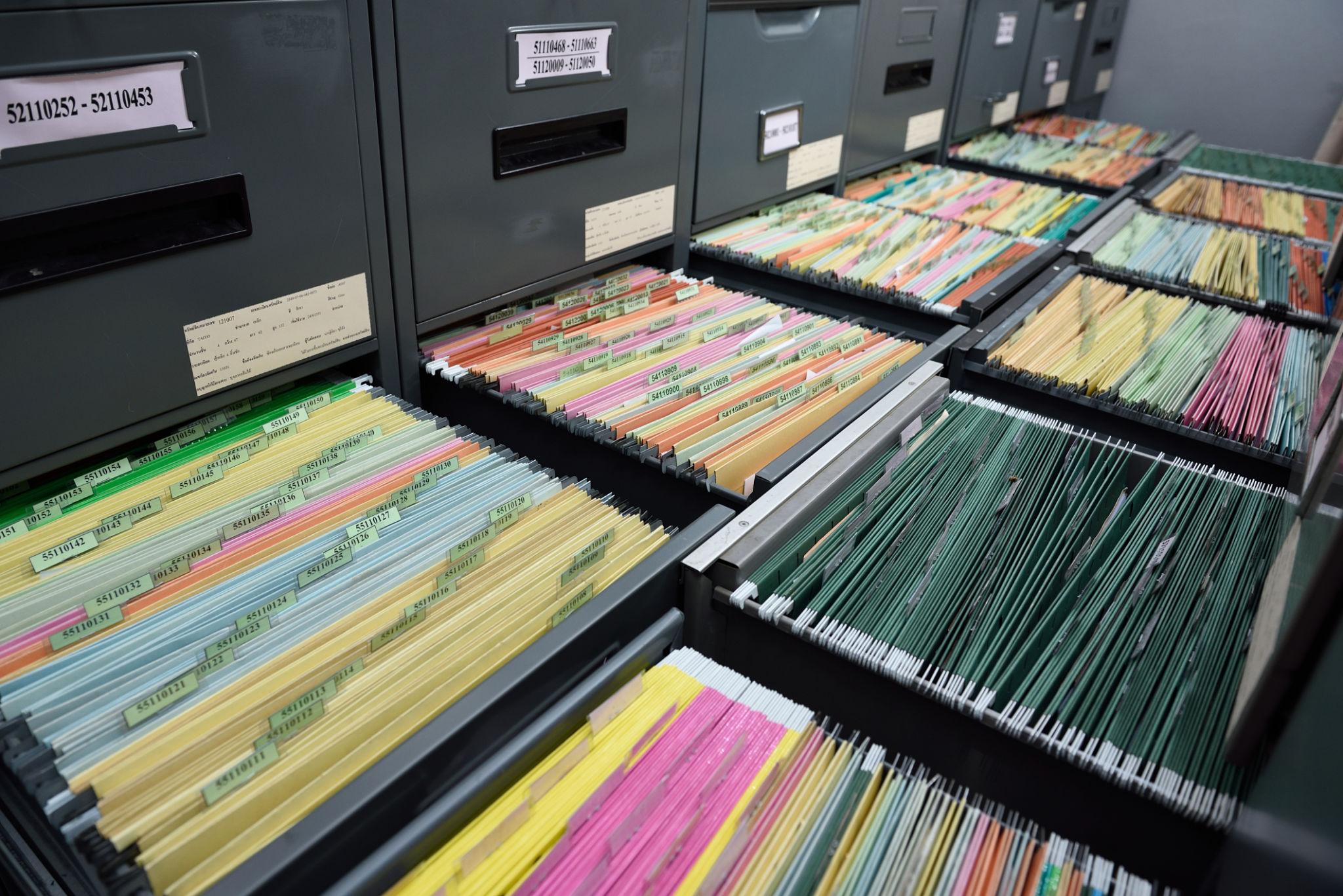
- School records are more than documents stored in crowded offices and ageing filing cabinets.
- Hillary Muhalya explains how proper record keeping protects learners, staff, finances and institutions from future administrative and legal difficulties.
- He argues that schools need clear retention policies and secure digital systems to safeguard their institutional memory.
A school is remembered not only for the learners it educates but also for the records it preserves. Behind every admission, examination result, employment contract, financial transaction, policy decision and graduation certificate lies documentation that tells the story of the institution.
These records are more than paper files or digital documents; they form the legal, historical and administrative backbone of every school.
Yet, in many learning institutions, records management remains one of the most neglected aspects of school administration. As offices become congested and storage space becomes limited, administrators often make a costly mistake: disposing of old documents simply because they appear obsolete.
What seems unnecessary today may become critical evidence years later.
Across Kenya, many schools have struggled to respond to requests from former learners seeking proof of admission, confirmation of examination results or replacement of academic documents because essential records were destroyed. Others have faced legal disputes involving employment matters, procurement processes or financial audits, only to discover that the supporting documentation had long been discarded.
Professional institutions understand that information is a strategic asset. Just as buildings, laboratories, libraries and school buses require protection, so too do the records that document every key decision and activity undertaken by the institution.
Admission records remain among the most valuable documents a school can possess. They provide a permanent record of every learner who has ever joined the institution.
Years after leaving school, former students may require confirmation of admission for employment, university placement, immigration processes or professional registration. Without these records, verifying educational history becomes difficult and, in some cases, impossible.
Equally important are learners’ cumulative records. These files document a learner’s academic journey, including performance, assessments, co-curricular participation, behavioural reports, guidance and counselling interventions, health information and transfer details.
A learner who leaves today may return years later, while another may request transcripts or recommendation letters long after graduation. Such requests can only be efficiently addressed when records have been properly preserved.
Protect staff and academic records
Human resource records require the same level of protection.
Every teacher and non-teaching staff member has a professional file containing appointment letters, contracts, promotion records, appraisal reports, leave records, disciplinary correspondence, salary adjustments, resignation letters and retirement documentation.
These records protect both the employee and the institution, particularly in labour disputes, pension claims or legal proceedings. Premature disposal can expose schools to financial loss and reputational risk.
Academic assessment records are equally indispensable.
Examination results, continuous assessment reports, mark sheets, competency evaluations and transcripts provide credible evidence of learner achievement.
Former students often return years later seeking verification of grades for university admission, scholarships or employment. A school that cannot authenticate its own academic records risks undermining its credibility and public trust.
Financial records strengthen accountability
Financial documentation forms the foundation of accountability and transparent governance.
Receipts, payment vouchers, invoices, procurement records, cash books, payroll documents, bank statements, budgets and audited financial reports demonstrate how resources have been managed.
During audits, investigations or court proceedings, these records become essential. Their absence may raise concerns even in the absence of wrongdoing.
Minutes of meetings are equally significant.
Whether from Board of Management meetings, staff meetings, Parents Association deliberations or committee sessions, these records capture official resolutions and institutional decisions.
Years later, they may serve as the only reliable reference explaining how or why a particular decision was made. In many legal and administrative matters, well-maintained minutes have safeguarded institutions from costly disputes.
Institutional policies should also be preserved, even when updated or replaced.
Schools evolve, regulations change and priorities shift. Retaining historical policy documents enables administrators to understand past decisions, respond to legal inquiries and demonstrate compliance with regulations applicable at the time.
Accident reports, disciplinary records and safeguarding documentation also require careful retention.
Incidents involving learners, staff or visitors may appear resolved but can resurface years later through litigation, insurance claims or official investigations. Proper documentation enables schools to demonstrate due process, accountability and adherence to duty of care.
Visitor registers, though often overlooked, play a critical role in school security. They provide an official record of all individuals who entered the institution, their purpose and the time of visit.
In cases involving safeguarding concerns, security breaches or investigations, these records can provide vital evidence.
Schools should also maintain comprehensive records of certificates, testimonials and graduation documents issued to learners.
Every certificate must be traceable. This allows institutions to verify authenticity, replace lost documents where appropriate and protect their reputation against academic fraud.
Inspection reports and quality assurance findings are another important category of records.
Reports from the Ministry of Education, quality assurance officers, accreditation bodies, public health officials and other regulators provide a historical record of compliance, performance and institutional development.
These documents are essential for strategic planning and continuous improvement.
Similarly, asset management records require careful preservation.
Asset registers, procurement files, invoices, warranty certificates, maintenance schedules and disposal records establish ownership and support accountability.
They facilitate audits, support insurance claims and ensure responsible management of institutional resources.
However, preserving records does not mean retaining every document indefinitely.
Well-managed institutions operate under structured records retention policies that define what should be kept permanently, what should be retained for specified periods, how records should be stored and when lawful disposal may occur.
Such frameworks eliminate uncertainty and ensure compliance with legal and professional standards.
Digital records are changing school administration
The digital era has further transformed records management.
Schools are increasingly adopting electronic document management systems that complement physical archives through secure scanning, cloud storage, encrypted backups and controlled access.
Digital systems reduce risks associated with loss, fire, flooding or deterioration, while improving efficiency and retrieval.
However, they should enhance—not replace—sound records management practices supported by clear policies and regular backups.
Beyond compliance, effective records management reflects institutional leadership quality.
It demonstrates transparency, accountability, professionalism and respect for institutional memory.
Schools that prioritise documentation are better prepared for audits, inspections, accreditation processes, litigation and strategic planning. They also respond more efficiently to requests from learners, parents, staff and government agencies.
Records are institutional assets
Ultimately, records should never be viewed as outdated paperwork occupying office space.
They are silent custodians of institutional history, preserving achievements, protecting reputation and providing evidence when needed. Once destroyed, many of these records cannot be accurately reconstructed.
Before authorising the disposal of any file, every school administrator should pause and ask a fundamental question: Is this merely an old document, or is it an irreplaceable asset that could protect our institution in the future?
Outstanding schools are distinguished not only by academic performance, infrastructure or enrolment figures, but also by strong systems of governance, accountability and institutional memory.
They recognise that every well-preserved record strengthens the foundation upon which future generations will build.
READ ALSO: Proposed higher education funding model to introduce 100percent student loans, tougher repayment rules
In education, effective teaching shapes lives, but effective documentation safeguards institutional legacy.
A school that protects its records protects its learners, its staff, its leadership and its future.
By Hillary Muhalya
You can also follow our social media pages on Twitter: Education News KE and Facebook: Education News Newspaper for timely updates.
>>> Click here to stay up-to-date with trending regional stories
>>> Click here to read more informed opinions on the country’s education landscape