- Leadership shapes much more than an organisation’s policies, strategies and performance.
- Maingi M’Thuranira explains how leaders’ character, attitudes and daily actions gradually influence those around them.
- He argues that lasting organisational transformation begins with leaders first transforming themselves.
Walk into any organisation and, within minutes, you begin to sense its spirit. Some organisations feel vibrant and full of life. People smile, collaborate, solve problems creatively, and take genuine pride in their work. Others feel heavy and uninspiring. Conversations are guarded, innovation is absent, and employees seem to be counting the hours until the workday ends.
Long before people experience an organisation’s strategic plan, they experience its atmosphere. Before they read its vision statement, they feel its culture. Before they admire its achievements, they encounter its people—and those people are often a reflection of what they have consistently experienced from those who lead them.
The same principle is evident in every sphere of life. Walk into a school and you can quickly tell whether teachers are inspired or exhausted. Visit an office and it soon becomes apparent whether employees are trusted or merely controlled. Sit in a church and you will often sense whether people serve with joy or out of obligation. Spend time with a family and you will notice whether love, respect, and security flourish or whether fear, tension, and conflict have become the norm.
These realities rarely emerge by accident; they are the visible expression of the invisible spirit of leadership.
Leadership extends far beyond holding a position of authority. Edgar Schein observed that leaders shape organisational culture through what they consistently pay attention to, measure, reward, tolerate, and how they respond to challenges and crises (Schein, 2010).
Leadership, therefore, is the continual transfer of a leader’s values, beliefs, emotions, attitudes, and character to those within their sphere of influence, whether that transfer is intentional or unconscious.
An anxious leader often creates an anxious organisation. A dishonest leader cultivates a dishonest culture. A hopeful leader inspires hopeful people. A humble leader develops humble teams, while an angry leader produces defensive employees.
Likewise, disciplined leaders establish disciplined systems because people may obey instructions out of obligation, but they absorb attitudes through consistent exposure. Over time, they become reflections of the environment their leaders create.
This explains why two organisations with similar resources, operating in the same environment and facing comparable challenges, can achieve dramatically different results.
The difference is seldom found in their budgets, facilities, or equipment. More often, it lies in the spirit of the individual leading them.
This insight aligns closely with transformational leadership theory, which argues that leaders who model integrity and articulate a compelling vision elevate not only the performance of their followers but also their motivation, commitment, and moral aspirations (Burns, 1978; Bass, 1985).
Culture is built daily through leadership
Many organisations invest significant resources in seminars, restructuring initiatives, policy reviews, motivational speakers, and strategic planning in an effort to improve organisational culture.
While these interventions have value, they often produce only temporary results because they address symptoms rather than the source. Culture is not primarily created through documents or policies; it is built daily through leadership.
Every day, leaders communicate what truly matters through their actions. They determine what is celebrated, what is tolerated, what is rewarded, and what is confronted.
Over time, these daily decisions shape organisational culture far more powerfully than any mission statement displayed on a wall.
Kouzes and Posner (2017) describe this as “modeling the way,” emphasising that leaders earn trust by consistently living the values they expect others to embrace.
People follow what leaders demonstrate
One of the greatest misconceptions about leadership is the belief that people primarily follow what leaders say. In reality, people follow what leaders repeatedly demonstrate.
Employees observe how managers respond to mistakes. Teachers notice how principals treat support staff. Children carefully watch how parents resolve conflict. Church members pay close attention to how pastors respond to criticism, and citizens judge public leaders by how they exercise authority.
Whether consciously or unconsciously, people are constantly asking one silent question: What is normal here?
The answer is almost always supplied by leadership.
This is why organisations can become unhealthy without anyone intentionally setting out to create a toxic culture. A leader who constantly criticises eventually creates an environment where criticism becomes the dominant language.
A leader who avoids accountability quietly teaches others to do the same. A leader who gossips should never be surprised when gossip becomes the unofficial language of the organisation.
Leadership inevitably multiplies both its strengths and its weaknesses.
Transformation begins with the leader
One of the greatest challenges leaders face is their own blind spot. Many sincerely desire change within their organisations while resisting change within themselves.
They expect greater commitment from employees while becoming less committed personally. They demand excellence while accepting mediocrity in their own work. They insist on honesty while occasionally compromising the truth, and they promote teamwork while making every significant decision alone.
Eventually, organisations detect these inconsistencies.
Trust begins to erode, motivation declines, innovation slows, and people gradually stop giving their best—not necessarily because they no longer believe in the organisation’s mission, but because they no longer believe the mission is being genuinely lived by those entrusted to lead it.
The most effective leaders recognise that organisational transformation always begins with personal transformation.
Before asking others to improve, they examine themselves. Before correcting others, they first submit themselves to correction. Before demanding change, they become living examples of the change they wish to see.
Such leadership requires humility, a quality that is becoming increasingly rare but remains indispensable.
Great leaders devote as much effort to managing themselves as they do to managing others.
They understand that emotional intelligence is not an optional leadership skill but an essential one. Research consistently identifies self-awareness and self-regulation as defining characteristics of highly effective leaders (Goleman, 1998).
They guard against pride because pride clouds judgment. They confront bitterness because bitterness eventually poisons relationships.
They deal honestly with fear because fearful leaders create fearful organisations, and they intentionally cultivate gratitude because grateful leaders inspire hopeful and resilient teams.
Simply put, leaders reproduce who they are.
Leadership through the lens of Scripture
This principle is deeply rooted in Scripture. Proverbs 29:2 reminds us that when the righteous prosper, the people rejoice, but when the wicked rule, the people groan.
Leadership never affects only the individual; it inevitably influences the wellbeing of everyone under its care.
Jesus demonstrated this truth perfectly. His leadership flowed not merely from authority but from character, compassion, integrity, humility, and sacrificial service.
More than two thousand years later, His influence continues because His spirit gave life to His leadership.
This principle remains equally relevant in Kenya today.
Many schools struggle not because teachers lack ability but because leadership has unintentionally fostered fear instead of trust. Businesses lose talented employees not simply because salaries are inadequate but because people eventually grow weary of toxic environments.
Churches lose spiritual vitality when programmes become more important than people, and families drift apart when leadership in the home is replaced by control instead of love.
Whenever the spirit of leadership weakens, organisational performance eventually follows.
Conversely, when leaders intentionally cultivate trust, humility, accountability, learning, hope, and service, remarkable transformation begins to take place.
People become more willing to contribute. Creativity flourishes, conflict becomes healthier, ownership increases, and excellence becomes voluntary rather than enforced.
Organisations become resilient because people are no longer working merely for a salary, a title, or recognition. Instead, they become committed to a purpose greater than themselves.
That is the extraordinary power of healthy leadership.
Leaders must also evaluate themselves
As leaders, we devote considerable time to evaluating our organisations. We analyse budgets, review performance reports, inspect facilities, assess risks, and develop strategic plans.
These responsibilities are important, but perhaps the most significant evaluation is the one we often neglect—an honest assessment of ourselves.
Every leader should periodically ask: What atmosphere do people experience when I enter the room? Do I leave people with greater hope or greater anxiety? Do my words build confidence or diminish it? Does my leadership release the gifts of others or suppress them? Am I creating followers or developing future leaders? What kind of organisation would exist if everyone led exactly as I do?
The answers to these questions may be uncomfortable, but they also have the power to transform both leaders and the organisations they serve.
Healthy organisations do not emerge by accident. They are built by leaders who continually allow themselves to be transformed before seeking transformation in others.
Character is a leader’s greatest investment
Ultimately, the greatest investment any leader will ever make is not in new buildings, improved strategies, or more advanced technology.
It is the investment made in personal character.
Every day, whether leaders realise it or not, people borrow hope from their faith, courage from their conviction, integrity from their example, resilience from their perseverance, and purpose from their vision.
In time, people may forget many of the speeches a leader delivered or the strategies they introduced.
What they will remember is how that leader made them feel, how their character shaped the lives of others, and how their spirit transformed the atmosphere in which people worked, learned, worshipped, and lived.
In the end, leadership is not remembered because of the position someone held but because of the spirit they left behind.
The spirit of the leader eventually becomes the spirit of the organisation.
READ ALSO: Dark side of overseas jobs as Kenyans are lured into scam compounds abroad
Every leader, therefore, must choose carefully the spirit they cultivate, for whether they recognise it or not, their organisation is already reflecting it.
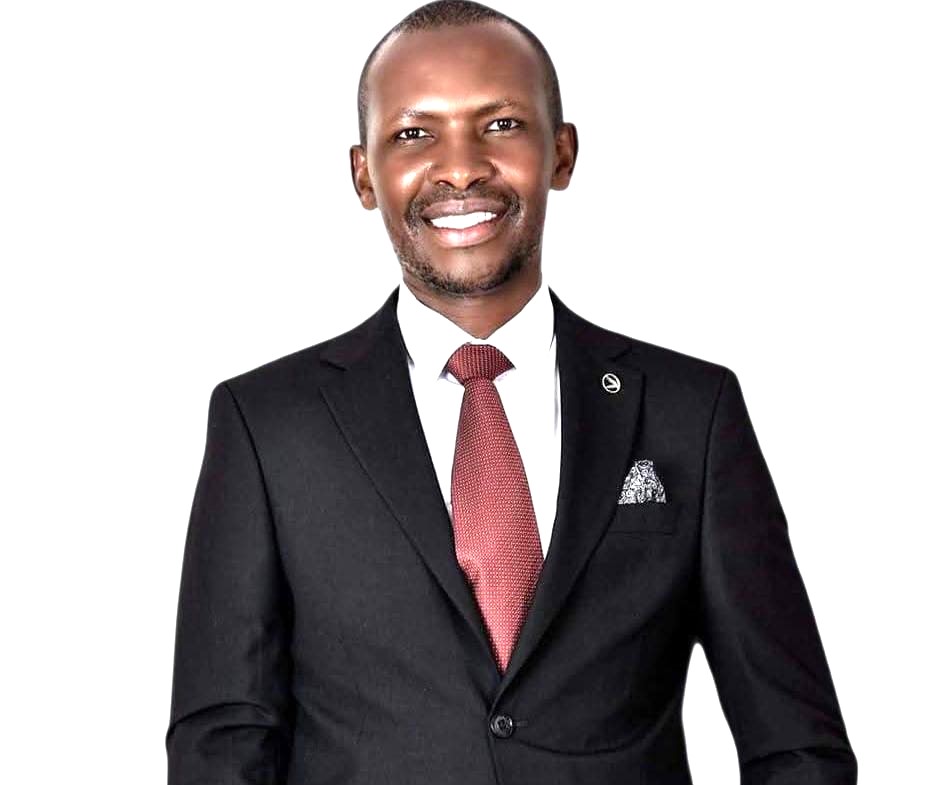
By Maingi M’Thuranira
M’Thuranira is a leadership facilitator, educator and mentor.
You can also follow our social media pages on Twitter: Education News KE and Facebook: Education News Newspaper for timely updates.
>>> Click here to stay up-to-date with trending regional stories
>>> Click here to read more informed opinions on the country’s education landscape