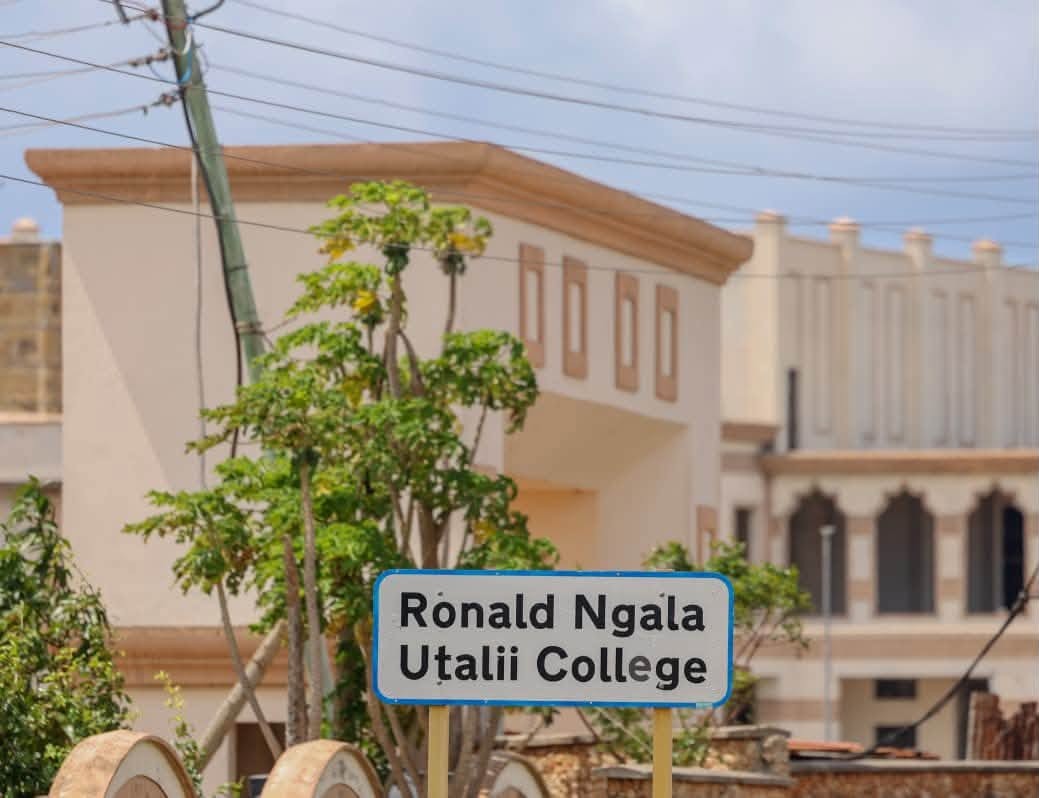
- Ronald Ngala Utalii College in Kilifi will admit its first 1,000 students on September 1, 2026, ending a 12‑year delay.
- The institution will train learners in hospitality, tourism, and maritime disciplines, supporting Kenya’s target of five million tourist arrivals by 2028.
- The college is expected to create jobs, stimulate local businesses, and strengthen Kilifi’s role in the blue economy.
Kenya’s long‑delayed Ronald Ngala Utalii College in Kilifi County is finally set to open its doors, ushering in a new era for tourism and hospitality education. After 12 years of stalled operationalisation, the institution will admit its first cohort of 1,000 students on September 1, 2026, a milestone hailed as transformative for the country’s skills pipeline in tourism, hospitality, and maritime services.
Tourism Principal Secretary Julius Bitok, accompanied by Kilifi Governor Gideon Mung’aro, announced the breakthrough during an inspection tour of the 40‑acre facility. Bitok confirmed that preparations are nearly complete, with the government declaring the college “95 per cent ready” to welcome learners. He assured that final touches are underway to ensure classes begin as scheduled.
Originally envisioned as a world‑class complement to the Kenya Utalii College in Nairobi, the Kilifi institution had been plagued by delays despite heavy public investment. Its opening now signals renewed government commitment to expanding access to technical and professional training while positioning Kenya as a regional hub for tourism education.
The college will offer diploma programmes and short professional courses in hospitality management, catering, housekeeping, hotel operations, tourism management, seafaring, and maritime services.
These industry‑oriented programmes are designed to equip learners with practical competencies and internationally competitive skills demanded by the fast‑evolving tourism sector.
Government plans project a gradual expansion from the initial intake of 1,000 students to 4,000 learners, making it one of East Africa’s largest specialised institutions for tourism and hospitality training. Bitok emphasised that the college will play a pivotal role in addressing the growing demand for skilled personnel across Kenya’s tourism value chain, which continues to rebound with rising international arrivals.

To strengthen experiential learning, the government is exploring a Public‑Private Partnership (PPP) to complete and operate a modern tourist‑class hotel within the college. The facility will serve both as a commercial enterprise and a live training laboratory, enabling students to gain hands‑on experience in accommodation services, culinary arts, food and beverage management, customer relations, and hotel administration.
ALSO READ:
Rongo University students celebrate as Obado, two others convicted over Sharon Otieno’s murder
Bitok stressed that practical exposure is essential in producing graduates ready for immediate employment in both local and international establishments. He linked the operationalisation of the college to Kenya’s broader tourism growth agenda, which targets five million international arrivals annually by 2028. Achieving this goal, he noted, requires a steady supply of professionally trained personnel across hotels, resorts, airlines, cruise operations, and travel agencies.
Beyond education, the college is expected to become a major economic catalyst for Kilifi County and the wider Coastal region. Government estimates suggest at least 1,000 direct and indirect jobs will be created, while increased demand for local goods and services will stimulate small businesses, transport operators, accommodation providers, and food suppliers.
Governor Mung’aro described the institution as a transformative investment that will unlock opportunities for thousands of young people aspiring to careers in tourism, hospitality, and the blue economy. He highlighted Kenya’s struggle to meet international certification standards, citing a recent recruitment exercise where only 59 of 600 Kenyan seafarer applicants qualified. He said the college will help bridge this gap by producing graduates with globally recognised competencies.
Mung’aro further noted that the institution will contribute significantly to the development of Kenya’s blue economy, preparing professionals for shipping, cruise tourism, marine hospitality, and other emerging maritime industries. He cautioned political leaders against reckless remarks that could damage Kenya’s global tourism reputation, stressing that the industry depends heavily on international confidence and perception.
As the inaugural admission date approaches, Ronald Ngala Utalii College stands poised to become a flagship centre of excellence in Africa. With modern facilities, industry‑driven programmes, and a strong focus on practical training, the college represents Kenya’s renewed commitment to building world‑class human capital, strengthening the blue economy, creating employment opportunities, and reinforcing the country’s position as one of the continent’s premier tourism destinations.
By Hillary Muhalya
You can also follow our social media pages on Twitter: Education News KE and Facebook: Education News Newspaper for timely updates.
>>> Click here to stay up-to-date with trending regional stories
>>> Click here to read more informed opinions on the country’s education landscape