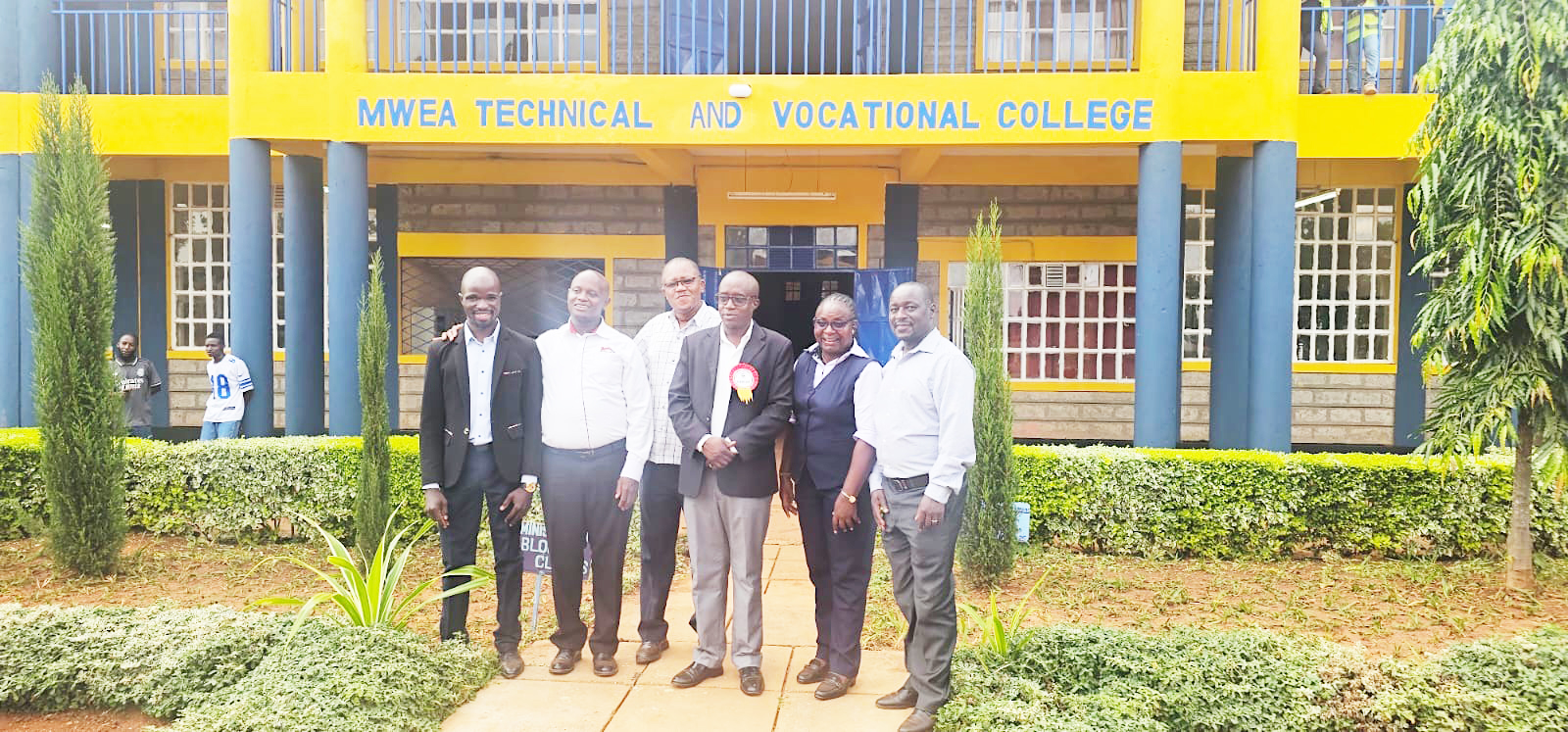
- Mwea Technical and Vocational College is equipping youth with modern agricultural and business skills.
- Collaboration with Agitech/Mazao Group exposes students to mechanised farming and climate‑smart practices.
- The initiative reflects Kenya’s TVET shift toward competence, self‑employment, and recognition of prior learning.
As dawn breaks over the rice fields of Mwea, a different kind of farming revolution is quietly taking shape.
Inside the workshops and demonstration farms of Mwea Technical and Vocational College (TVC), young people are learning that agriculture is no longer about hoes and subsistence farming. Instead, it is becoming a business driven by technology, innovation and entrepreneurship.
For years, thousands of Kenyan youths have viewed farming as a last resort, preferring to pursue white-collar jobs in towns and cities. Yet shrinking employment opportunities have forced many to rethink that perception.
Mwea TVC believes the future lies in equipping young people with practical agricultural skills that can create employment rather than wait for it.
That vision has received a major boost through a partnership between the institution and Agitech/Mazao Group, a collaboration designed to expose trainees to modern farming technologies and sustainable agricultural practices.
The programme seeks to bridge the gap between classroom learning and the realities of today’s agricultural sector by giving students practical experience in mechanised farming, agribusiness and climate-smart production methods.
Principal Tabitha Jessee said the institution’s goal is to produce graduates who are capable of creating their own opportunities instead of depending solely on formal employment.
ALSO READ:
NG-CDF allocation rises to Sh61.8 billion in major boost for schools, bursaries and healthcare
The institution has also expanded its training and ventured in crop production by introducing rabbit farming as part of its agribusiness programme, opening another income-generating opportunity for graduates.
“We have learners who have ventured into rabbit farming. With the skills they acquire here, they will be able to start their own businesses after graduation. Our goal is to produce graduates who can employ themselves and effectively serve their communities,” she said.
The changing approach reflects a wider shift taking place within Kenya’s Technical and Vocational Education and Training (TVET) sector, where institutions are increasingly focusing on competence rather than theory.
Mwea TVC is also encouraging people who acquired skills informally to seek formal recognition through the Recognition of Prior Learning (RPL) programme.
The initiative assesses and certifies competencies gained through years of work experience, enabling artisans and entrepreneurs without formal qualifications to obtain nationally recognised certificates.
According to the college, assessment fees vary depending on the training specialisation and whether the evaluation is conducted on-site or off-site. The partnership with Agitech/Mazao Group therefore represents more than an agreement between two institutions.
It reflects a growing recognition that solving youth unemployment will require closer collaboration between training institutions and industry, ensuring graduates leave college not only with certificates, but with the skills, confidence and entrepreneurial mindset needed to thrive in a changing economy.
By Jonathan Mwinzi
You can also follow our social media pages on Twitter: Education News KE and Facebook: Education News Newspaper for timely updates.
>>> Click here to stay up-to-date with trending regional stories
>>> Click here to read more informed opinions on the country’s education landscape