- Never before has Kenya produced such a large pool of students qualified to pursue university education
- Financing remains a major hurdle, as Tuition, accommodation, learning materials, transport, and daily living costs are placing considerable pressure on many households, making government scholarships and student loans critical for ensuring deserving students aren’t locked out
- The coming academic year will therefore serve as the clearest assessment yet of Kenya’s higher education financing reforms.
For thousands of Kenyan students, the release of the latest Kenya Universities and Colleges Central Placement Service (KUCCPS) results marks the beginning of a lifelong dream. Admission letters are being downloaded, parents are making financial plans, and anticipation is building ahead of reporting dates to universities, Technical and Vocational Education and Training (TVET) institutions and teacher training colleges.
Yet beyond the celebrations lies a sobering reality. The institutions preparing to welcome this historic cohort of learners are facing one of the most severe financial crises in Kenya’s higher education history. Record admissions are colliding with mounting debts, delayed government funding, ageing infrastructure, staff shortages and rising operational costs, creating what education experts describe as the ultimate test of the government’s Student-Centred University Funding Model.
This year’s placement follows the impressive performance in the 2025 Kenya Certificate of Secondary Education (KCSE) examination, which produced an unprecedented 268,700 students who qualified for university admission. During the KUCCPS placement process, 212,510 students applied for placement into public universities, representing more than 79 per cent of all those eligible for degree programmes.
The numbers tell a story of remarkable educational progress. Never before has Kenya produced such a large pool of students qualified to pursue university education. It reflects years of investment in expanding secondary education, improving transition rates and creating opportunities for more young people to access higher learning.
ALSO READ:
Government launches exercise to register 5,000 trainers, modernise TVET Institutions nationwide
However, it also presents an enormous financial obligation.
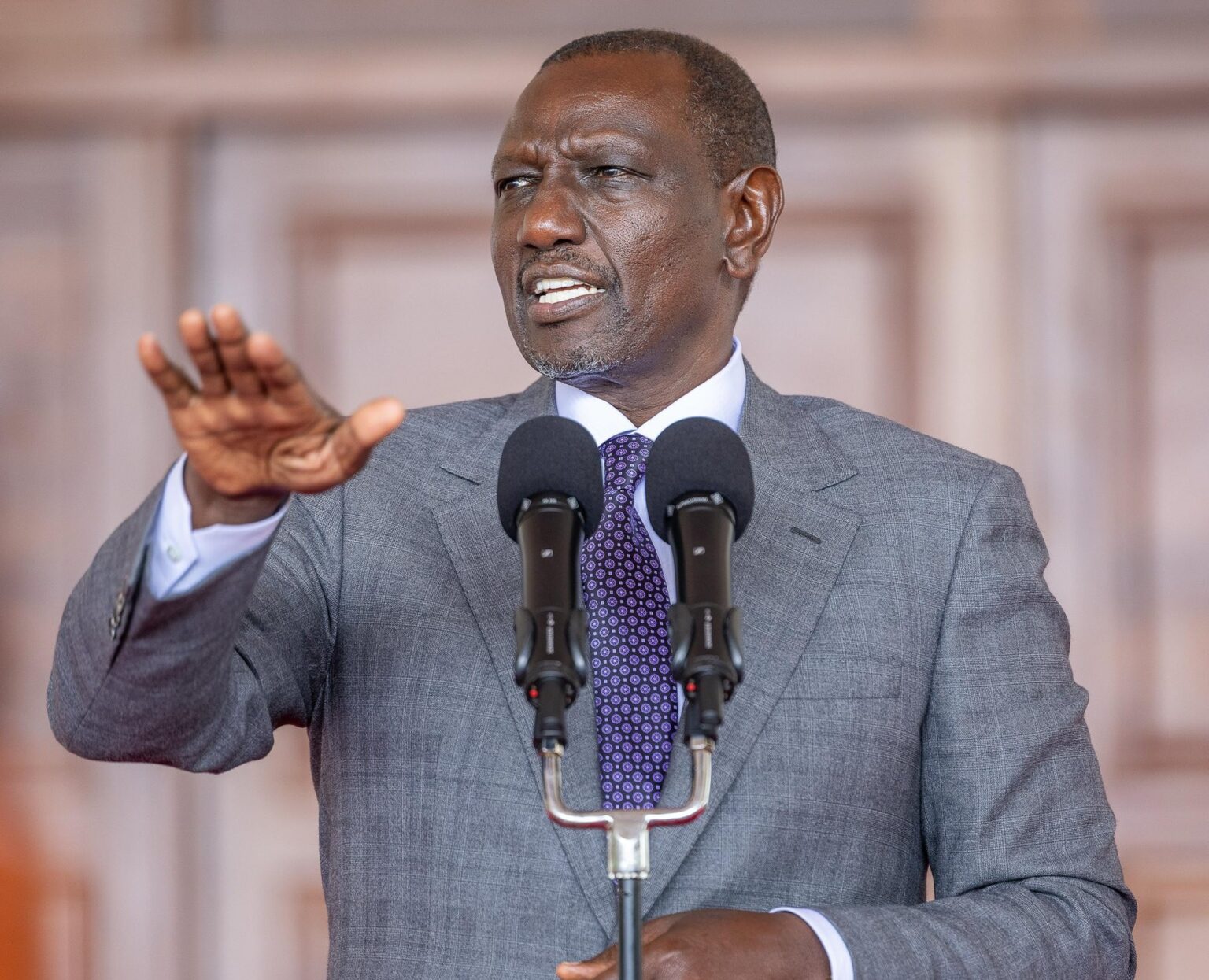
Every student placed in a public university is expected to apply for government financial support through the Higher Education Financing (HEF) portal under President William Ruto’s Student-Centred Funding Model. The framework, introduced in 2023, replaced the previous system where students admitted through KUCCPS received relatively uniform government sponsorship.
Instead, the new model assesses students according to their household’s financial circumstances. Those classified as highly vulnerable receive larger government scholarships and Higher Education Loans Board (HELB) loans, while students from better-off households receive lower levels of public support and are expected to contribute more towards their education.
The government has consistently defended the policy as a fairer and more efficient use of taxpayers’ money. Rather than subsidising every student equally, officials argue, the model directs greater assistance to those who genuinely cannot afford university education.
The principle has won praise from many education economists. However, implementation has exposed significant challenges.
Universities say that while students continue receiving admission letters, government funding has often arrived late or fallen below institutional expectations. Delays in scholarship and HELB disbursements have disrupted university cash flow, forcing institutions to postpone development projects, accumulate pending bills and struggle to meet payroll obligations.
Several public universities have for years been operating under severe financial pressure. Billions of shillings in accumulated debt, declining internally generated revenue, ageing facilities and increasing maintenance costs have steadily weakened their financial position. Some institutions have had to delay supplier payments, suspend infrastructure expansion and scale back research activities simply to keep essential services running.
The arrival of a record first-year class therefore raises a critical question: can Kenya’s universities successfully absorb the largest intake in history without compromising educational quality?
ALSO READ:
Education stakeholders believe the answer depends almost entirely on financing.
More students require more lecture rooms, more laboratories, more hostel space, more lecturers, more library resources, stronger digital infrastructure and expanded student support services. Without corresponding investment, universities risk becoming overcrowded institutions where access improves but quality deteriorates.
Academic leaders have repeatedly warned that increasing enrolment without increasing funding creates unsustainable pressure on institutions already operating at their limits. Large class sizes reduce interaction between lecturers and students, laboratory sessions become overcrowded, research funding shrinks and learning facilities deteriorate faster than they can be maintained.
Varsities financial Crisis
Universities continue facing rising utility bills, staff salaries, pension obligations, technology investments and maintenance costs. Inflation has increased the price of goods and services essential to university operations, yet institutional funding has not always kept pace with these realities.
The Treasury therefore faces a delicate balancing act. On one hand, expanding access to higher education remains a national priority under Kenya’s development agenda. On the other hand, limited public finances and competing demands from healthcare, security, infrastructure and county governments constrain the amount available for higher education.
Education analysts argue that the debate should no longer focus solely on how many students enter university. Instead, attention must shift towards whether universities possess the financial capacity to educate those students effectively.
A university system cannot be judged successful merely because admission numbers are rising. Its success must also be measured by graduation rates, research productivity, employability of graduates, innovation, teaching quality and institutional sustainability.
The Student-Centred Funding Model was designed to eliminate financial barriers to higher education while ensuring public resources reach the neediest learners. Yet its credibility ultimately depends on timely implementation. If scholarship allocations and HELB loans are delayed, students from vulnerable families may struggle to pay fees, secure accommodation or meet basic living expenses despite having secured university admission.
Likewise, universities depend on predictable government funding to maintain academic calendars, pay staff, invest in infrastructure and preserve educational standards.
As thousands of students prepare to join campuses in the coming months, expectations are high. Families hope university education will open doors to employment and social mobility. Universities hope the government will honour its funding commitments. The government hopes its reforms will demonstrate that equitable financing can coexist with expanded access.
ALSO READ:
MoE to deploy TVET trainers to senior schools to ease technical subjects teacher shortage
The coming academic year will therefore serve as the clearest assessment yet of Kenya’s higher education financing reforms.
If government scholarships and HELB loans are disbursed efficiently, universities receive adequate operational funding and students complete their studies without unnecessary financial disruption, the Student-Centred Funding Model could become one of the most transformative education reforms in recent decades.
If funding delays persist, however, record admissions could expose deeper structural weaknesses within Kenya’s university financing system, leaving institutions under greater financial strain while students bear the consequences of uncertainty.
For now, one fact remains undeniable: Kenya has successfully created unprecedented access to university education. The next and arguably more important challenge is ensuring that this access is matched by sustainable financing, quality teaching, modern facilities and a university system capable of nurturing the country’s next generation of innovators, professionals and leaders.
The true measure of this historic KUCCPS placement will therefore not be the number of students admitted, but whether those students find universities adequately funded, academically prepared and equipped to deliver the quality education envisioned under Kenya’s long-term development aspirations.
By Hillary Muhalya
You can also follow our social media pages on Twitter: Education News KE and Facebook: Education News Newspaper for timely updates.
>>> Click here to stay up-to-date with trending regional stories
>>> Click here to read more informed opinions on the country’s education landscape