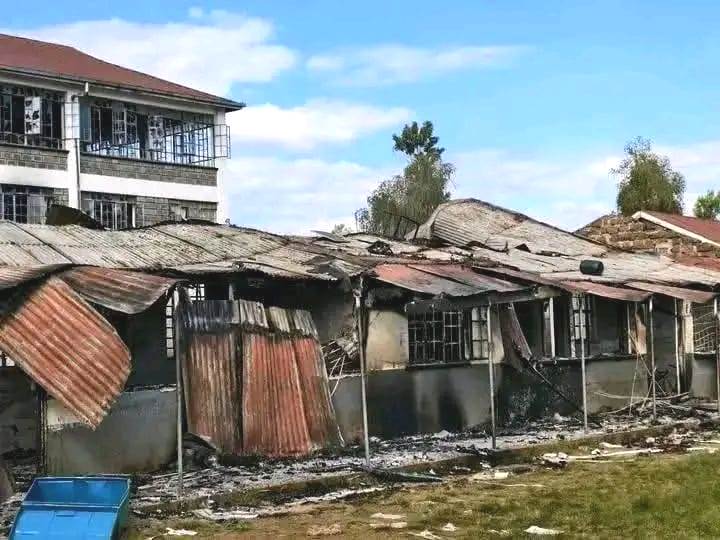
Student unrest remains one of the most disruptive and costly challenges within education systems globally. In a matter of hours, a single incident of unrest can halt academic progress, destroy infrastructure, erode institutional reputation, and inflict long-lasting emotional and financial damage on learners, parents, and governments alike.
While the visible consequences of such unrest are often dramatic and widely reported, the deeper causes are more subtle, structural, and frequently overlooked.
Yet across many education systems, a striking contrast persists. Some institutions experience repeated disruptions, while others; often operating under equally demanding conditions—maintain remarkable stability, discipline, and continuity of learning. This contrast raises a critical question: what explains the consistent calm in some schools and the recurring unrest in others?
The answer lies not in intimidation or reactionary discipline, but in what can best be described as a silent shield; a carefully constructed ecosystem of preventive leadership, responsive administration, student engagement, and welfare-centred governance.
Many private schools and institutions have mastered this model, keeping student unrest at bay through systems that prioritise foresight over reaction and trust over coercion.
This article examines that silent shield in depth, explores tiered institutional models of stability, and draws lessons for governments and policymakers seeking to strengthen national education systems.
ALSO READ:
Understanding the roots of student unrest
To understand prevention, one must first understand causation. Student unrest rarely emerges without warning. It is typically the result of accumulated grievances that are left unresolved until they reach a breaking point.
Common triggers include:
Perceived unfair treatment or discrimination
Poor quality or delayed meals
Inadequate accommodation or sanitation
Excessive academic pressure without support
Breakdown in communication between students and administration
Lack of psychological or emotional support systems
Absence of meaningful student representation
Individually, these issues may appear minor. Collectively, however, they form a pressure in institutions if unmanaged, can escalate into coordinated unrest. Effective institutions therefore do not treat unrest as an event; they treat it as a process—and intervene long before it matures.
The silent shield: A system built on prevention, not reaction
The most stable institutions operate on a fundamentally different philosophy from reactive systems. Instead of responding to unrest after it occurs, they invest in structures that prevent it from forming in the first place.
- Structured communication and student voice
At the heart of institutional stability is communication that is both structured and meaningful. Private schools and institutions provide formal platforms where students can articulate concerns safely and constructively.
These include:
Student councils with real influence
Class representation systems
Regular dialogue forums with administration
Anonymous feedback channels
The significance of these systems lies not in their existence, but in their responsiveness. When students believe their concerns will be heard and addressed, frustration is diffused before it escalates into collective action. Communication becomes a pressure-release mechanism rather than a symbolic exercise.
ALSO READ:
Youth benefit from free digital skills training at Ndumberi JITUME Centre
- Rapid response and early intervention mechanisms
One of the strongest predictors of institutional stability is response time. In high-performing institutions, issues are not left to accumulate.
Whether the concern involves food quality, discipline disputes, or infrastructure challenges, leadership responds quickly, often within structured timelines. This responsiveness prevents the psychological build-up of resentment, which is often the hidden fuel behind unrest.
In such environments, students learn a critical lesson: problems can be solved within the system. This reduces the motivation to seek solutions outside it.
- Guidance, counselling, and emotional infrastructure
Modern learners face increasing psychological pressure, ranging from academic expectations to social identity challenges and family-related stress. Institutions that ignore this reality often experience higher levels of behavioural instability.
In contrast, private schools and leading institutions invest in structured counselling systems that provide:
Emotional support
Conflict mediation
Stress management guidance
Academic counselling
Peer relationship support
This emotional infrastructure ensures that internal struggles are addressed early. Students are not left to navigate complex emotional landscapes alone, reducing the likelihood that distress manifests as disruptive collective behaviour.
- Fairness, consistency, and disciplinary trust
Discipline is a necessary component of institutional order, but its effectiveness depends on perception. Where discipline is seen as fair, it strengthens authority. Where it is seen as biased, it fuels resistance.
Stable institutions therefore prioritise:
Transparent rules
Consistent enforcement
Equal treatment of students
Clear disciplinary procedures
This fairness builds institutional trust. Students are more likely to comply with systems they perceive as legitimate rather than imposed.
ALSO READ:
KUPPET welcomes appointment of John Lekakeny Ololtuaa as Basic Education PS
- Student welfare as a strategic foundation
Welfare is often mistaken for comfort. In reality, it is a stability mechanism.
Institutions that invest in:
Nutritious meals
Clean and safe accommodation
Adequate healthcare
Recreational facilities
Safe learning environments
send a clear message: students matter. This sense of value reduces hostility and increases emotional attachment to the institution.
Where welfare is strong, unrest is weak. Where welfare is neglected, unrest finds fertile ground.
Tiered model of institutional stability in private education
A closer examination of private and international institutions reveals a tiered model of stability. While differences exist in scale and resources, the underlying principle remains consistent: prevention is more effective than control.
Tier 1: Elite stability institutions (very low unrest risk)
These institutions demonstrate highly advanced governance systems, strong cultural discipline, and proactive student engagement structures.
Strathmore University
Aga Khan Academy Nairobi
International School of Kenya (ISK)
Peponi School
Key characteristics:
Selective admission processes
Strong leadership culture
Intensive student support systems
High investment in welfare and counselling
Clear institutional values and identity
These institutions rarely experience unrest because systems are designed to detect and resolve dissatisfaction early.
Tier 2: High-stability expanding institutions
These institutions manage larger and more diverse populations while maintaining structured governance.
United States International University Africa (USIU-Africa)
Daystar University
Hillcrest International Schools
Greensteds International School
Key characteristics:
Strong administrative systems
Diverse but structured student populations
Functional counselling and welfare frameworks
Emphasis on communication and engagement
While occasional tensions may arise, institutional mechanisms ensure they are contained early.
ALSO READ:
How technocrats helped me understand the complex world of education policy and reform
Tier 3: Large-scale complex institutions
These institutions operate at scale, often serving diverse academic and socio-economic populations.
Mount Kenya University
KCA University
Key characteristics:
Large enrolment and multiple campuses
Varying levels of system uniformity
Ongoing reforms in student engagement and welfare
Greater exposure to structural pressures
Their experience highlights the importance of continuous system strengthening to maintain stability at scale.
Lessons for governments and public education systems
The practices observed in private institutions offer critical insights for public education reform.
- Institutionalise Student Voice Systems
Governments can significantly reduce unrest by strengthening structured student representation in decision-making processes within schools.
- Strengthen Early Warning and Rapid Response Systems
Delays in addressing grievances often escalate tension. A responsive administrative framework can prevent minor issues from becoming major crises.
- Elevate Counselling as Core Infrastructure
Counselling should not be treated as supplementary. It is a core stabilising function in modern education systems.
- Ensure Fair and Transparent Discipline Systems
Perceived injustice is one of the strongest triggers of collective unrest. Uniform disciplinary systems reduce this risk significantly.
- Invest in Student Welfare as Preventive Policy
Adequate meals, sanitation, housing, and safe learning environments are not luxury expenditures—they are essential components of stability and security.
The core insight: Stability is designed, not accidental
Across all tiers of institutions, one truth remains consistent: student unrest is rarely spontaneous. It is the outcome of accumulated neglect, weak communication, and delayed intervention.
Where systems are weak, unrest grows unnoticed. Where systems are strong, unrest is absorbed, resolved, and neutralised before it becomes visible.
The future belongs to preventive education leadership
The most stable educational institutions are not those that rely on fear, surveillance, or punitive control. They are those that invest in relationships, trust, and responsive governance structures that treat students as partners in the learning process.
The silent shield is therefore not a theory—it is a proven model. It demonstrates that when learners are heard, supported, and respected, stability is not imposed; it emerges naturally.
For governments, policymakers, and education leaders, the lesson is clear: the future of peaceful learning environments will not be secured by stronger reactions to unrest, but by smarter prevention of its causes.
In the final analysis, education systems that endure are those that understand a simple truth: the strongest shield against student unrest is not force—it is trust, fairness, and purposeful leadership anchored in human dignity.
By Hillary Muhalya
You can also follow our social media pages on Twitter: Education News KE and Facebook: Education News Newspaper for timely updates.
>>> Click here to stay up-to-date with trending regional stories
>>> Click here to read more informed opinions on the country’s education landscape