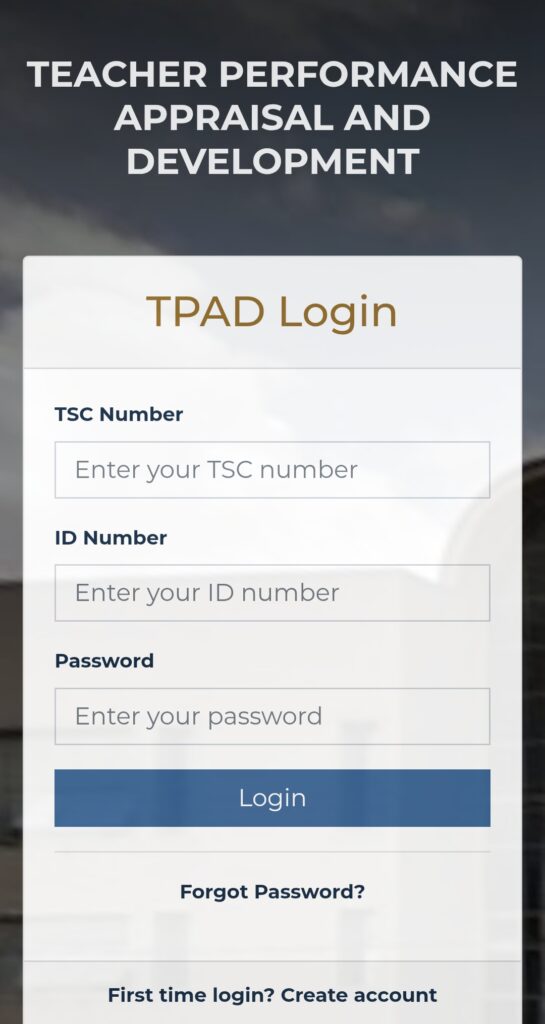
- Teachers across Kenya say persistent TPAD system glitches are disrupting performance appraisals.
School administrators report repeated login failures, delayed responses and unsaved submissions.
Educators are calling for system upgrades and timely communication from TSC on technical issues.
Teachers across Kenya have raised concerns over persistent slowdowns and technical glitches affecting the Teacher Performance Appraisal and Development (TPAD) system, saying the platform has become increasingly difficult to access at a time when many are required to update and submit their performance appraisal records.
The complaints have emerged from different parts of the country, with many educators reporting that the online platform is taking unusually long to load, frequently timing out and, in some instances, failing to save information after it has been entered. The situation has left thousands of teachers frustrated as they try to meet appraisal requirements while also attending to their classroom responsibilities.
TPAD is a key performance management tool used by the Teachers Service Commission (TSC) to monitor teachers’ professional performance, lesson preparation, classroom delivery, learner assessment and other aspects of instructional practice. Teachers are expected to regularly update their records on the platform as part of the Commission’s performance management framework.
Teachers, school heads report disruptions
However, many educators say the current system slowdown has made it difficult to complete the required tasks within a reasonable time. Some report experiencing repeated login failures, while others say the portal becomes unresponsive after they have entered information, forcing them to repeat the process several times.
A teacher in Nairobi said the system had become so slow that what would ordinarily take a few minutes was now consuming several hours. The teacher noted that repeated loading delays and unexpected logouts had disrupted work schedules and made it difficult to balance teaching responsibilities with administrative requirements.
Similar concerns have also been raised in other parts of the country. A teacher in Kitale said the TPAD portal frequently freezes while data is being entered, causing information to disappear before it can be saved. According to the teacher, the repeated interruptions have increased anxiety among educators who fear they may struggle to complete their appraisals before the required deadlines.
The frustrations are not limited to classroom teachers. Deputy principals and principals, who are responsible for supervising, validating and approving teachers’ appraisal records, have also expressed dissatisfaction with the system’s performance. They say persistent slowdowns, delayed responses and frequent technical glitches have significantly hampered the appraisal process, making it difficult to review and approve teachers’ submissions on time.
School administrators note that because every appraisal must pass through a verification and approval process, technical disruptions create bottlenecks that affect entire schools rather than individual teachers alone. Some administrators report spending several hours attempting to access appraisal records, only for the platform to freeze, log them out unexpectedly or fail to save approved entries. They argue that the challenges are increasing their administrative workload and interfering with other critical school management responsibilities.
Calls for improvements
The system interruptions have forced many teachers and administrators to remain in school beyond official working hours or work late into the evening in an effort to complete pending appraisal tasks. Others say valuable time that should be dedicated to lesson preparation, learner support and academic planning is instead being spent waiting for the TPAD portal to respond.
Education stakeholders observe that digital platforms are intended to improve efficiency, reduce paperwork and simplify record management. However, they note that these benefits can only be realised if the systems remain stable and responsive, particularly during periods when thousands of users are accessing them simultaneously.
The latest complaints have renewed calls for improvements to the TPAD platform to ensure it can accommodate heavy traffic without affecting service delivery. Teachers and school administrators argue that while they fully support accountability and performance appraisal, the technology supporting the process should be reliable enough to enable them to complete their work without unnecessary delays.
Some educators have appealed to the Commission to communicate promptly whenever technical challenges arise. They say timely updates would help reduce uncertainty and reassure users that the problems are being addressed. Others have suggested that, should the technical issues persist, reasonable flexibility in submission timelines may be necessary to ensure that no teacher or school administrator is disadvantaged by circumstances beyond their control.
Education experts also emphasise that teacher performance management systems should enhance professionalism rather than create additional stress. They argue that digital transformation in the education sector should be accompanied by continuous system upgrades, adequate technical support and sufficient server capacity to handle increased demand.
READ ALSO: Evojo Primary School in Vihiga mourns promising Kaimosi TTC trainee teacher
As teachers, deputy principals and principals continue to report slow response times and intermittent access to the TPAD portal, many are hoping the technical issues will be resolved quickly. A stable and efficient appraisal system is essential for promoting accountability, strengthening professional development and enabling educators to focus on their primary responsibility of delivering quality education to learners.
By Hillary Muhalya
You can also follow our social media pages on Twitter: Education News KE and Facebook: Education News Newspaper for timely updates.
>>> Click here to stay up-to-date with trending regional stories
>>> Click here to read more informed opinions on the country’s education landscape